Genesis did not begin with a century-old crest, a royal pedigree, or a hand-built limousine carrying heads of state. It began with a Hyundai badge.
The original Hyundai Genesis arrived in the United States for the 2009 model year as an ambitious rear-wheel-drive luxury sedan. It offered buyers a choice of V6 or V8 power, plenty of comfort, and a much lower price than comparable cars from established luxury brands.
It was not a rebadged car, but it was still a Hyundai trying to convince shoppers that the same company selling affordable Elantras and Sonatas could build a legitimate luxury sedan. That was a tough sell, especially in a segment where the badge on the grille can matter as much as the machinery behind it.
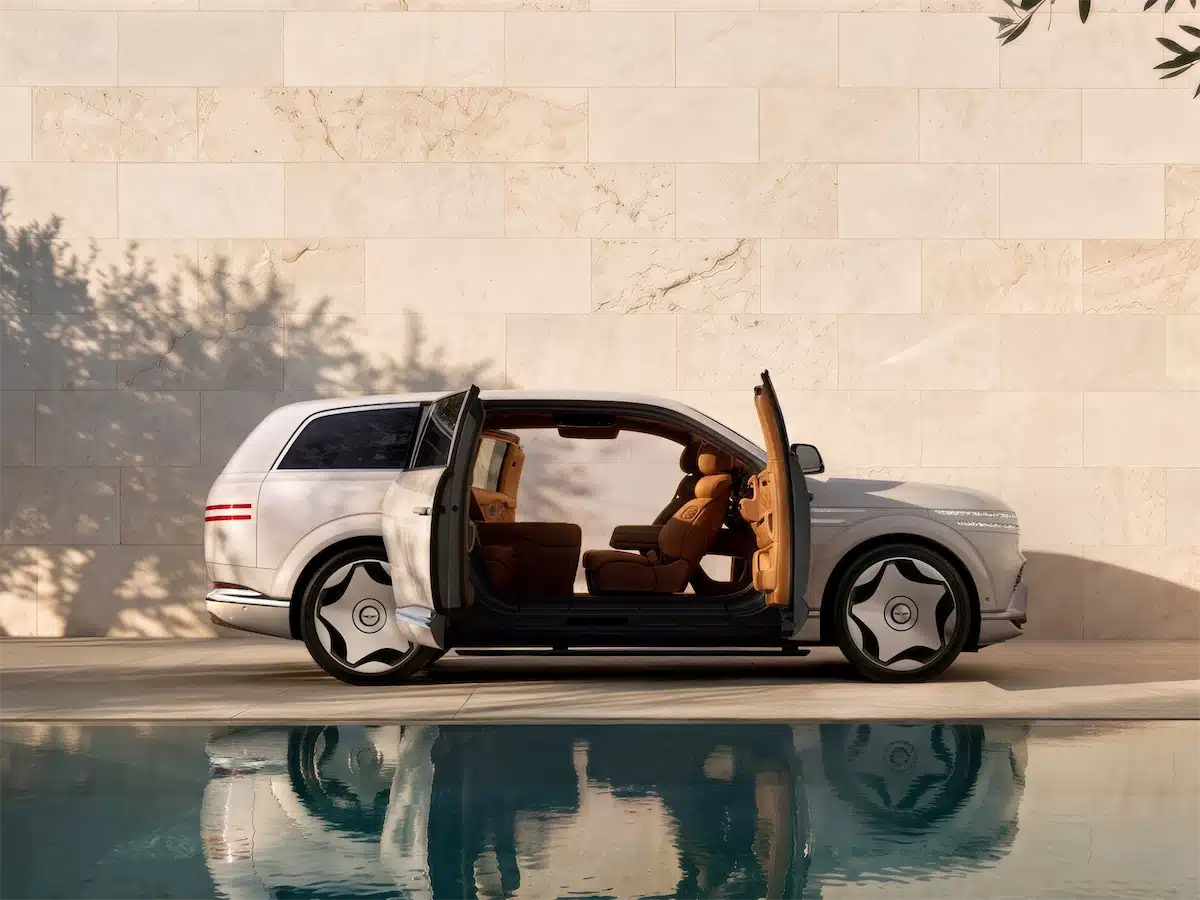
Less than two decades later, Genesis is preparing to sell an electric flagship SUV with pillarless coach doors, swiveling lounge seats, cashmere upholstery and a heated wood floor. The new GV90 Neolun is not merely chasing Mercedes-Benz or BMW. It is reaching toward Mercedes-Maybach, Bentley and even Rolls-Royce.
That may be one of the most remarkable glow-ups in the modern auto industry.
Genesis Started as a Hyundai Model, Not a Luxury Empire
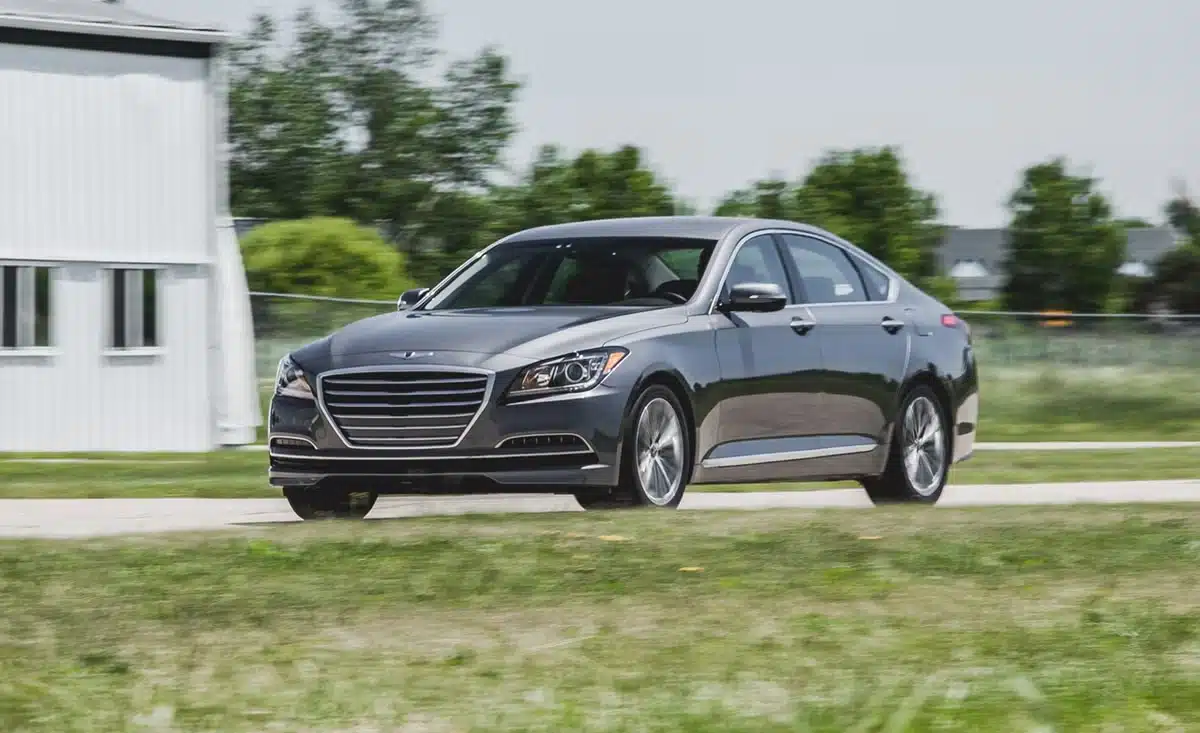
Before Genesis became its own brand, the name appeared on the trunk of the Hyundai Genesis sedan. Hyundai built that car to deliver old-fashioned luxury-car fundamentals, including rear-wheel drive, available V8 power, a spacious cabin and a long list of standard equipment.
The value proposition was easy to understand. Buyers received much of the comfort and performance associated with an expensive European sedan without paying for a premium badge.
The problem was that it still wore a Hyundai emblem. Fair or not, Hyundai was better known at the time for practical transportation than country-club parking lots. Convincing customers to spend luxury-car money at a mainstream dealership required a leap of faith.
Hyundai eventually turned Genesis into a standalone luxury brand in 2015. The second-generation Hyundai Genesis sedan became the Genesis G80, while the larger Equus was replaced by the G90 flagship. Genesis later added the smaller G70 sedan and a growing family of SUVs.
The formula remained familiar: give buyers distinctive styling, upscale materials, and plenty of equipment, then price the vehicle below the traditional luxury establishment.
The GV90 Is Genesis Planting Its Flag at the Top
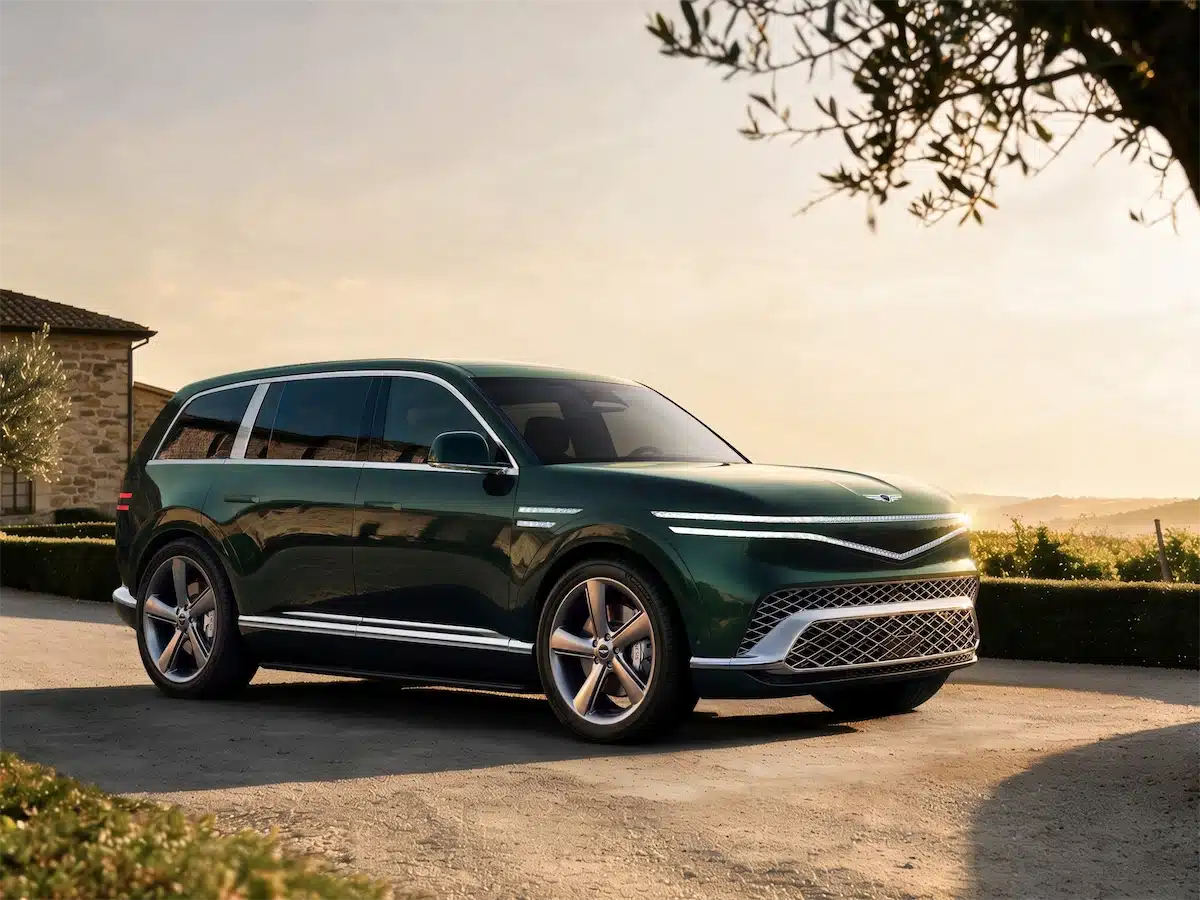
The GV90 represents a major change in that strategy. Instead of simply offering an alternative to an established luxury vehicle, Genesis is building something meant to stand alongside the industry’s most extravagant SUVs.
At 208.1 inches long and riding on a 127.8-inch wheelbase, the GV90 is a proper full-size machine. Its dimensions put it in the same general neighborhood as the long-wheelbase Range Rover and Rolls-Royce Cullinan. Its bespoke platform makes it stand out within the Genesis lineup.
Genesis will offer a standard GV90 with conventional doors and seating for six or seven. The GV90 Neolun takes the vehicle in a much more exclusive direction.
Its signature feature is what Genesis calls the Neolun Arch Gate. The power-operated rear doors are hinged at the back, much like the coach doors found on a Rolls-Royce. When the front and rear doors are open, no conventional B-pillar blocks the opening.
Genesis says the rear doors use a dual-motion hinge that first moves each door outward before swinging it open. Structural beams are integrated into the doors, while a heavily reinforced frame forms a concealed safety cage around the passenger compartment.
This is no longer a company merely trying to prove it belongs in the luxury market. Genesis is attempting engineering and design tricks that few automakers would even consider putting into production.
The Neolun Turns an SUV Into a Private Lounge
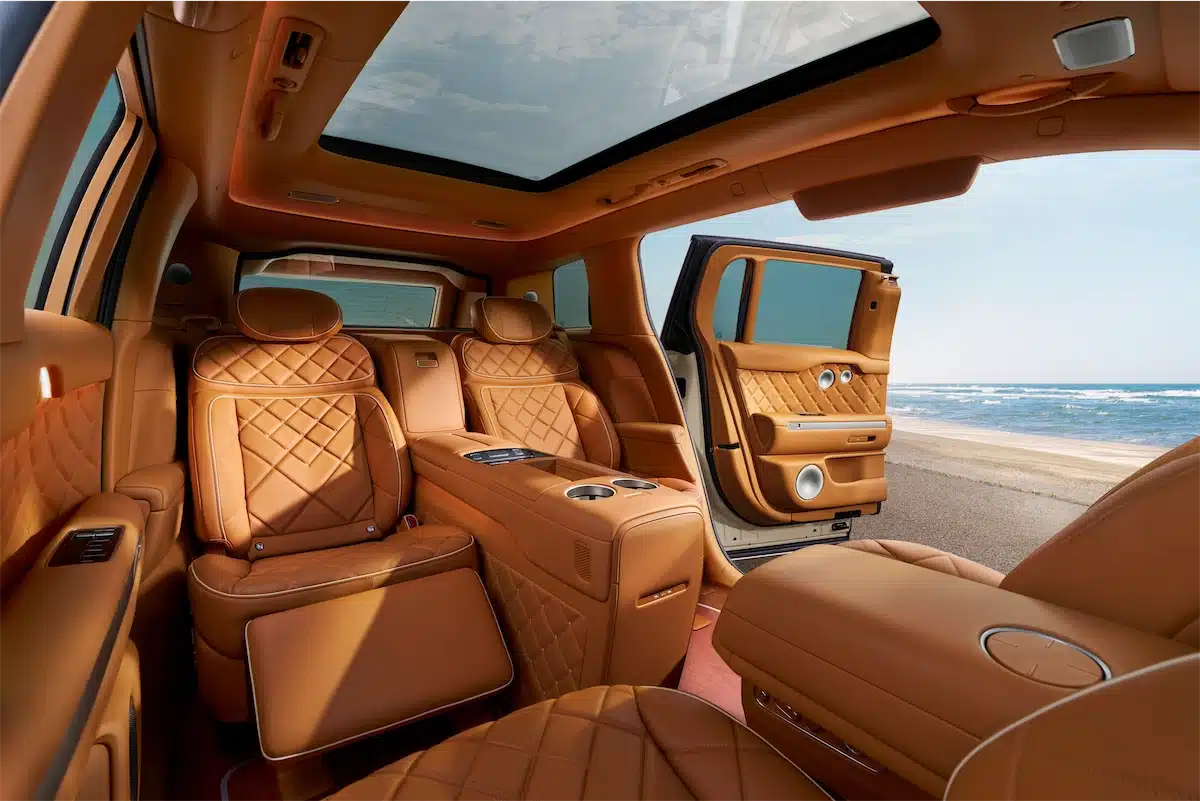
The GV90 Neolun’s interior makes the strongest case that Genesis has entered ultra-luxury territory.
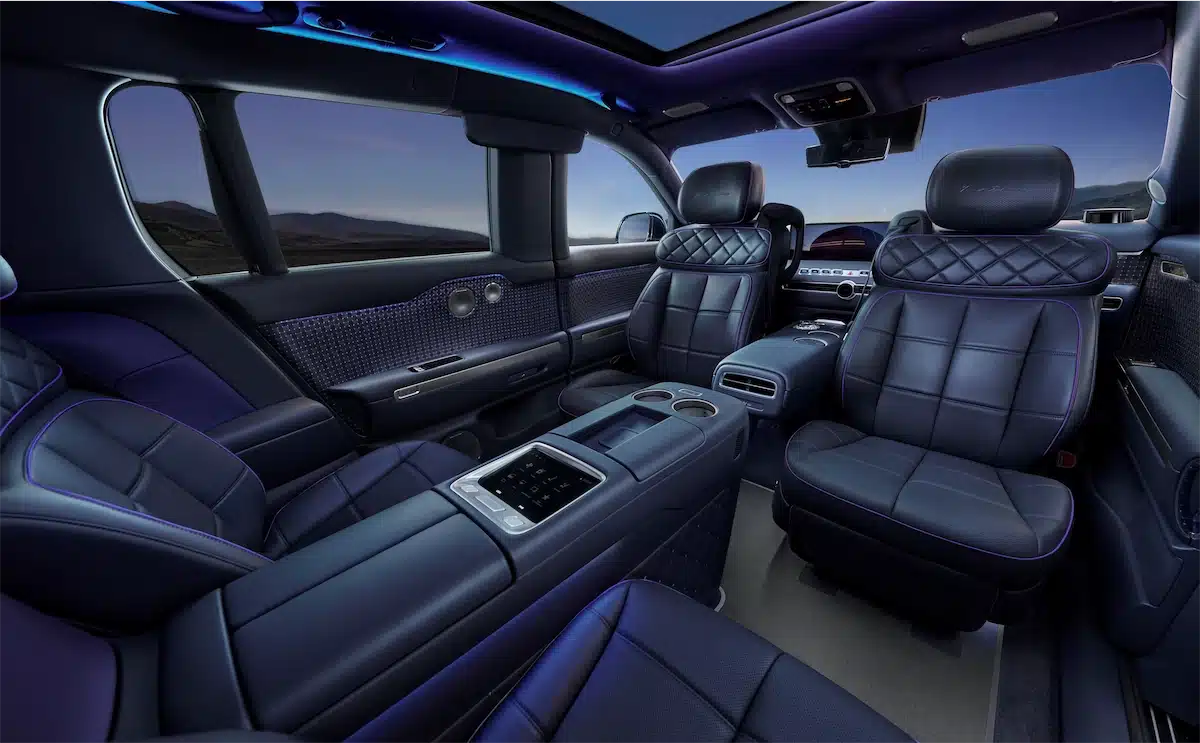
A limited-production First Edition will use a four-seat layout with individual reclining chairs. The front seats can rotate 180 degrees while the vehicle is parked, allowing all four occupants to face one another. Other Neolun models will offer three rows and six seats.
Available cabin features include a heated real-wood veneer floor, wool and cashmere materials, power-operated doors, pop-out tables and a refrigerator. The seats contain 15 individual air cells for adjustment and massage functions.
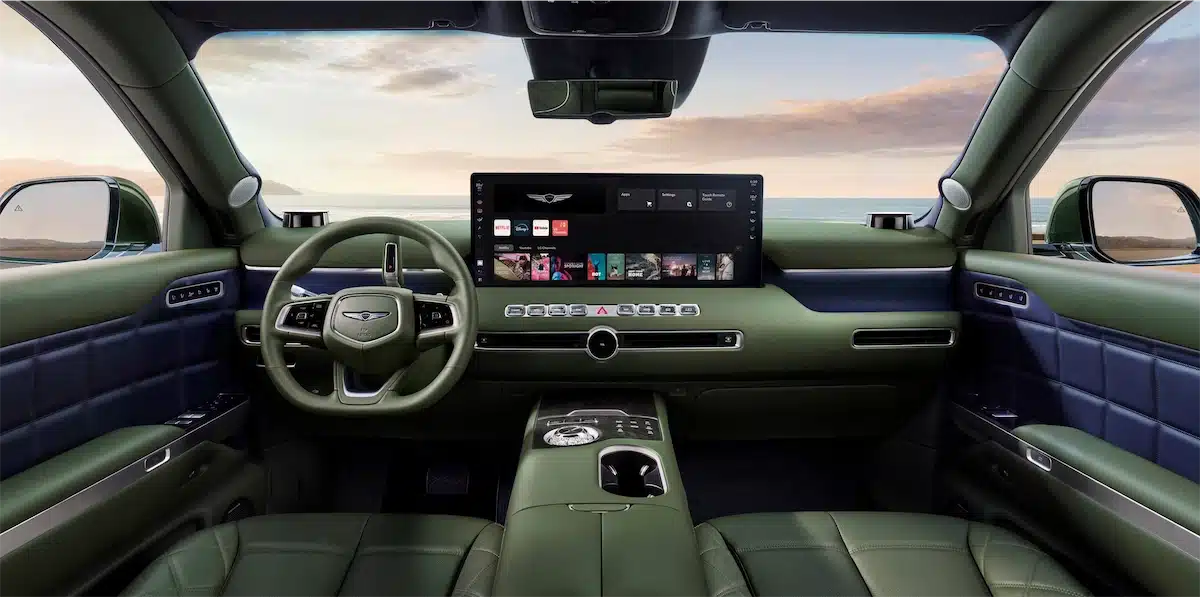
There is still plenty of technology, but Genesis has tried to make it feel like part of the experience instead of simply bolting a big tablet to the dashboard, even if that is exactly what it looks like.
A 23.6-inch OLED display handles driving information, navigation, and entertainment. When the GV90 is parked, the screen rises and expands into a 24.6-inch cinematic display. A 25-speaker Bang & Olufsen audio system supports Dolby Atmos and can recreate the acoustic character of locations such as Boston Symphony Hall and Wembley Stadium.
There is not even a traditional start button. The vehicle powers up as the occupants enter, prepares the shifter and other controls, and becomes ready to drive when the driver presses the brake pedal.
There Is Serious Hardware Under All That Luxury
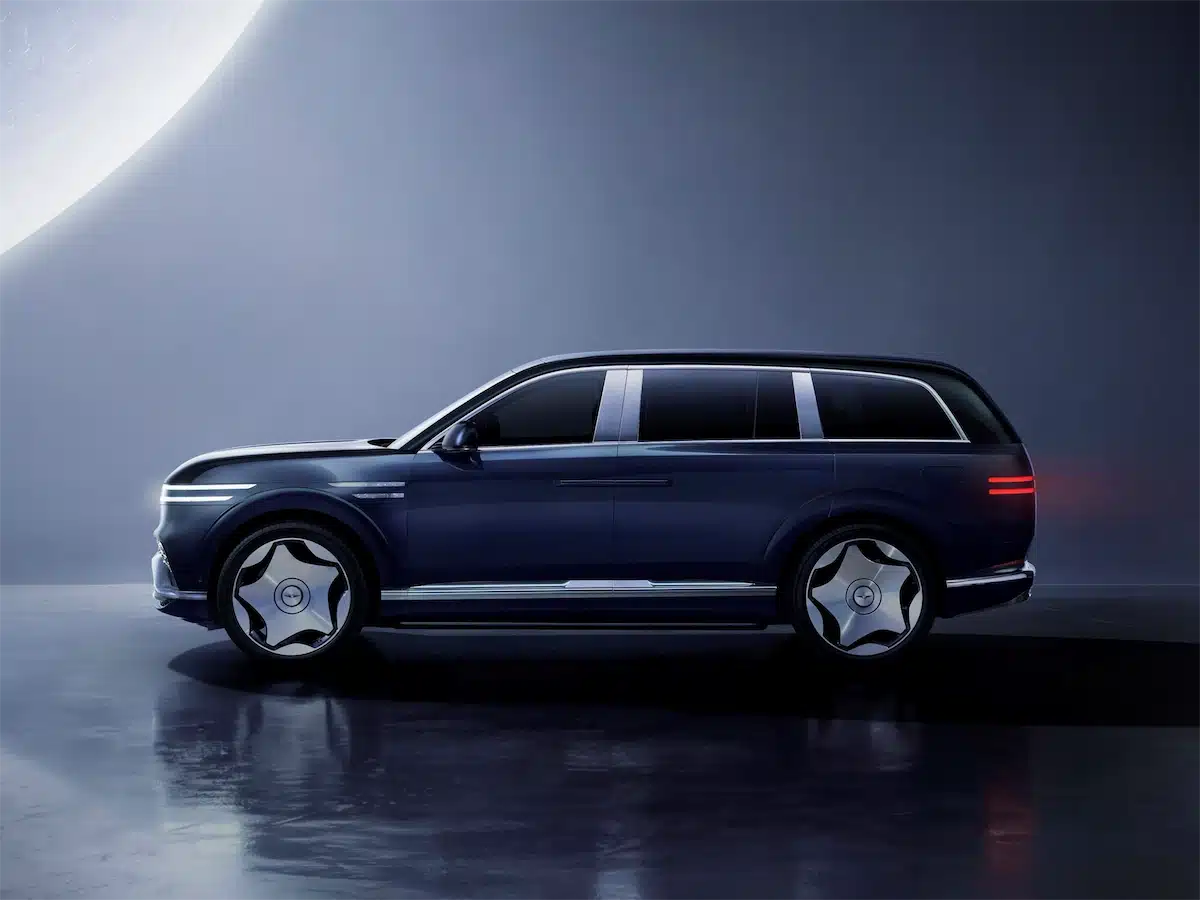
The GV90 is not relying solely on dramatic doors and expensive upholstery. It is built on a new electric platform called eMP, which Genesis says was developed specifically for its flagship.
A 123.5-kWh battery pack feeds two electric motors producing a combined 657 horsepower and 590 pound-feet of torque. Genesis estimates the seven-seat GV90 will travel approximately 310 miles on a charge.
Connected to a 350-kW DC fast charger, the battery can reportedly charge from 10 to 80 percent in 22 minutes. Those are manufacturer estimates, so real-world and EPA-certified numbers will matter once the GV90 gets closer to dealerships.
A multi-chamber air suspension can adjust its stiffness and the vehicle’s ride height. Rear-wheel steering turns the back wheels as much as five degrees, which Genesis says gives the massive SUV a turning circle comparable to that of a midsize car.
Electronic limited-slip differentials are fitted to both motors to manage traction. Thick acoustic glass and extensive sound insulation are intended to create the kind of quiet cabin expected in a true flagship.
Safety also receives unusual attention. Genesis says the GV90 uses 12 airbags, including a roof-mounted airbag designed to cover the panoramic glass during a severe rollover. The company also developed additional protection for the large battery and reinforced the structure surrounding the pillarless door opening.
Genesis Is Now Being Mentioned With Maybach and Rolls-Royce
Genesis has not announced U.S. pricing, but this will not be another bargain luxury vehicle in the traditional sense.
Estimates suggest that the conventional GV90 could begin in the low-$100,000 range, while the GV90 Neolun may start around $150,000. Pricing like this places it between vehicles such as the Cadillac Escalade IQ and Mercedes-Maybach EQS SUV.
Those estimates would make the GV90 the most expensive Genesis yet. They would also place a six-figure Korean luxury SUV in conversations once reserved for brands with generations of prestige behind them.
The comparison to Rolls-Royce is not just marketing theater. Very few modern vehicles offer rear-hinged coach doors, and even fewer eliminate the visible center pillar when those doors are open. The lounge-style seating and bespoke interior materials also move the Neolun beyond the typical three-row luxury SUV.
Of course, an ambitious specification sheet does not automatically make a vehicle equal to a Rolls-Royce Cullinan or a Mercedes-Maybach. Ride quality, craftsmanship, dealership treatment and long-term exclusivity will determine whether the GV90 truly belongs in that company.
But the fact that Genesis can now be discussed alongside those brands without the idea sounding ridiculous is an achievement by itself.
The GV90 Proves How Far Genesis Has Come
For most working buyers, the GV90 Neolun will remain a dream vehicle. Even if Genesis undercuts its European rivals, a likely price well above $100,000 puts it far beyond the average household budget.
That does not make it irrelevant.
Flagship vehicles show what a manufacturer can do when engineers and designers are given room to stretch. Features developed for the GV90 could eventually reach less expensive Genesis models and, over time, more attainable Hyundai and Kia vehicles.
The GV90 also tells a larger story about how quickly reputations can change. The Genesis name went from a single Hyundai sedan sold largely on value to a full luxury brand confident enough to build a 657-horsepower electric SUV with coach doors and a cashmere-lined lounge.
There will always be shoppers who refuse to pay Maybach money for a Genesis badge. Others may look at the hardware, craftsmanship and exclusivity and wonder why they should pay even more for an older name.
Either way, Genesis is no longer standing outside the luxury establishment asking to be taken seriously. With the GV90 Neolun, it is pulling up to the front door, opening both coach doors and inviting the establishment inside.