The 2027 Hyundai Kona SE loses a feature some drivers would rather switch off anyway: automatic engine stop-start. Hyundai’s entry trim drops Idle Stop and Go for the new model year, while the rest of the gasoline Kona range receives only modest equipment changes.
This is a carryover update, rather than a redesign. The familiar small SUV still offers two engines, available all-wheel drive and four trims. Here is what Hyundai has confirmed for U.S. shoppers.
2027 Kona SE drops Idle Stop and Go
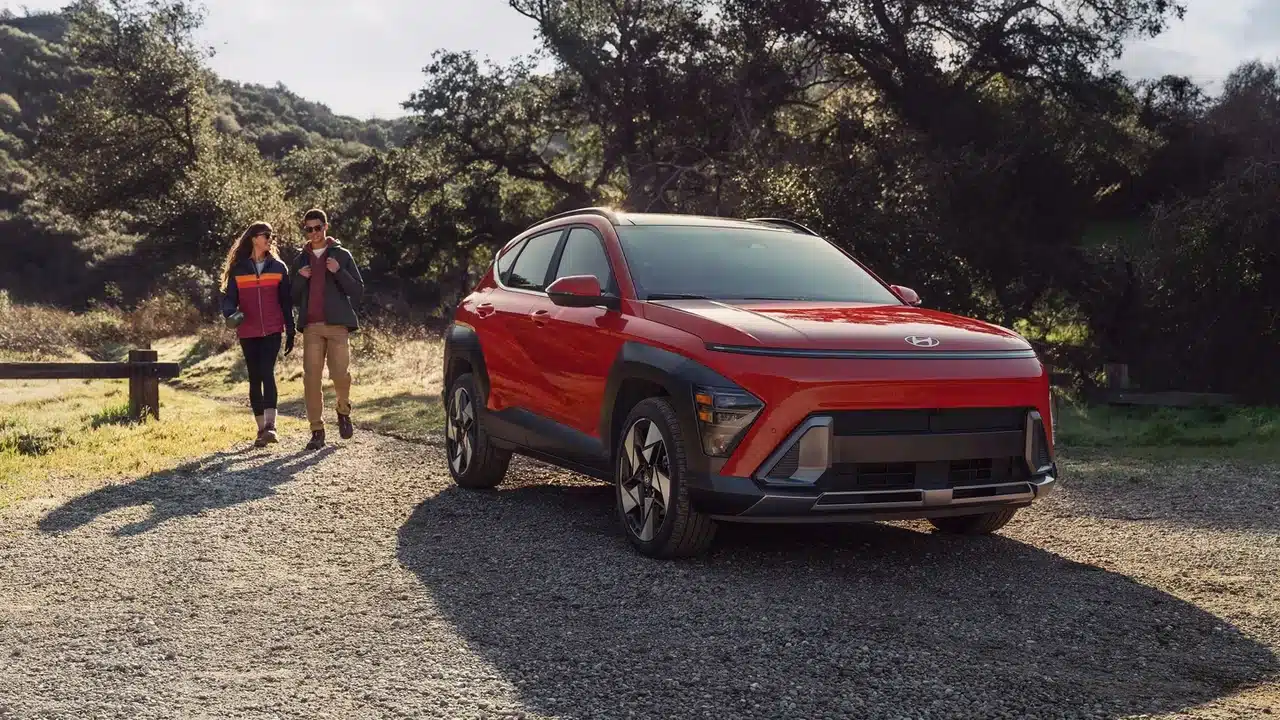
Hyundai’s 2027 Kona change sheet specifically lists Idle Stop and Go as deleted from the SE. That is the system that can shut the engine off during a stop and restart it when it is time to move. The announcement names the SE; it should not be read as a blanket deletion across every Kona trim.
The other listed change affects cabin lighting. Ambient lighting moves from SEL Premium and higher trims to Limited only. Buyers comparing a 2026 SEL Premium with a 2027 version should check that equipment difference before assuming the newer vehicle includes everything the older one did.
Hyundai does not explain the reasons for either deletion in the update sheet. These changes concern the gasoline Kona covered here, not a confirmed U.S. update for Kona Electric.
Two engines separate the four trims
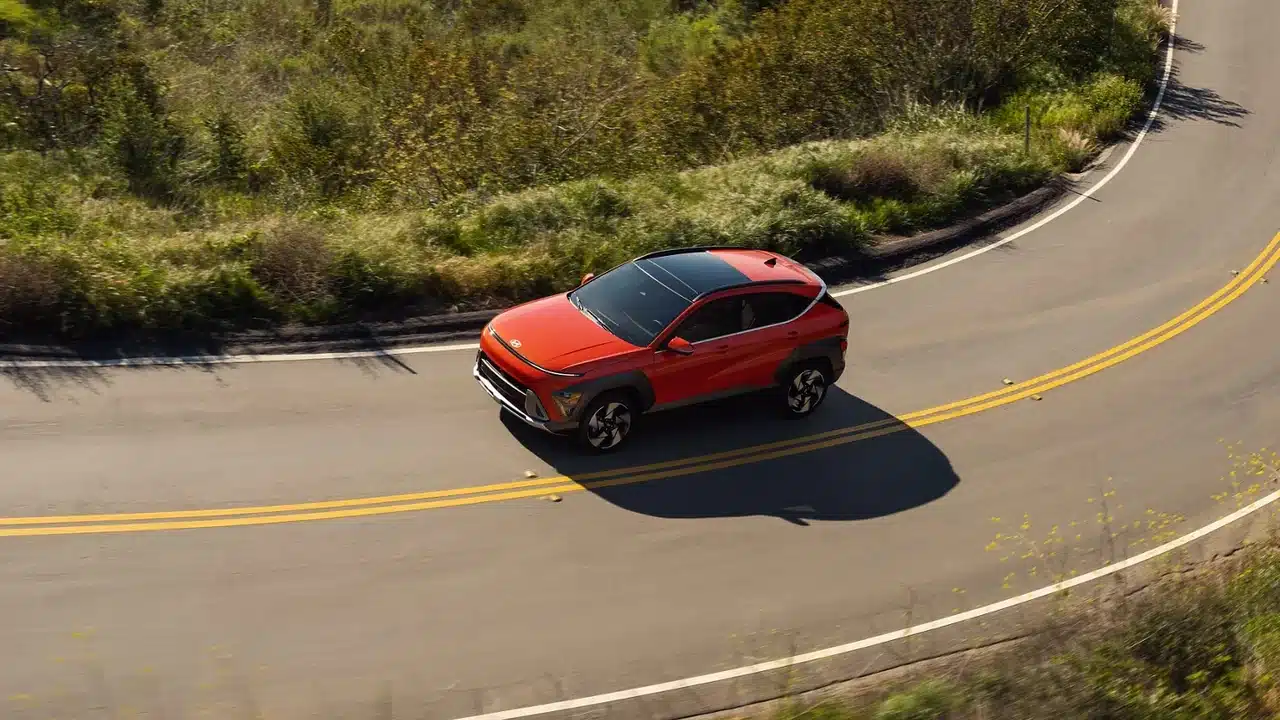
SE and SEL Sport use a 2.0-liter four-cylinder making 147 horsepower and 132 pound-feet of torque. It pairs with Hyundai’s Intelligent Variable Transmission, a continuously variable transmission. SEL Premium and Limited move to a 1.6-liter turbocharged four-cylinder with 190 horsepower and 195 pound-feet, paired with an eight-speed automatic.
Front-wheel drive is standard, and HTRAC all-wheel drive is optional on all four trims. That lets buyers choose AWD without moving to the turbo engine, or choose turbo power while keeping front-wheel drive.
The EPA combined estimates are 31 mpg for front-drive 2.0-liter models and 27 mpg with AWD. Turbo versions return 28 mpg combined with front-wheel drive or 26 mpg with AWD. The most efficient configuration reaches 35 mpg on the highway.
Five seats and useful room in a small footprint

The Kona measures 171.3 inches long and 71.9 inches wide, with a 104.7-inch wheelbase. Hyundai lists five-passenger seating and 38.2 inches of rear legroom. Cargo space measures 25.5 cubic feet with the rear seats upright and 63.7 cubic feet with them folded.
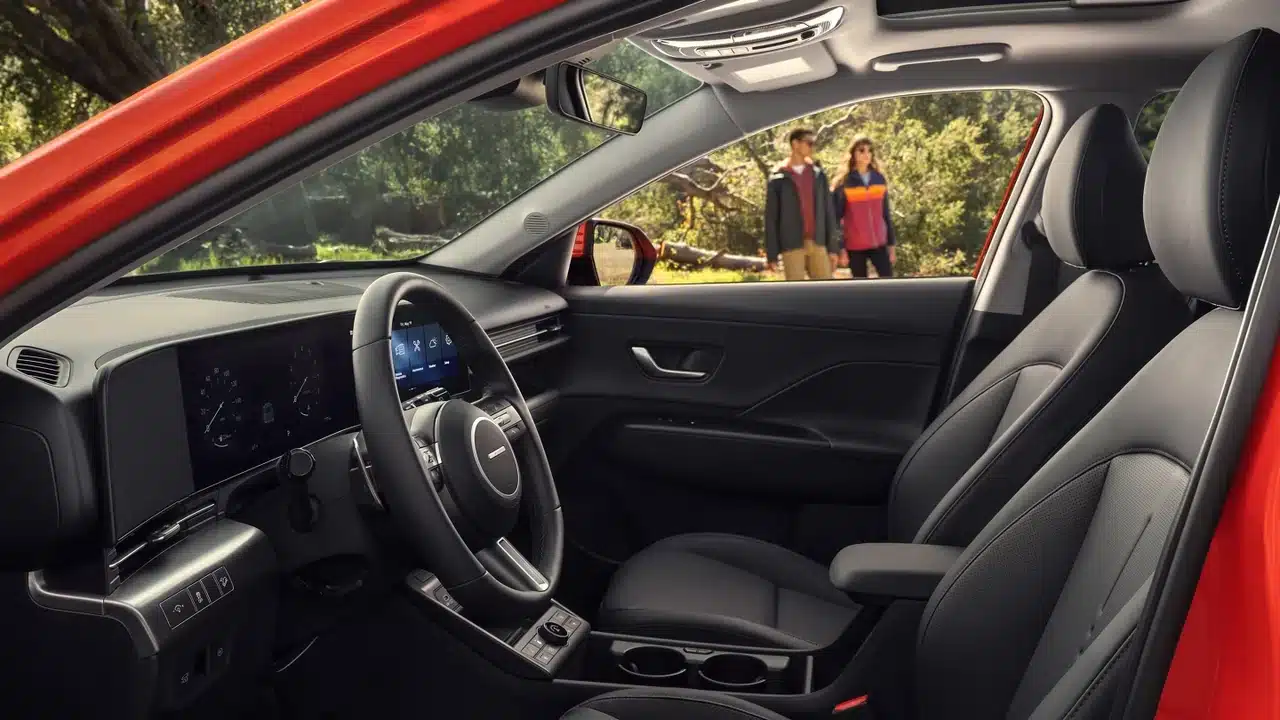
A 12.3-inch touchscreen and wireless Apple CarPlay and Android Auto are standard. SEL Sport adds details such as 18-inch black wheels and a wireless phone charger. SEL Premium brings the turbo engine, 19-inch wheels and H-Tex upholstery.
Limited adds conveniences including a hands-free smart liftgate, Surround View Monitor and Blind-Spot View Monitor. Those cameras are trim-specific equipment, rather than features included with the base price.
2027 Hyundai Kona pricing starts at $25,500
Hyundai’s U.S. specifications page lists starting MSRPs of $25,500 for SE, $26,825 for SEL Sport, $28,425 for SEL Premium and $32,535 for Limited. Freight, taxes, fees and optional equipment are additional.
The jump from SEL Sport to SEL Premium is $1,600 before those charges, and it buys the stronger engine as well as additional equipment. Limited costs another $4,110 above SEL Premium. That makes the middle trims worth comparing closely if engine performance matters more to you than cameras and other premium conveniences.
For a shopper who dislikes automatic stop-start, however, the least expensive SE is the version with the explicitly confirmed deletion. That small model-year change could matter more in everyday driving than a new wheel design or another lighting feature.