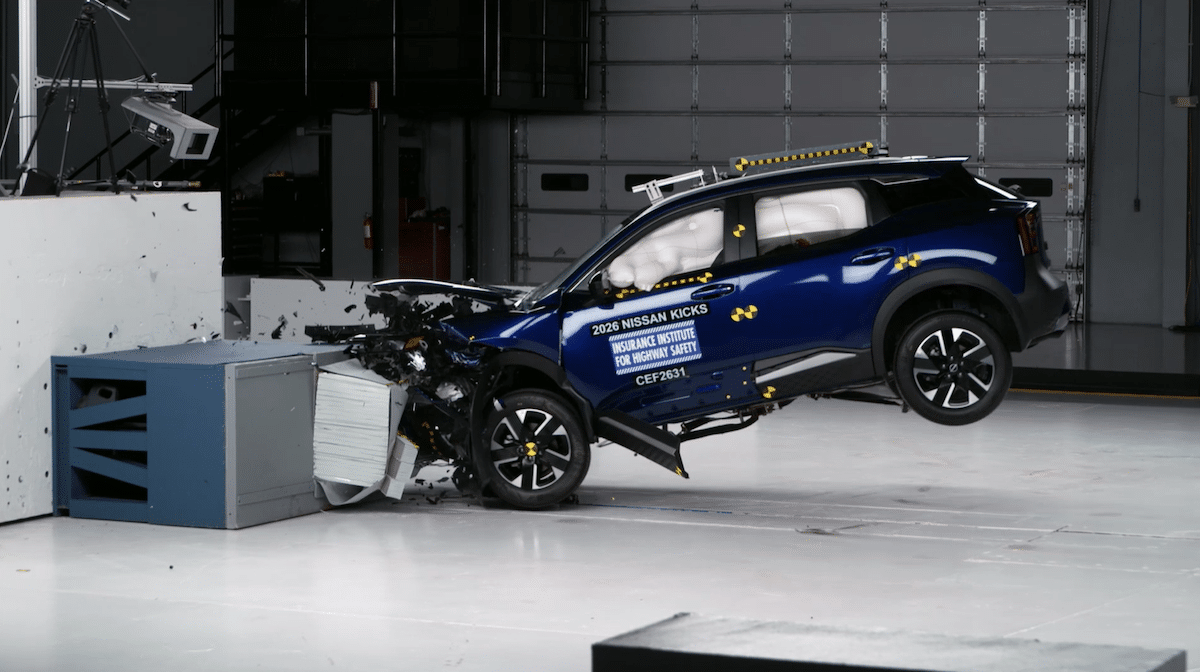
The 2026-27 Nissan Kicks has earned a Top Safety Pick award from the Insurance Institute for Highway Safety (IIHS), thanks to improvements aimed at protecting rear-seat passengers. The agency also released new ratings for five other vehicles, none of which qualified for either of its safety awards.
Redesigned for 2025, the Nissan Kicks initially stumbled in the moderate-overlap front crash test, which evaluates protection for occupants in both rows, with particular emphasis on rear-seat safety. It earned a poor rating. Nissan subsequently revised the rear seat belts. Only Kicks models built after June 2026 incorporate the changes and qualify for the award, having earned a good rating in the moderate-overlap test. All other tests resulted in Good ratings. To check a Nissan Kicks’ build date, look for the safety certification label on the driver’s door frame or sill. It lists the month and year of production.
Toyota And Audi Don’t Get The Nod
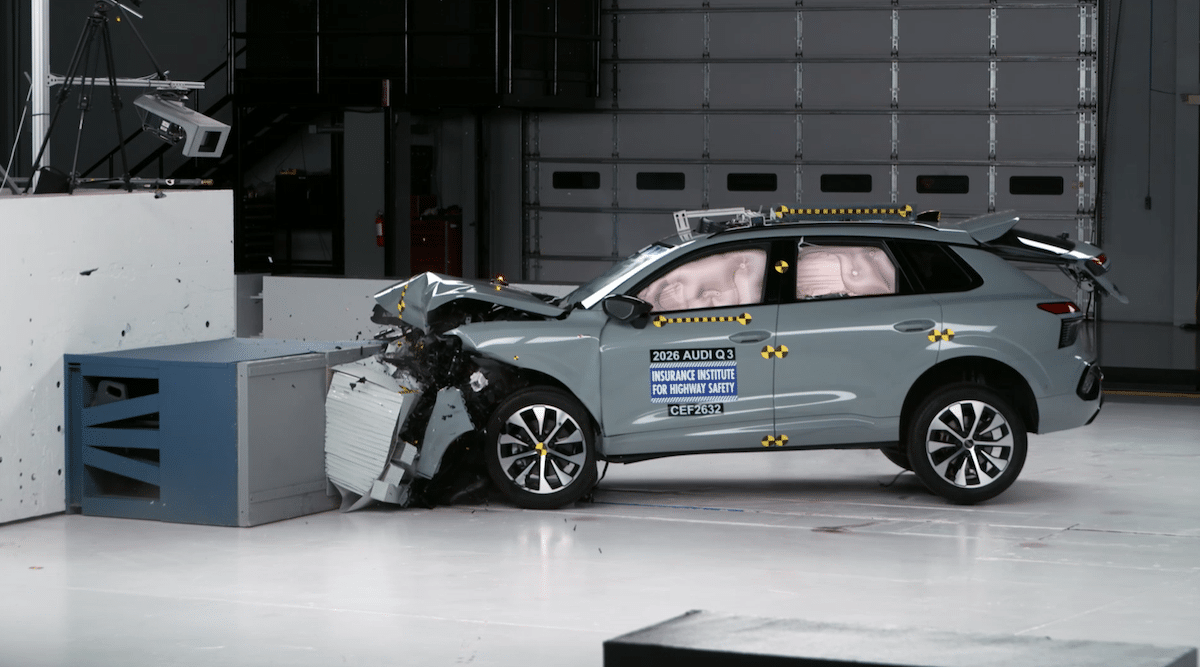
The IIHS also evaluated the 2026-27 Audi Q3, 2026 Chevrolet Trailblazer, 2026 Toyota RAV4 and RAV4 Plug-In Hybrid, and 2027 Volkswagen Jetta. None earned a TOP SAFETY PICK award, illustrating how a single subpar result can derail a vehicle’s chances, even when it performs well in other tests.
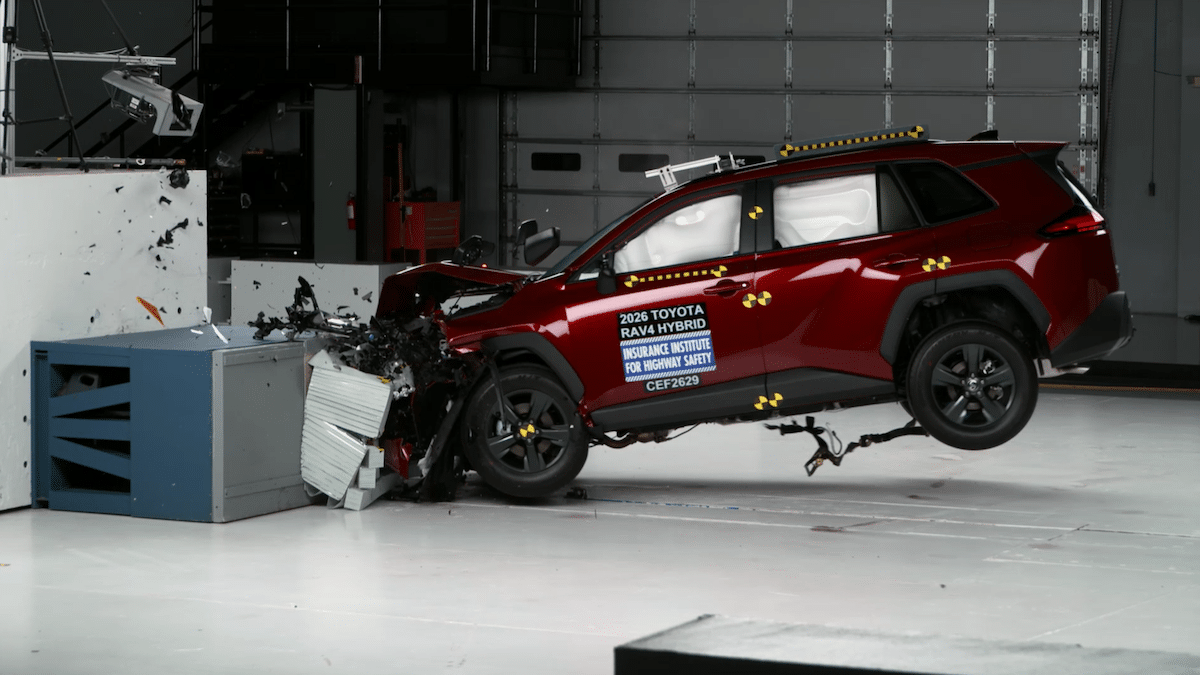
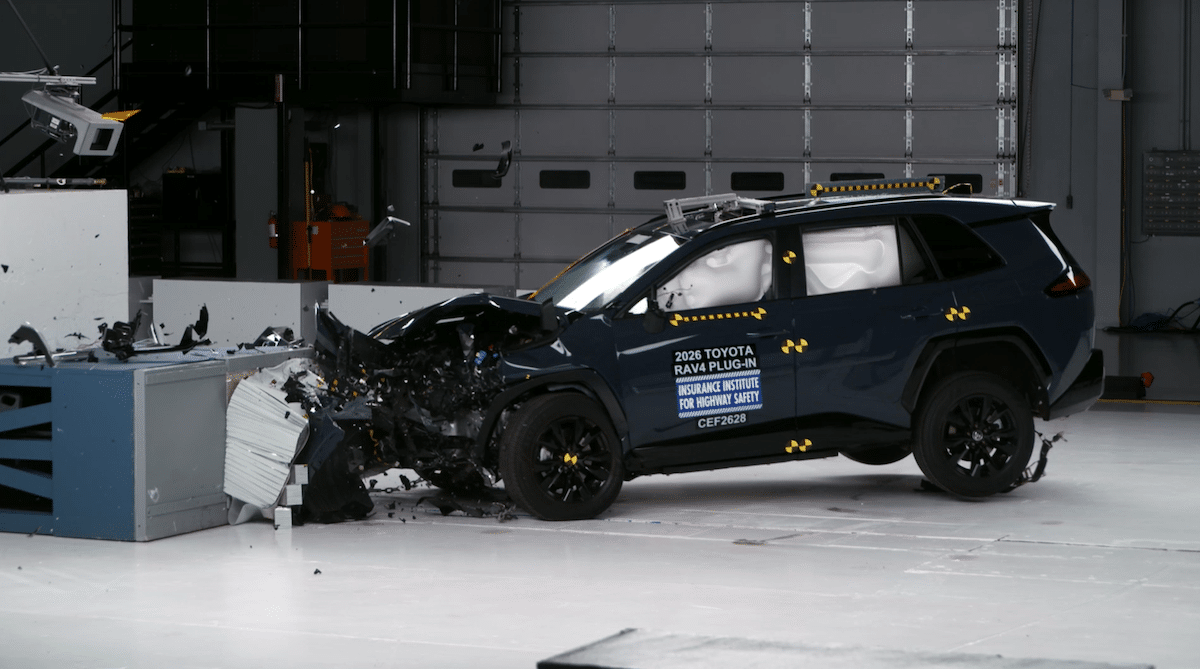
The 2026-27 Audi Q3 received a Poor rating in the moderate-overlap front crash test but earned Good ratings in all other evaluations. The 2026 Toyota RAV4 and RAV4 Plug-In Hybrid stumbled in the same test, earning Acceptable and Marginal ratings respectively, while receiving Good ratings across the remaining evaluations.
Chevrolet’s Troubling Test Scores
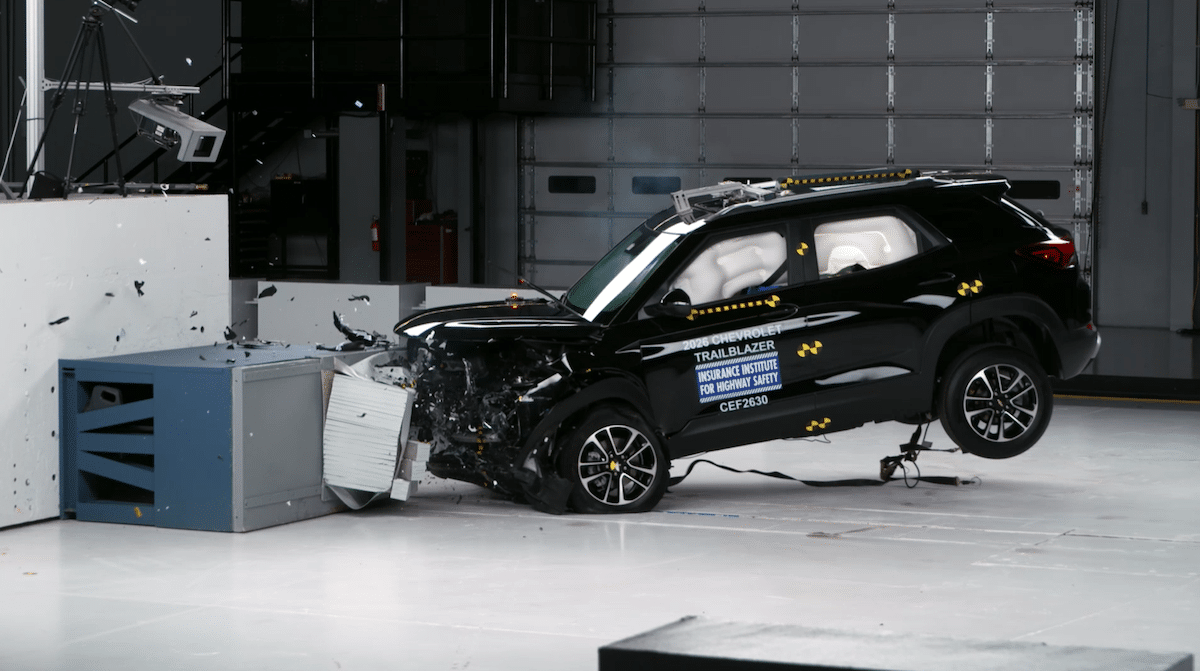
One of Chevrolet’s most affordable, and popular, small SUVs received particularly bad test results. The 2026 Chevrolet Trailblazer received Poor marks in the moderate-overlap front and front crash prevention vehicle-to-vehicle tests, as well as the headlight test. It earned a Marginal rating in front crash prevention for pedestrians, Acceptable ratings for seat belt reminders and LATCH ease of use, and Good rating for small overlap front and side crash tests.
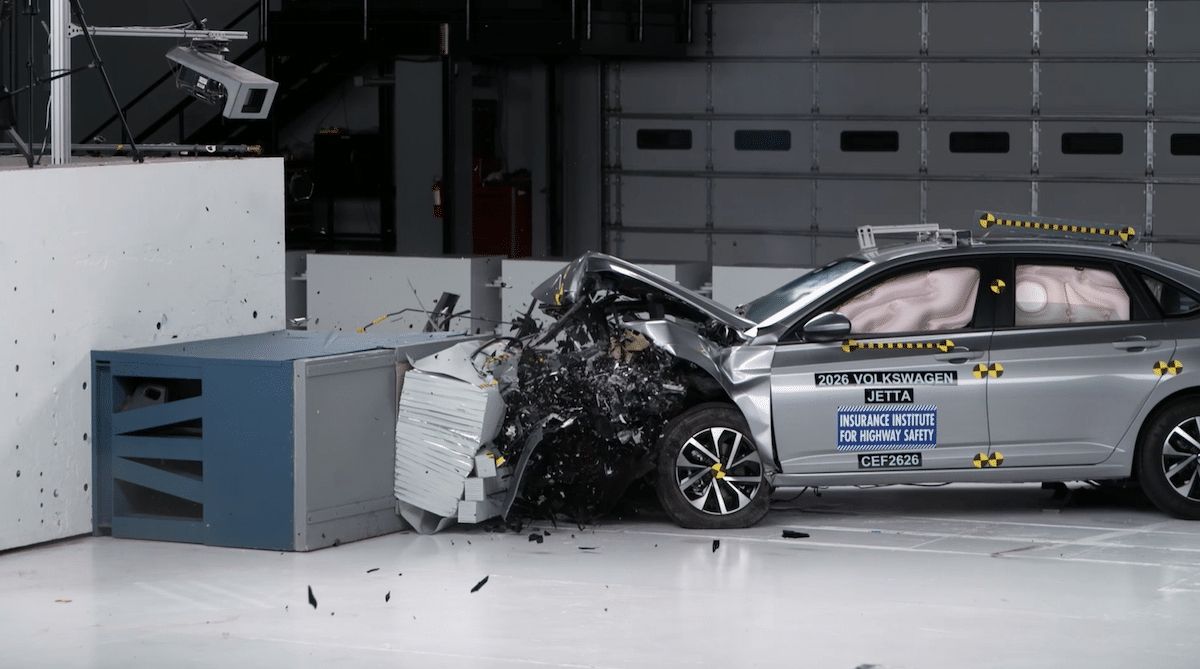
Similarly, Volkswagen’s least-expensive model, the 2027 Jetta sedan, didn’t make the cut for a mix of reasons. IIHS didn’t rate tit for seat belt reminders or vehicle-to-vehicle front crash prevention. But the Jetta earned Good ratings for small overlap front and moderate overlap front safety. Side crash testing and LATCH ease of use brough Acceptable ratings. Front crash prevention for pedestrians and headlights earned Marginal rankings.
IIHS’ Test Standards
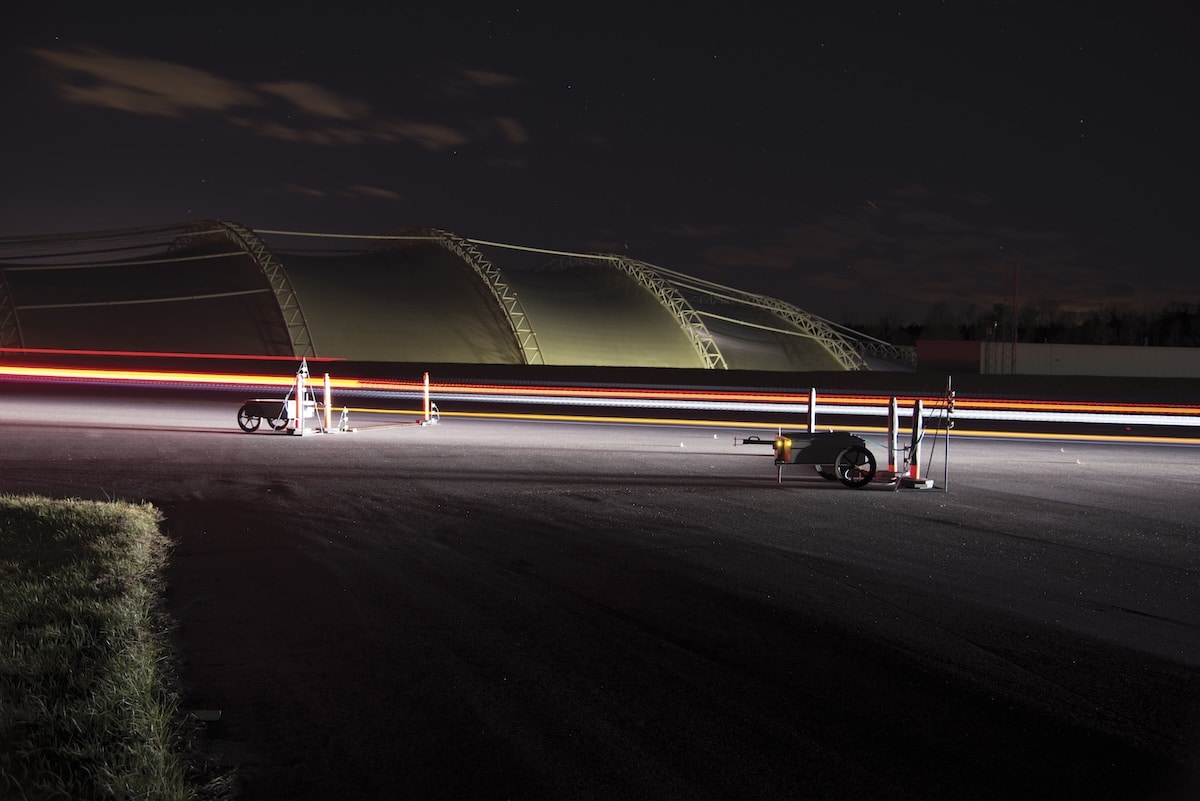
The IIHS has tightened its criteria for 2026, requiring good ratings in moderate-overlap front, small-overlap front and side crash tests, along with acceptable or good headlights across every trim level.
To earn the Top Safety Pick award, a vehicle must also receive an acceptable or good rating in the pedestrian front crash prevention test. The more demanding Top Safety Pick+ award requires a good rating in that evaluation, along with an acceptable or good rating in the updated vehicle-to-vehicle front crash prevention test introduced in 2024. Qualifying front crash prevention systems must be standard equipment for either award.
The IIHS also evaluates seat belt reminders and the ease of using LATCH child-seat anchors. Neither assessment affects award eligibility, but both appear in the accompanying ratings table and may be worth considering before buying a vehicle.
The Upshot
The latest IIHS ratings show how a single weakness can undermine an otherwise strong crash-test performance. The Nissan Kicks demonstrates that targeted improvements can make a meaningful difference, but buyers should pay attention to build dates and individual test results rather than assuming every model year offers the same protection. With tougher award criteria in place, the ratings offer another reminder that safety is about more than surviving a crash: headlights and crash-prevention technology also matter.