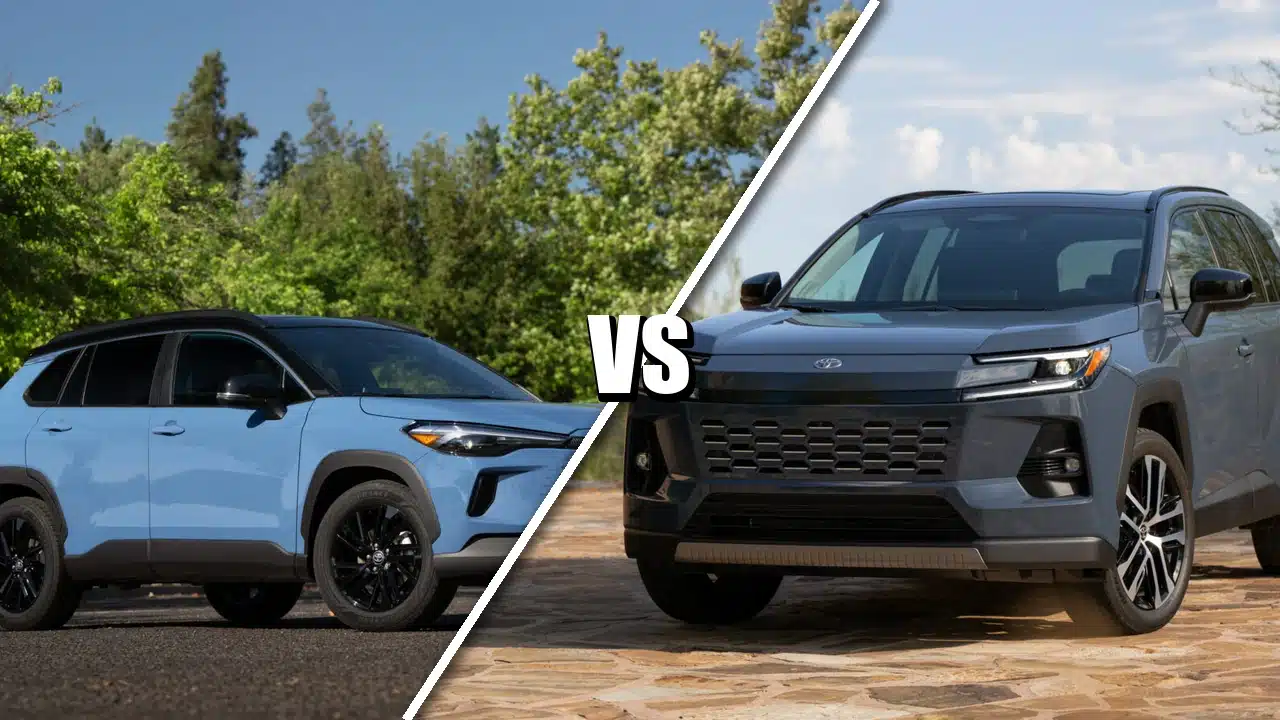
The Toyota RAV4 is the obvious starting point for a lot of compact SUV shoppers. After spending a week with the 2026 Corolla Cross XSE Hybrid, though, I think the smaller Toyota deserves a spot on the same shopping list. It handled the everyday jobs I asked of it without making me wish I had brought a bigger vehicle.
This Corolla Cross Hybrid vs RAV4 comparison brings together that weeklong review and my separate first drive of the redesigned 2026 RAV4 Limited. These were different drives on different roads, not a same-day fuel-economy or acceleration contest. The question is whether the extra room, power and equipment in the RAV4 solve a problem you actually have.
Start with the people and cargo you actually carry
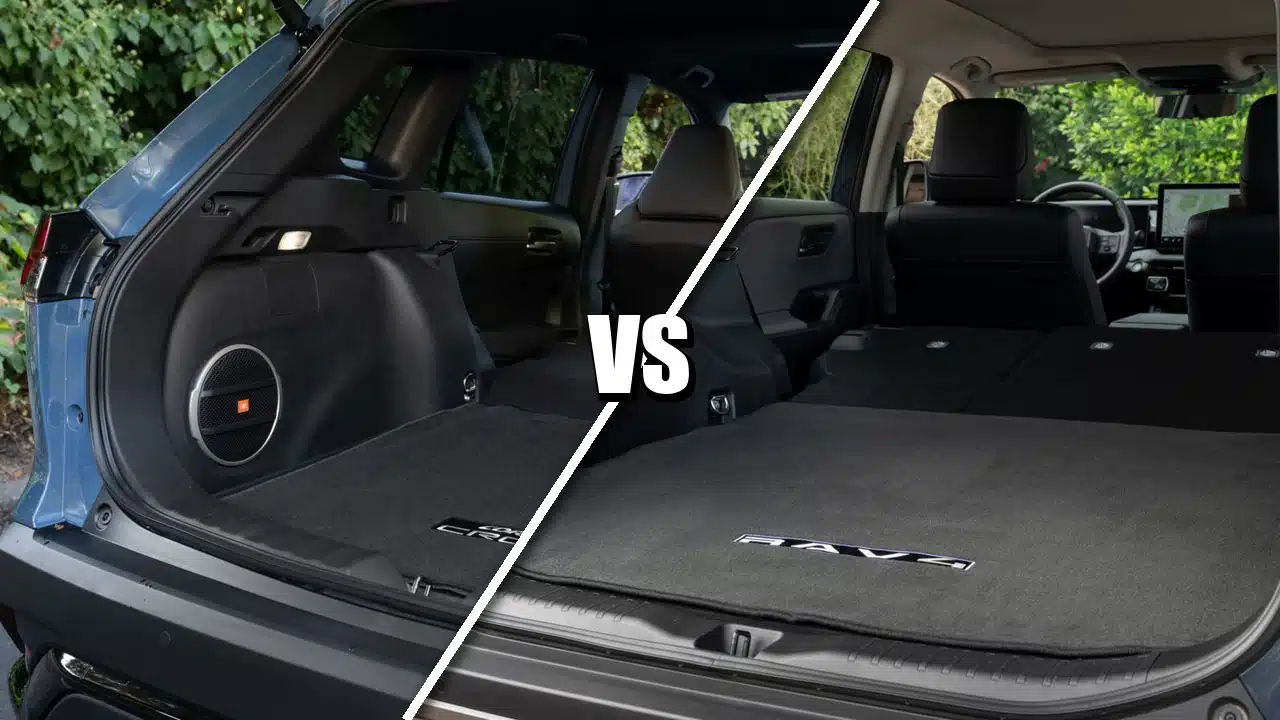
The most useful moment in my Corolla Cross review happened at the hatch. My golf bag fit across the cargo area with the rear seats still up. That may sound minor, but a load you carry regularly tells you more than a vague promise that an SUV is spacious. I also appreciated the power liftgate on the well-equipped XSE I drove.
I sat in the second row behind my own driving position and had comfortable headroom and legroom. I am 5 feet 7 inches tall, so that is a specific fit check rather than a promise for a family of six-footers. The rear air vents were welcome, too. If your back seat normally holds taller adults or bulky child seats, bring those passengers or seats along before deciding the smaller Toyota is enough.
The RAV4 gives you a bigger vehicle and a more substantial cargo area to work with. During its walkaround I found useful storage, tie-downs and a temporary spare under the floor. I did not repeat my Corolla Cross golf-bag test in the RAV4, so I am not treating the two videos as a measured loading contest.
That is the first decision: the Corolla Cross made sense for my normal errands and golf bag. Frequent family trips with everyone aboard and luggage behind them make a stronger case for moving up. Both have folding rear seats, but folding them is only useful when you do not need those seats for people.
Both are hybrids, but the RAV4 brings more power
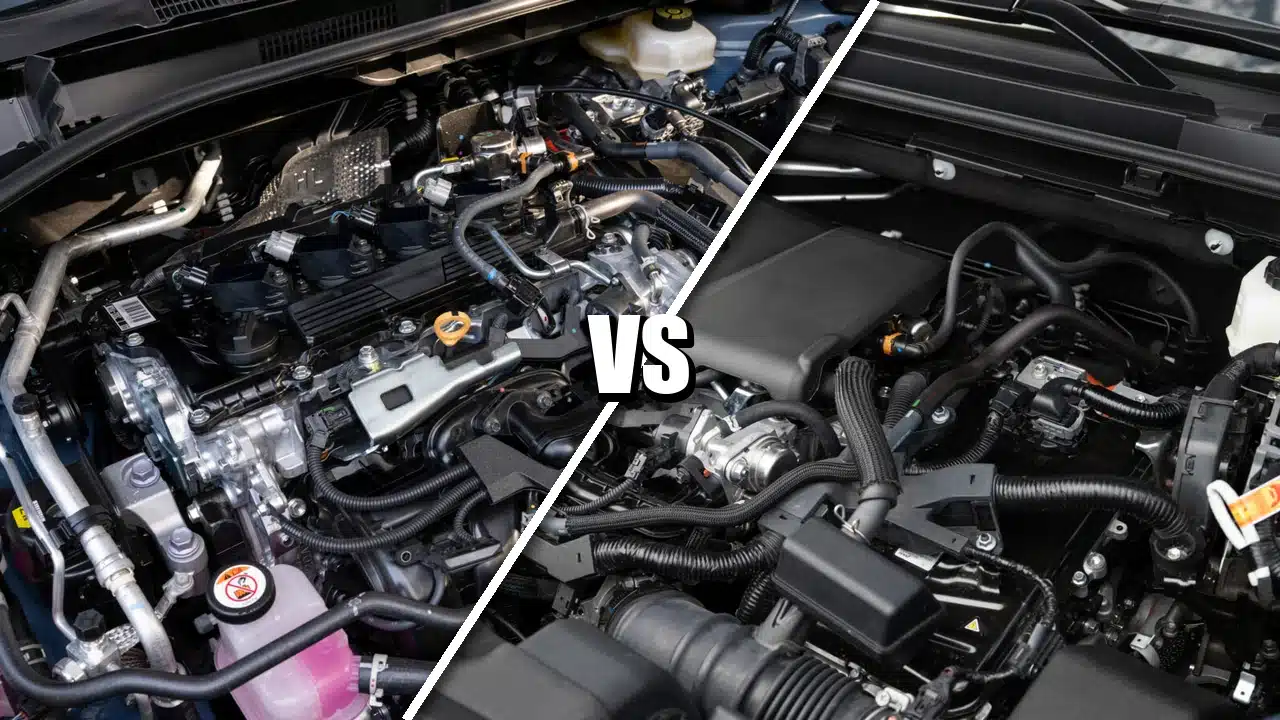
The Corolla Cross Hybrid uses a 2.0-liter four-cylinder engine and electric motors, with standard all-wheel drive. Toyota lists 196 net combined horsepower for the hybrid system. That is the appropriate total to compare with another hybrid, rather than the gas engine output alone.
The 2026 RAV4 Limited I drove has a 2.5-liter hybrid system, standard all-wheel drive and 236 net combined horsepower. Some other RAV4 hybrid trims offer front-wheel drive with 226 horsepower. The plug-in RAV4 is a separate powertrain and is not the vehicle being compared here.
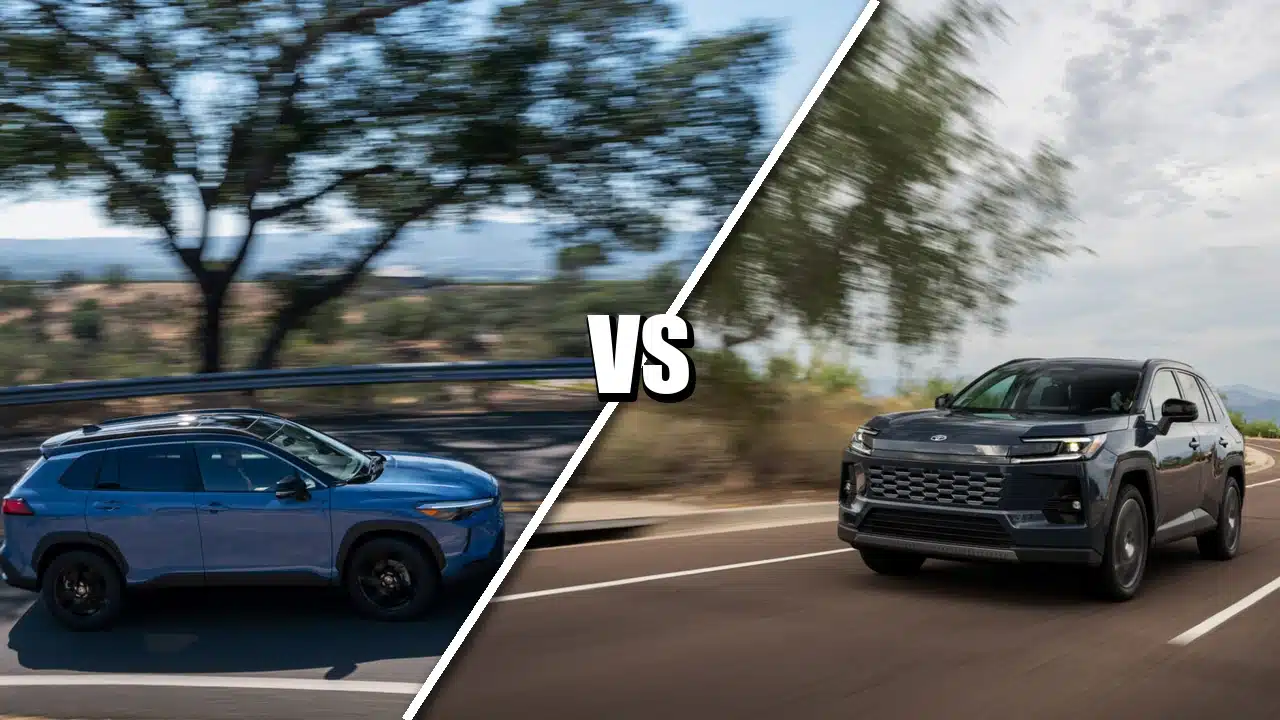
On the road, I found the Corolla Cross an easy everyday commuter. It was not trying to deliver a Lexus-like ride, but the driving experience fit its practical mission. In the RAV4 first drive, the smoother, more linear acceleration stood out compared with the previous RAV4 generation. That is a separate observation from declaring it faster in a timed test against the Corolla Cross.
Toyota quoted a 42-mpg combined estimate for the Corolla Cross Hybrid in its model announcement. My videos did not provide a controlled, same-route fuel-economy comparison, and broad RAV4 lineup claims should not be applied to every trim. Use the window stickers for the exact two vehicles you are shopping. Neither of these conventional hybrids needs to be plugged in.
The Corolla Cross keeps things familiar; Limited adds more toys
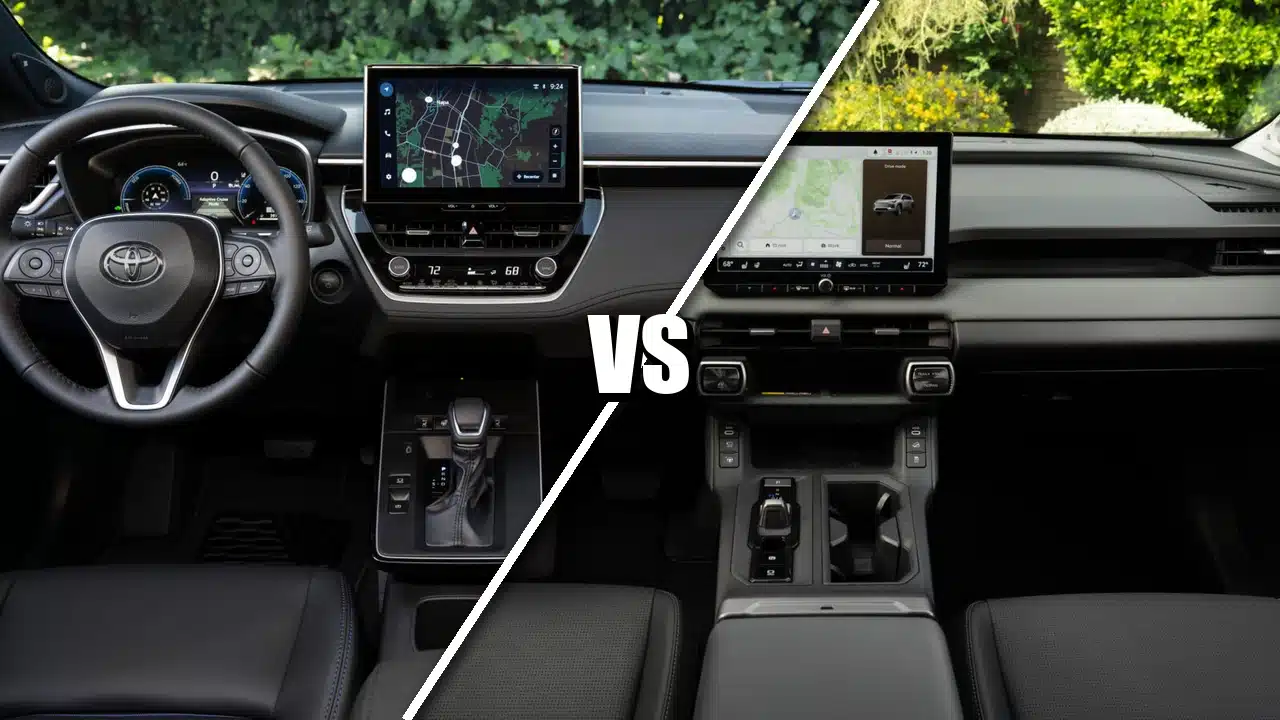
The Corolla Cross XSE had the conveniences I wanted without feeling especially complicated. Its 10.5-inch touchscreen, separate climate controls, wireless phone charger, heated seats and heated steering wheel made the cabin feel well equipped. I liked the visibility, including the small windows near the front pillars.
The RAV4 Limited takes the equipment further. Its 12.9-inch center screen and 12.3-inch driver display give it a different presentation. The new multimedia system, two wireless charging pads and compact shift-by-wire selector also change how the center console works. I demonstrated those controls in the first-drive video rather than assuming every RAV4 has the same setup.
The Limited also had heated rear outboard seats and a panoramic roof. Those are meaningful upgrades if passengers use them. They do not automatically make the Corolla Cross a poor choice for someone who mostly drives alone. Lower RAV4 trims and lower Corolla Cross trims have different equipment, so keep the actual trim names attached to the comparison.
I found the RAV4 seats comfortable, although some road noise remained noticeable. The Corolla Cross was comfortable enough for its commuter role, too. A bigger screen and extra features are easy to count. Whether the seating position and controls suit you takes a test drive.
Compare the actual deals before paying for more SUV
The loaded Corolla Cross XSE Hybrid in my review was approximately $37,000. That should not be confused with the roughly $25,000 entry point I mentioned for the broader Corolla Cross range, which includes gas-only models. A base gas Corolla Cross and a loaded hybrid XSE are different purchases.
Toyota announced a $31,900 starting MSRP for the 2026 RAV4 Hybrid in front-wheel-drive form, before its dealer processing and handling fee. That is also not the price of the Limited I drove. Comparing the Corolla Cross test vehicle with the least expensive RAV4 would tell you very little about the difference between two similarly equipped examples.
My takeaway is to start smaller and prove that you need to move up. If the Corolla Cross fits your passengers, cargo and parking space, its straightforward controls and hybrid powertrain give you plenty to work with. I would not buy a larger vehicle simply because RAV4 is the more familiar name.
The RAV4 becomes more compelling when you will regularly use the additional room, want the stronger hybrid system or specifically value the Limited equipment. Neither a weeklong review nor a first drive establishes long-term reliability. Choose between these two around the job they need to do, then compare real out-the-door quotes for the right trims.
Based on my 2026 Corolla Cross XSE Hybrid review and my 2026 RAV4 Limited first drive. Specifications checked against Toyota’s Corolla Cross announcement and RAV4 model release. The Corolla Cross video includes a ScreenProTech promotion. Comparison graphics use Toyota-supplied photographs.