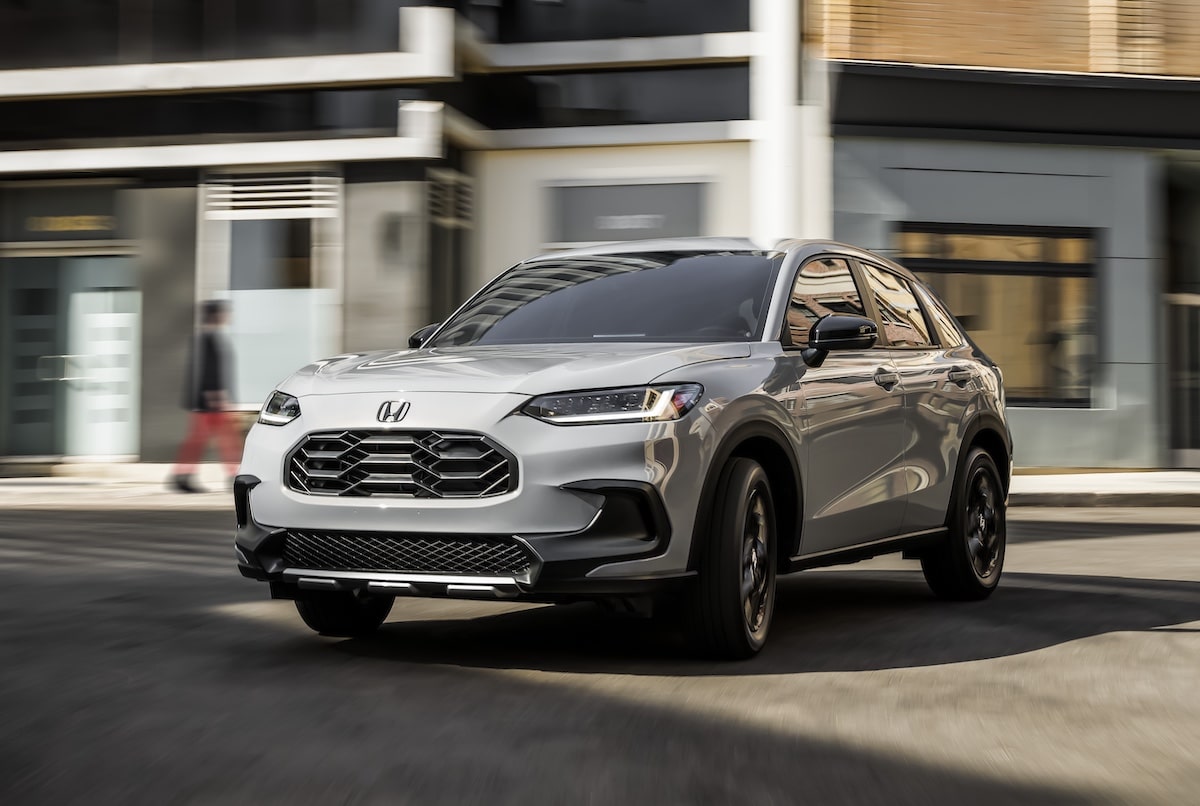
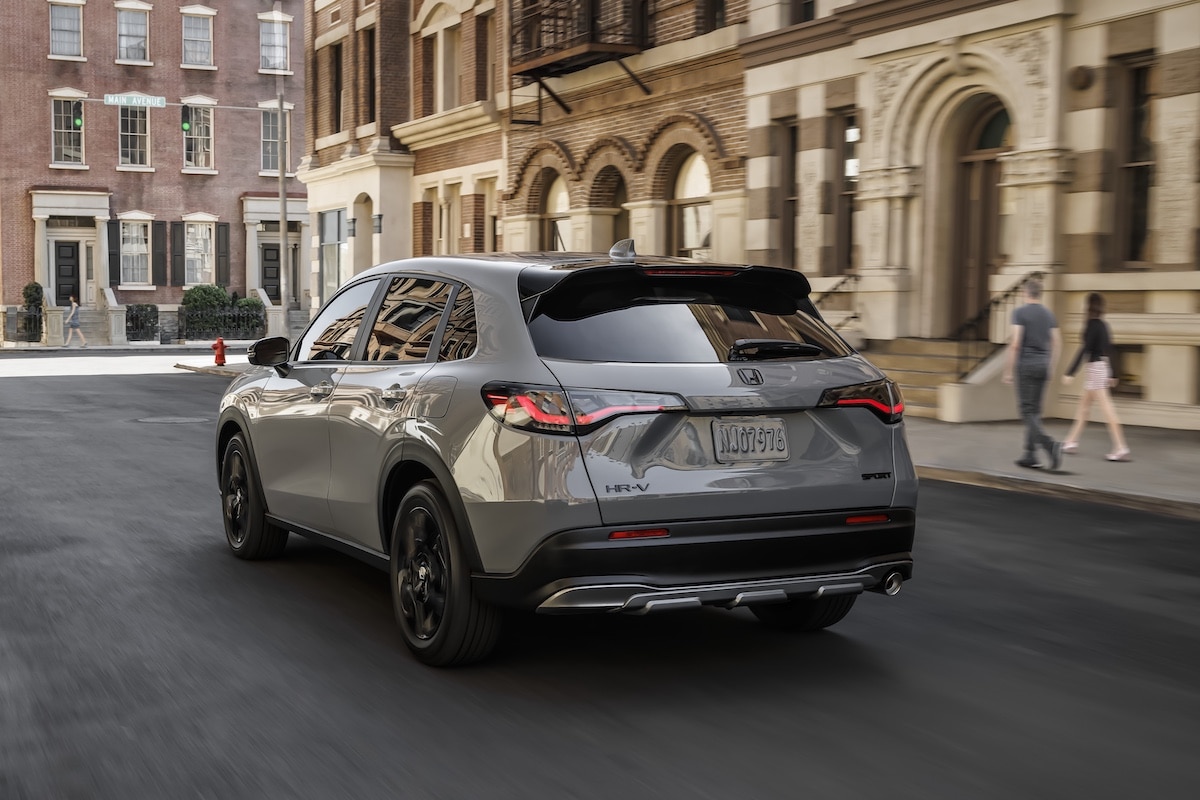
There comes a point in every successful young professional’s life when the sports coupe is traded for something sensible. Not because they’ve lost their passion for driving, mind you, but because life has a way of introducing dogs, bicycles, weekend trips to IKEA, and occasionally children. The 2026 Honda HR-V is practical without being dreary, responsible without being joyless, and just stylish enough that you won’t feel compelled to park it around the corner when your neighbors are watching.
SIZING UP THE HONDA HR-V
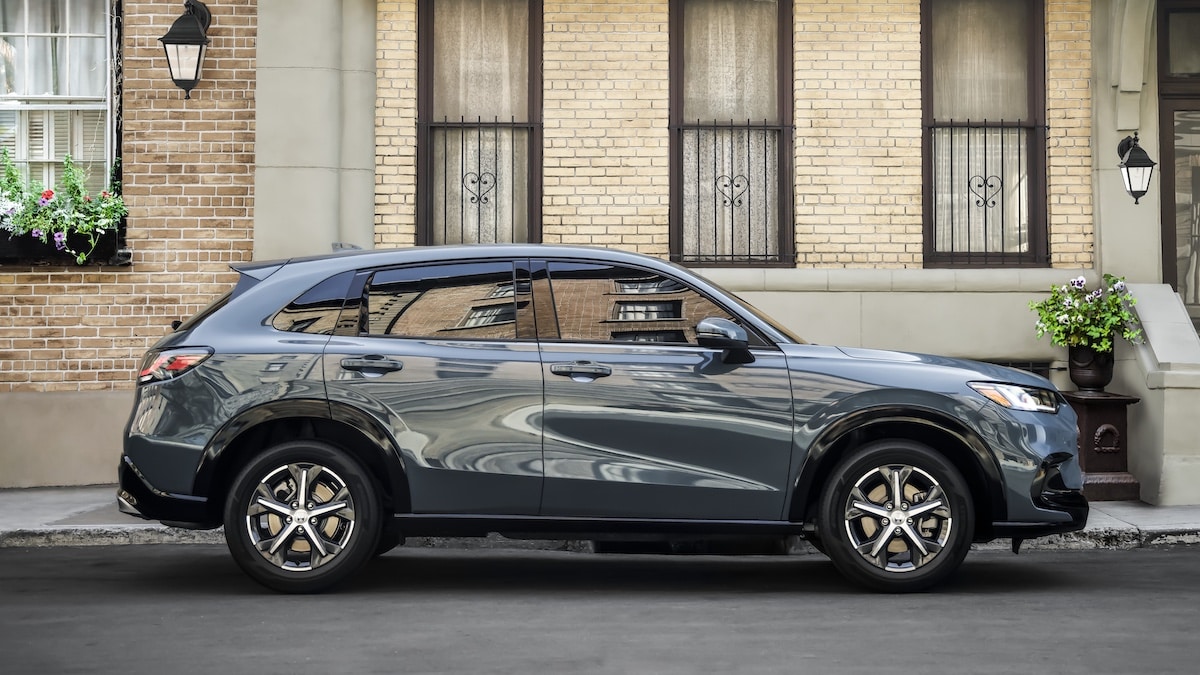
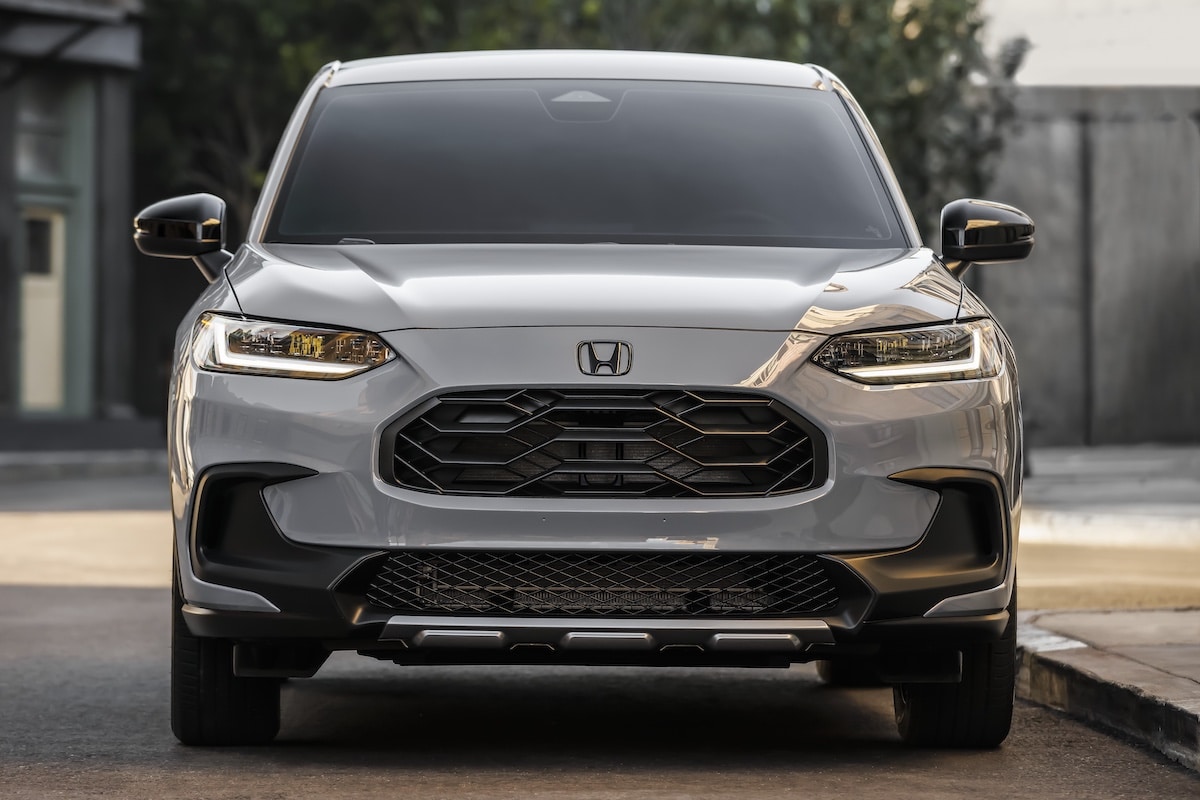
Offered in ascending LX, Sport, and EX-L trim levels, the subcompact 2026 Honda HR-V remains the smallest crossover in Honda’s American arsenal, although small is now a matter of perspective. This generation’s growth spurt transformed the HR-V from an overinflated economy hatchback into something approaching a proper compact utility vehicle. It stretches nearly ten inches longer than the original model and rides on the same basic architecture as the Civic.
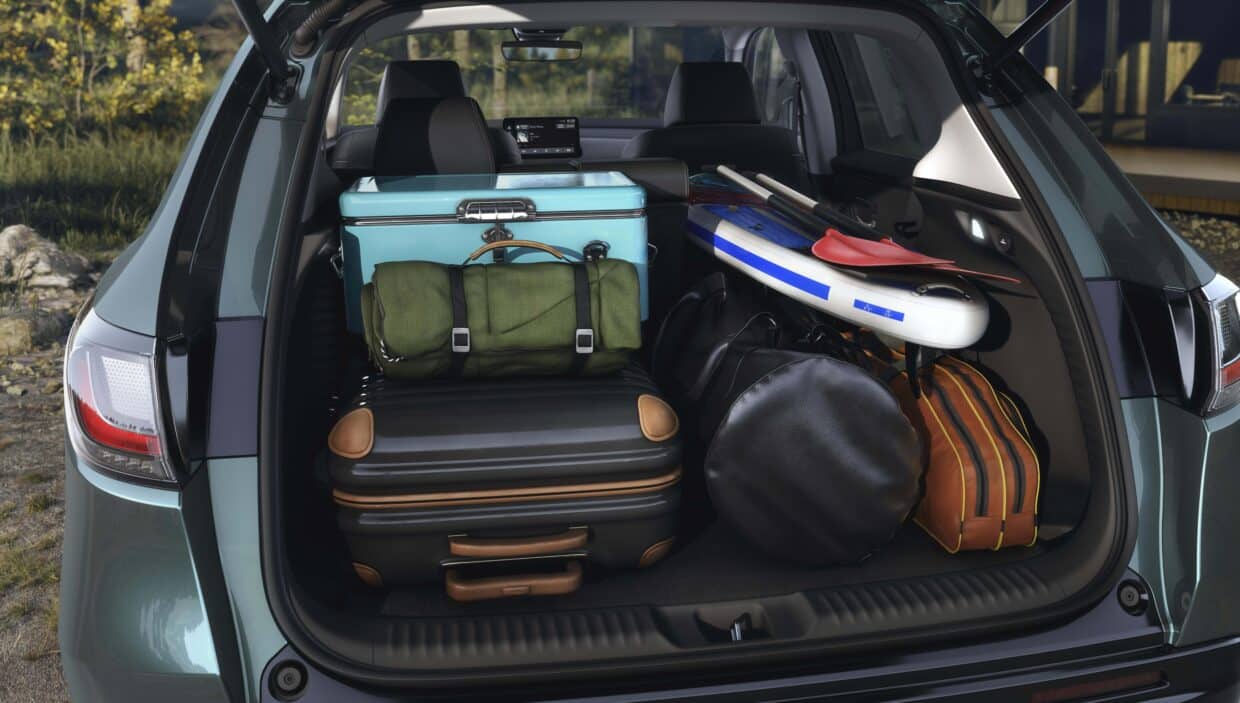
Curiously, all that additional sheetmetal doesn’t translate into cavernous cargo space. Passenger volume and cargo capacity are merely competitive rather than class-leading. In fact, the cargo arear is unchanged in size from the previous generation, despite the vehicle being nearly a foot longer.
CLIMB INSIDE THE HONDA HR-V
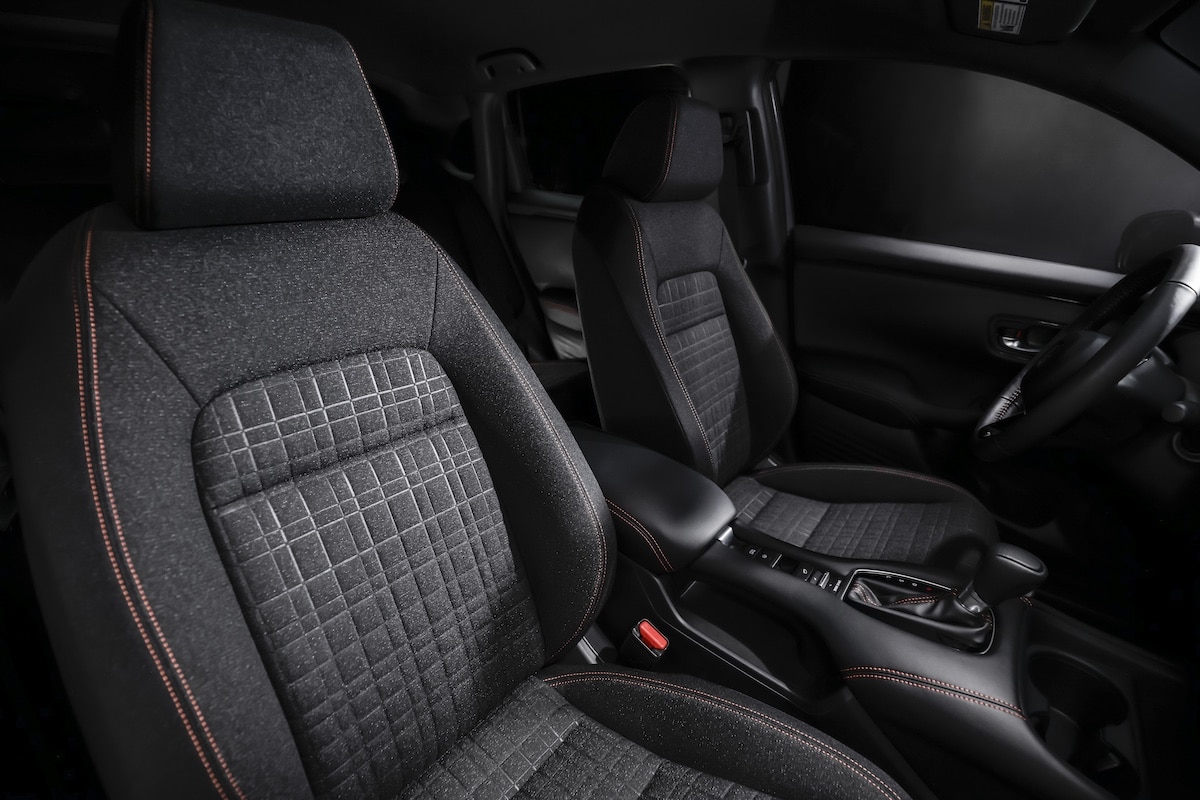
Still, the Civic bones have worked wonders elsewhere. The cabin has matured dramatically. Gone is the old HR-V’s bargain-basement collection of plastics and rental-car ambiance. In its place is a clean, sensible dashboard that embraces Honda’s long-standing philosophy that controls should be where your hands expect them to be rather than where a software engineer thinks they ought to live.
The EX-L trim does its best to impersonate a luxury car, with leather-trimmed seating surfaces, soft-touch materials scattered strategically throughout the cabin, and enough tasteful detailing to make you forget that certain door panels remain stubbornly hard plastic. The front seats are comfortable, visibility is excellent, and the driving position is nearly ideal. The driver’s seat gets power adjustment; the passenger remains sentenced to manual labor. Rear-seat accommodations are perfectly adequate, although the cushion sits somewhat low and flat, reminding occupants that THE HONDA HR-V the HR-V still lives in the affordable end of suburbia.
Let’s Talk Tech
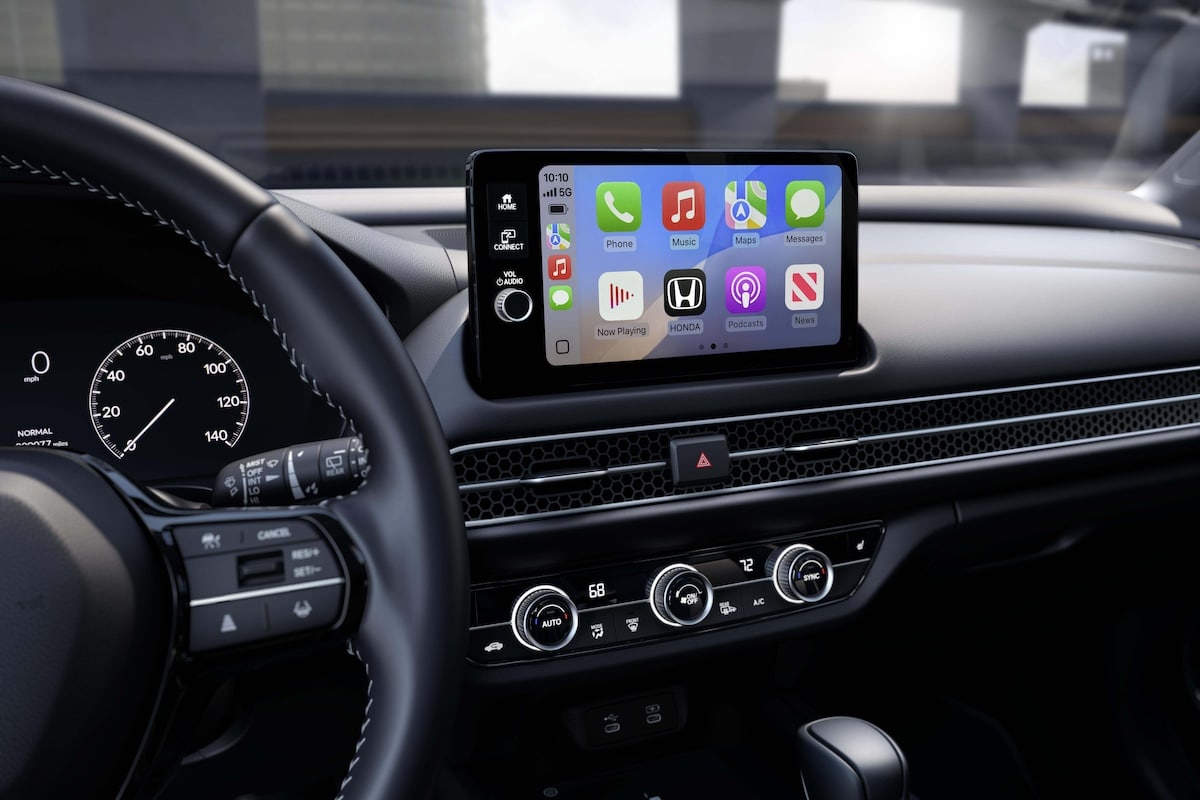
Technology is similarly straightforward and updated from previous years. All models now come with a 9-inch touchscreen with wireless Apple CarPlay and Android Auto, a wireless smartphone charging pad and a respectable audio system. None of it is revolutionary, but it all works, which in today’s automotive landscape qualifies as a small miracle.
Time To Move
Under the hood, Honda continues with its naturally aspirated 2.0-liter four-cylinder producing 158 horsepower and 138 pound-feet of torque. The numbers won’t inspire anyone to write poetry, but they are sufficient for the task at hand. A continuously variable transmission remains standard, paired with either front- or all-wheel drive.
Fuel economy remains respectable, hovering around the high-20-mpg range depending on drivetrain configuration, and regular unleaded fuel is all it asks for. In an era when some compact crossovers demand premium fuel while delivering economy-car performance, that’s a welcome act of restraint.
WHAT IT’S LIKE
The powertrain’s greatest virtue certainly isn’t speed. But the engine is refreshingly free of the turbocharged hesitation that afflicts many small crossovers. Place the drive mode selector in Sport and the HR-V develops a modest enthusiasm for forward progress. Not enough enthusiasm to frighten your insurance agent, mind you, but enough to merge confidently and navigate modern traffic without developing an inferiority complex.
The biggest surprise remains the way the HR-V drives. Earlier versions handled with all the precision and excitement of a shopping cart with a bent wheel. The current model is genuinely competent. Steering is light but predictable, body motions are well controlled, and the suspension exhibits a level of composure that would have seemed unimaginable in the first-generation HR-V.
No, it isn’t sporty. If you arrive at a mountain road hoping for a Civic Si on stilts, disappointment awaits. But the HR-V corners with confidence, absorbs rough pavement with grace, and feels planted at highway speeds. Push hard enough and body roll enters the conversation, but grip remains reassuringly strong. Ride quality is good for the class, although Honda still hasn’t entirely solved its longstanding relationship with road and tire noise.
The Upshot
What’s most impressive is how thoroughly civilized the HR-V has become. It no longer feels like an economy car pretending to be a crossover. It feels like a genuine Honda: solid, refined, thoughtfully engineered, and entirely comfortable with its place in the automotive hierarchy.
The old HR-V was eager but unsophisticated, a caffeinated little buzz bomb perpetually operating at the edge of its abilities. The 2026 model has learned some manners. Just don’t let that go to its head. HR-V still doesn’t stand for His or Her Royale Vehicle