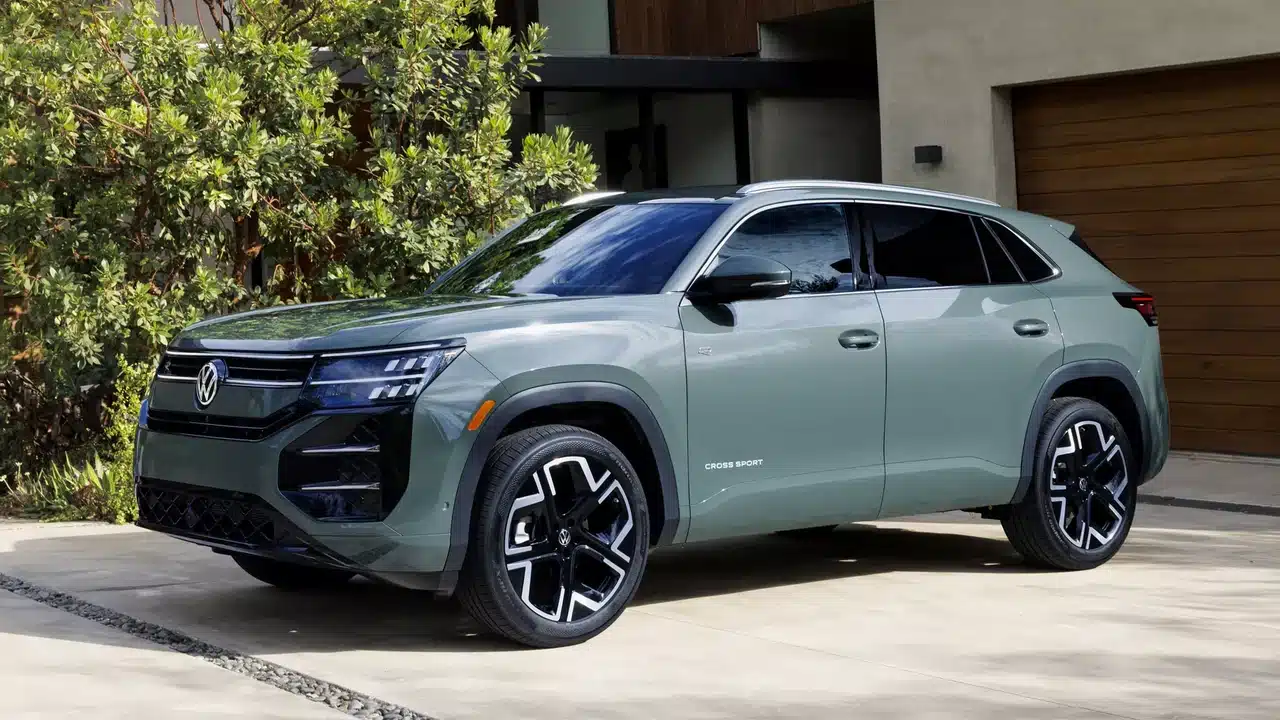
The 2027 VW Atlas Cross Sport is getting a complete redesign, a stronger turbocharged engine and a much more ambitious interior. Buyers hoping the new generation means an immediate hybrid option will have to keep waiting: Volkswagen plans that powertrain for a later midcycle refresh.
For the launch model, the changes focus on the things shoppers use every day, including more standard convenience equipment, bigger displays and available massaging front seats. Here are four things to know before the redesigned five-seat SUV reaches dealerships in early 2027.
A stronger turbo engine comes first; the hybrid comes later
The new Atlas Cross Sport uses the latest evo5 version of Volkswagen’s EA888 2.0-liter turbocharged four-cylinder. It produces 282 horsepower and 258 pound-feet of torque, with a variable-geometry turbocharger among the mechanical changes. That is 13 more horsepower than the outgoing engine.
An eight-speed automatic transmission remains part of the formula. Front-wheel drive is standard, and 4Motion all-wheel drive is available across the lineup. Volkswagen expects better fuel economy, but its announcement does not provide final EPA ratings. More power and an efficiency promise are useful starting points; actual mileage numbers still matter.
The hybrid is a separate, later development planned for the midcycle refresh. It should not be confused with a launch option for the 2027 model. VW has not provided its output or an on-sale date in this announcement.
Five seats, a shorter body and up to 5,000 pounds of towing
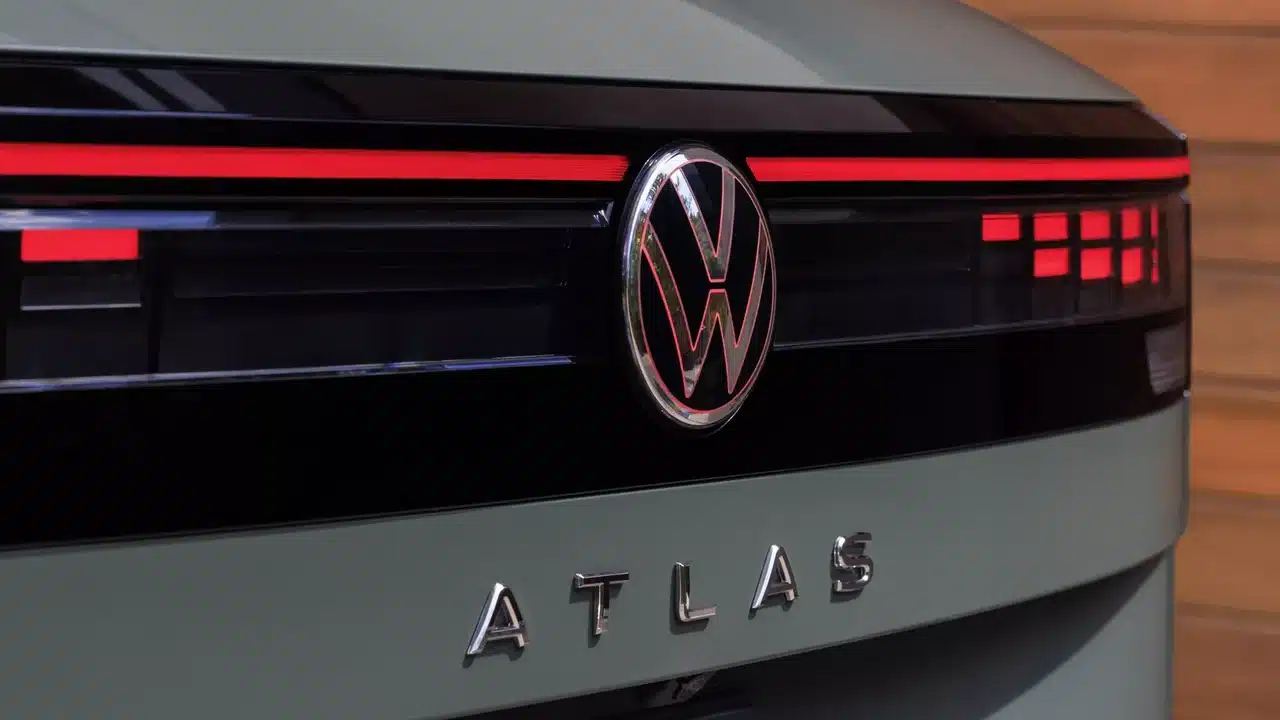
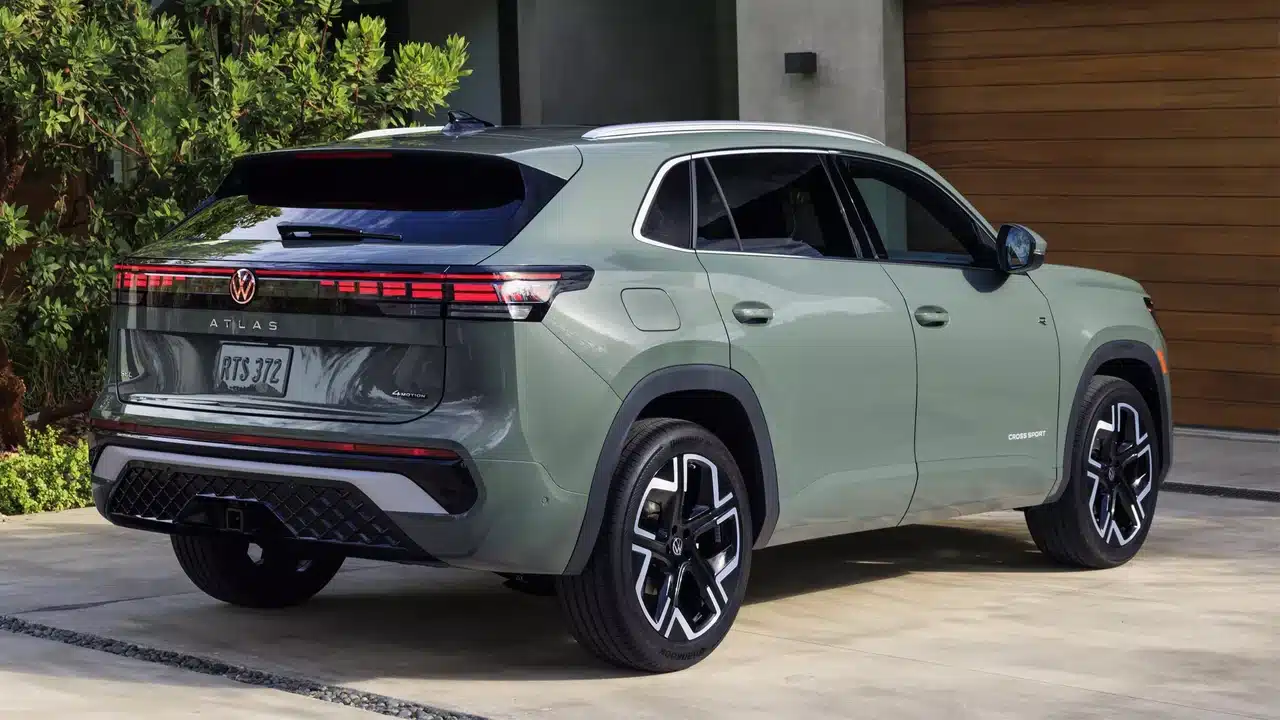
The Cross Sport remains the two-row alternative to the three-row Atlas. The new model measures 195.6 inches long, making it 5.4 inches shorter and 2.1 inches lower than the redesigned 2027 seven-seat Atlas. A sloping rear roofline and shorter rear overhang give it a different shape without adding a third row buyers may not need.
It moves to Volkswagen’s MQB Evo architecture and continues to be assembled in Chattanooga, Tennessee. VW describes the rear-seat legroom and cargo area as generous, but the reveal does not include final cargo-volume figures. Those specifications will be worth checking when comparing it with other midsize SUVs.
Maximum towing remains 5,000 pounds. That rating requires the factory-installed hitch and an appropriate third-party trailer brake controller for a braked trailer. Passengers, cargo, accessories and options can reduce available towing capacity.
More comfort equipment becomes standard
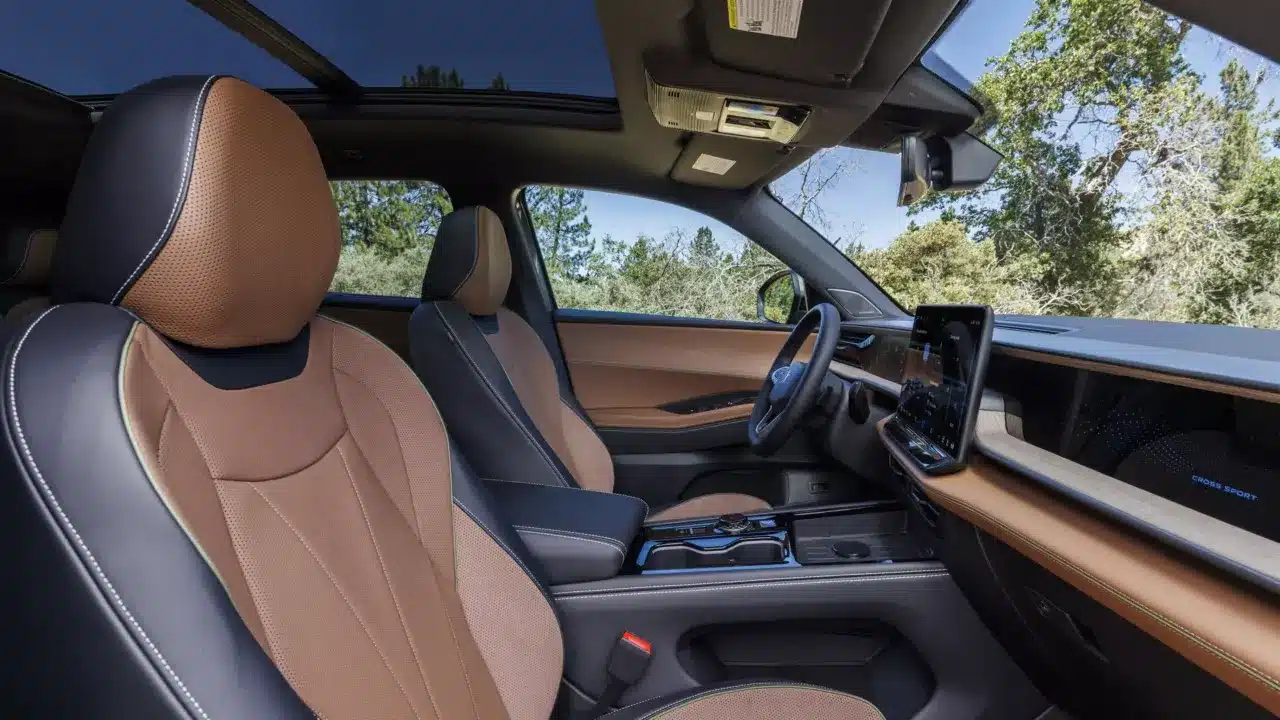
A power liftgate with Easy Open, rear sunshades, an auto-dimming driver-side mirror and front and rear parking sensors join the standard equipment list. Every model gets a revised 12-way driver’s seat with four-way lumbar support. These are practical upgrades that do not require buying the most expensive trim.
The more luxurious features remain trim dependent. Upper models offer thigh support and an improved full-back massage function for the front seats. Leatherette is standard on entry trims, while the upper two trims use Varenna leather and Nappa leather, respectively. Available passenger-seat memory is another addition.
New exterior colors include Dark Sage Metallic, Blackberry Metallic and Sandstone. The entry model uses 18-inch wheels; other trims get new 20- or 21-inch designs. The larger wheels are a styling choice shoppers should weigh against ride comfort and replacement-tire costs.
Bigger screens, a physical dial and pricing still to come
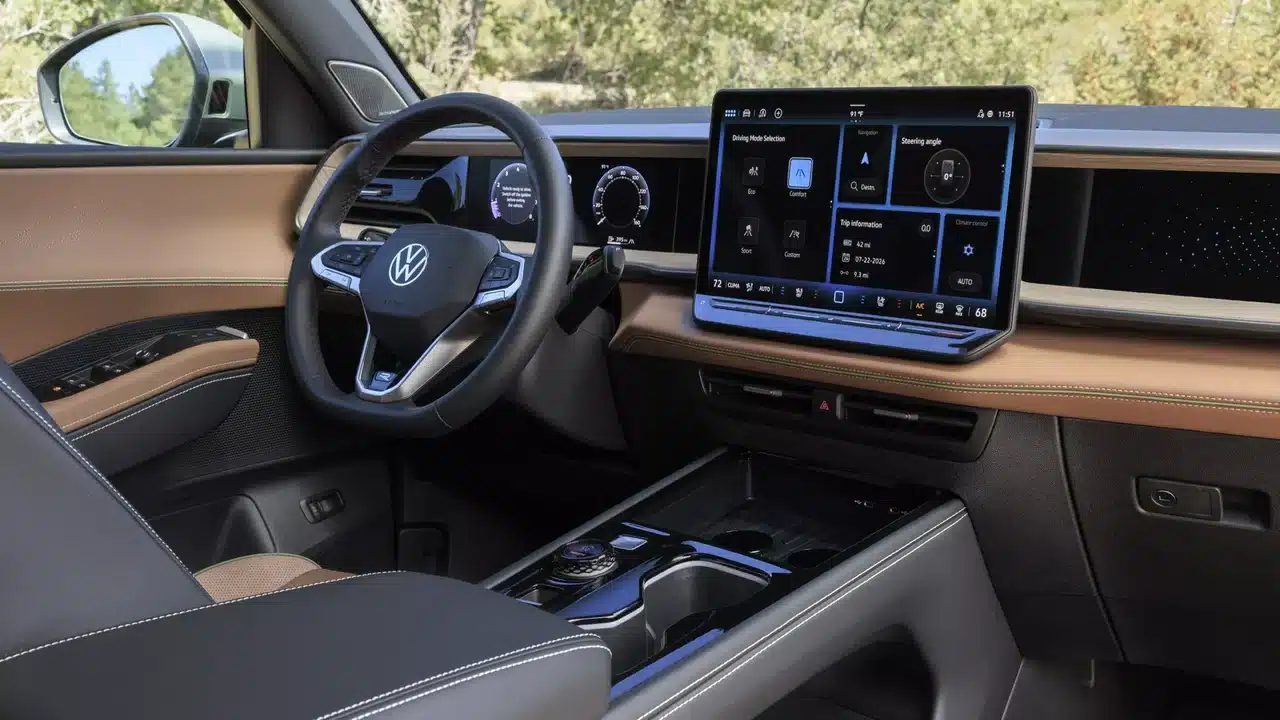
A 12.9-inch touchscreen is standard on the entry trim, with a 15-inch display fitted to most models. All versions have a 10.25-inch Digital Cockpit Pro instrument display. A physical Driver Experience Dial in the console handles volume, drive modes and coordinated lighting and audio settings.
The console accommodates two phones side by side with updated Qi2 wireless charging. Volkswagen also lists five USB-C ports. Some connected features, including available navigation, enhanced voice functions and Wi-Fi, are part of its In-Vehicle Premium subscription package; shoppers should check the included term and ongoing cost.
Updated Travel Assist adds driver-initiated lane changes while remaining a hands-on assistance system. Seven airbags include a new front center airbag. These features support the driver rather than replacing attention behind the wheel.
Volkswagen says pricing, further specifications and additional details will be released before the early-2027 launch. Until then, the clearest reason to wait is the broader redesign and equipment update—not a confirmed bargain price or a hybrid arriving immediately. Source: Volkswagen’s U.S. announcement. For the three-row alternative, see our 2027 Volkswagen Atlas coverage.