
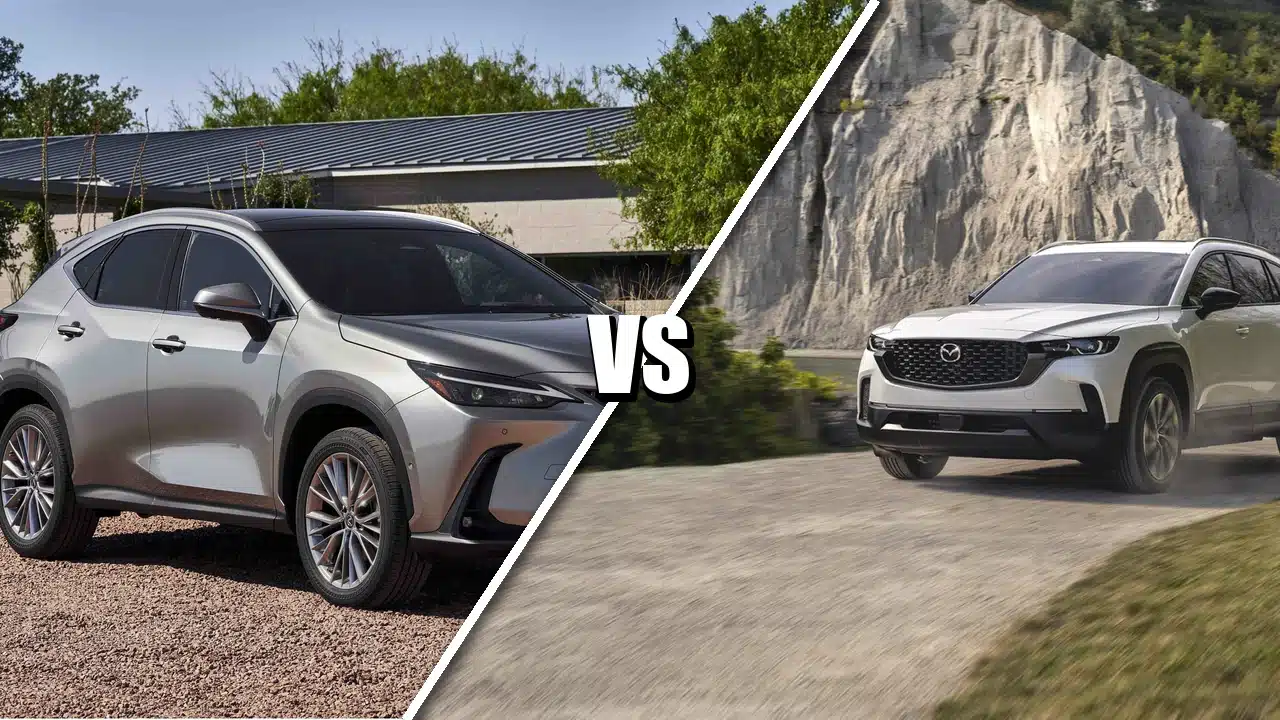
The 2026 Lexus NX 350h F Sport Handling I drove cost $58,264. The 2026 Mazda CX-50 Hybrid Premium Plus in my separate review was approximately $43,000. That is roughly a $15,000 difference between the two test vehicles, and it raises a fair question: what am I getting for the extra money?
After driving both, I would start with the seats before getting lost in the equipment list. I liked the Lexus’s styling and handling, but its heavily bolstered front seats did not fit me comfortably. My wife and I enjoyed the Mazda’s everyday driving feel. Neither SUV escaped criticism, and these separate reviews were not a same-day instrumented comparison.
The Lexus handles well, but try those seats first
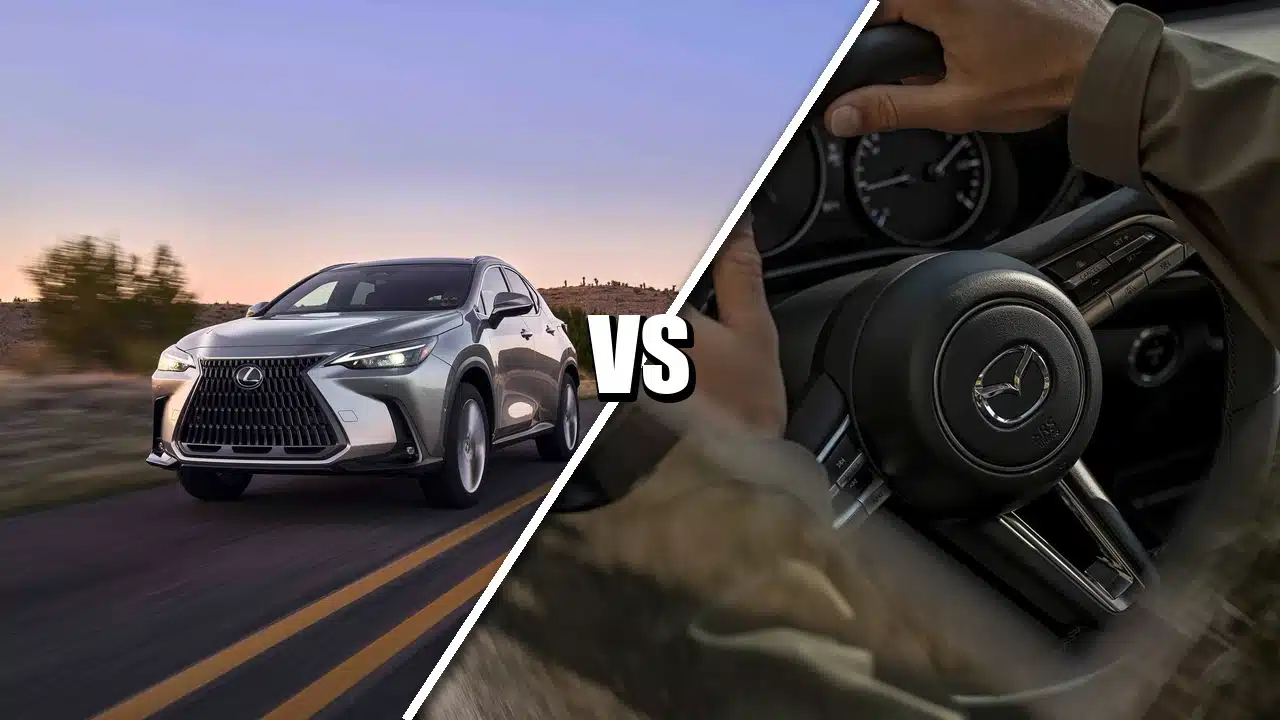
The NX 350h F Sport Handling combines a conventional hybrid powertrain with a sportier chassis and appearance package. Lexus added this grade to the hybrid lineup for 2026. Adaptive suspension, 20-inch wheels and the different exterior treatment give it a stronger personality than a basic commuter SUV.
On the road, I enjoyed its controlled response through corners. It felt composed, and the hybrid had enough acceleration for my normal driving. This was not a sports-car performance test, but I understood the appeal of adding the handling package to a compact hybrid SUV.
The front seats were the sticking point. Their pronounced side bolsters felt too confining for my body. In fact, I preferred sitting in the rear seats. That is a fit issue worth taking seriously before paying for a package that makes every drive less comfortable for you. Someone with a different build may love the same seats.
The Mazda made a better everyday impression on my wife and me during its review week. We previously owned a CX-5, so she had a useful reference for how a Mazda responds to steering and braking. She found the CX-50 easy to get used to, responsive and enjoyable. We also found the cabin reasonably quiet and the drive comfortable. That does not prove it rides better than the Lexus on every road, but it gives a shopper a reason to try both.
Hybrid badges do not make these the same SUV
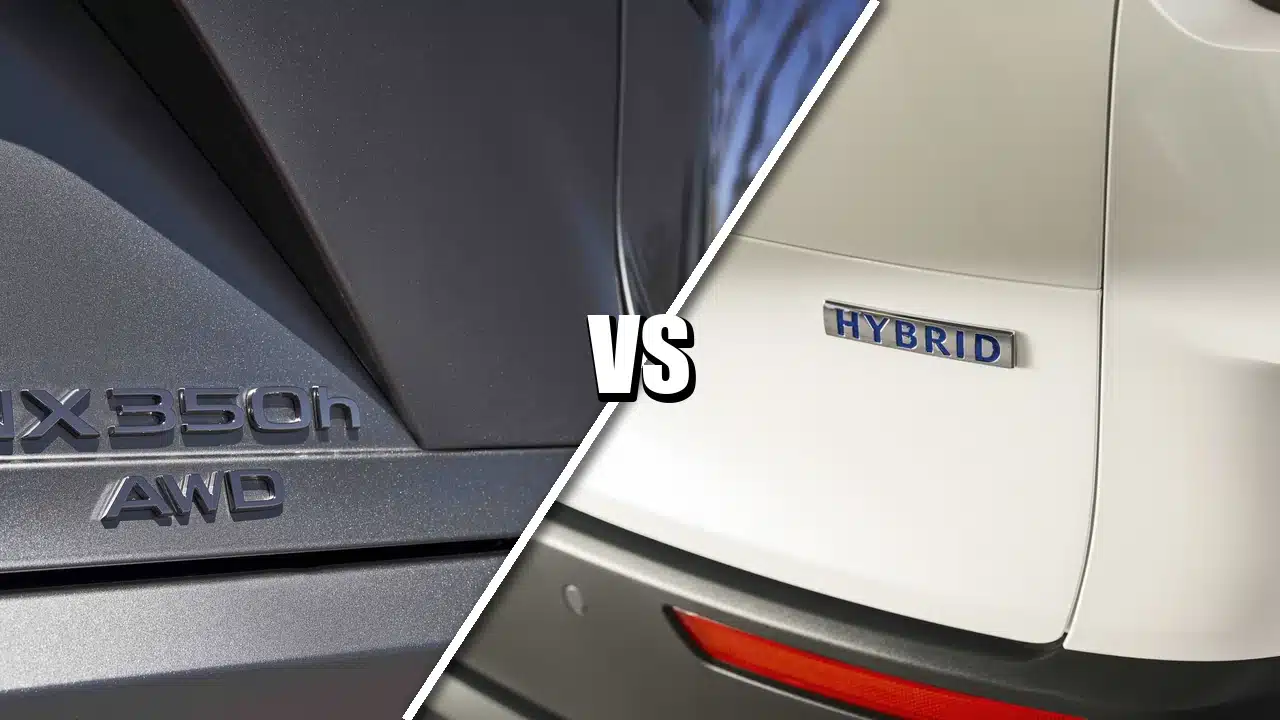
Both test vehicles were conventional hybrids with all-wheel drive. Neither requires plugging in. The Lexus uses a 2.5-liter four-cylinder hybrid system rated at 240 net combined horsepower. The Mazda’s 2.5-liter hybrid system produces 219 horsepower and also uses an electronically controlled continuously variable transmission.
Those figures describe the combined hybrid systems. They should not be confused with the output of a gasoline engine alone. The Mazda hybrid is also a separate powertrain from the Skyactiv-G engine and six-speed automatic offered in the gas-only CX-50. My video explanation blurred that distinction, so it is worth getting it right here.
I found the Lexus reasonably quick in normal use, although it was not going to overwhelm anyone with acceleration. Its transition between electric assistance and the running engine was more noticeable in one part of the drive and smooth in another. I also found its brakes a little touchy.
In the Mazda, merging onto the interstate did not feel like a struggle, and my wife liked how promptly the vehicle responded to her inputs. We did not record comparable acceleration runs or run these two hybrids over the same fuel-economy route. A horsepower advantage alone does not settle which one you will prefer in traffic.
Bring your passengers and your usual cargo
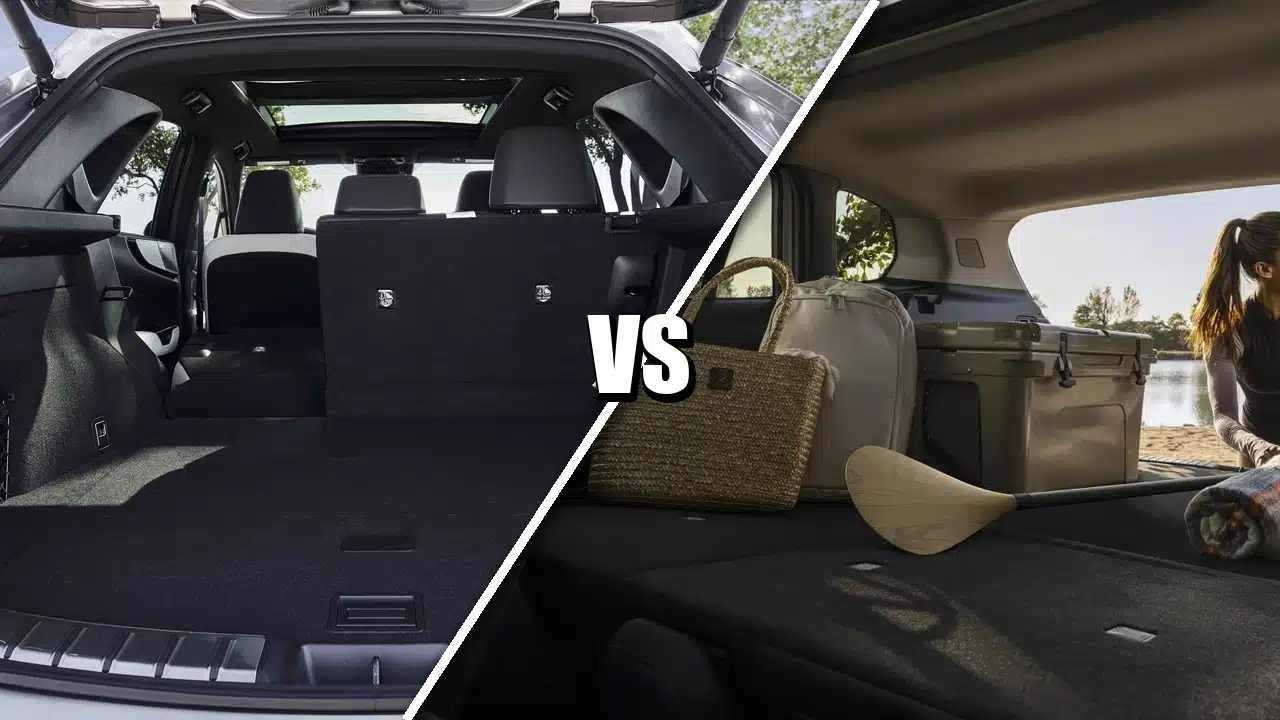
My NX cargo demonstration used a golf driver laid across the back. It fitted, but that was not a complete golf bag. I noted that carrying the bag could mean angling it or folding a rear seat. In the Mazda review, I showed my bag and tripod in the cargo area. These were different demonstrations, so I would not turn them into an invented measured cargo contest.
The rear-seat observations are more useful as a warning to try your actual family. At roughly 5 feet 7 inches tall, I could sit in the Lexus’s second row, with comfortable seats and enough headroom. I was less enthusiastic about spending a very long road trip there.
My wife’s experience with the Mazda exposed a different limitation. Her tall father needed the front passenger seat moved back, which left little room for our son behind him. Getting her father in and out also highlighted the relatively tight headroom through the opening.
That matters more than whether a brochure calls either vehicle spacious. Set the front seats for the people who will use them, then sit behind those positions. Bring the child seat, golf bag or other awkward load that normally travels with you. Paying for a luxury badge does not automatically solve a packaging problem, and enjoying the Mazda’s steering does not create more second-row room.
Decide which equipment improves your daily drive
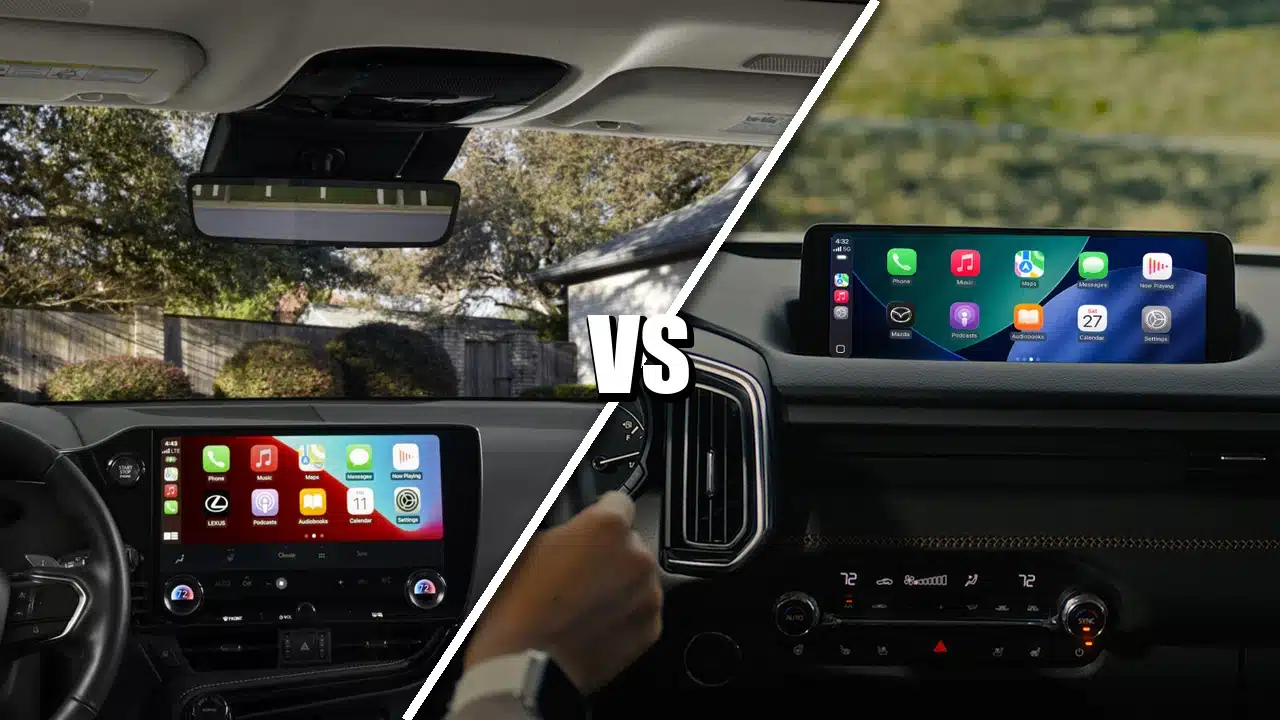
The Lexus test vehicle had features including a head-up display, Mark Levinson audio and a panoramic roof. Its electronic door releases and steering-wheel controls also gave it a different feel. My kids needed time to understand the door operation, and the shifter required some familiarity when selecting neutral for a car wash. Those are details to try during a demonstration, not simply tick off on a shopping list.
The Mazda Hybrid Premium Plus already brought plenty of comfort equipment. Heated rear seats and a heated steering wheel were added to this trim for 2026, alongside equipment such as ventilated front seats and a windshield-projected driving display. Its central controller was prominent in my review. My attempt to touch the native menu should not be read as a blanket statement that phone-integration touch functions are unavailable; the operating mode matters.
The approximately $15,000 difference here belongs to these two reviewed vehicles. It is not the price difference between every NX and every CX-50. A less expensive Lexus grade changes that calculation, and options, destination charges and dealer pricing need to be treated consistently when comparing actual quotes.
For my priorities, the Mazda made a strong case through its comfortable everyday feel and lower tested price. The Lexus had real appeal in its styling, equipment and composed handling. I would only pay the extra money after confirming that its particular seats and controls improved my daily experience. If the F Sport seats do not fit, try a different NX grade before dismissing the entire lineup. A short review of either vehicle cannot establish long-term reliability.
This comparison draws on my Lexus NX review and Mazda CX-50 review, with specifications checked against Lexus and Mazda.