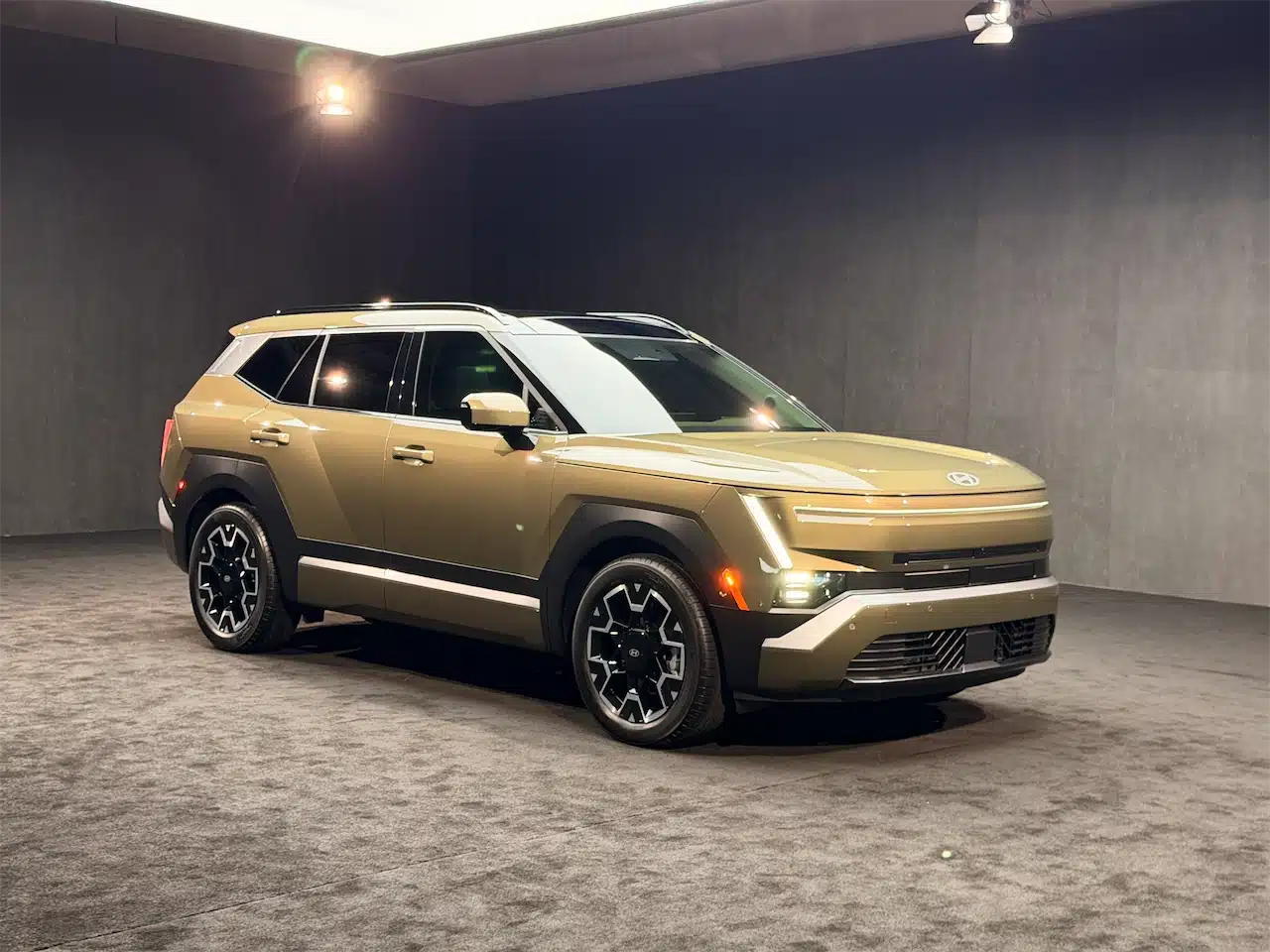
The Hyundai Tucson is an immensely valuable vehicle for the Hyundai brand. Hyundai sold over 250,000 Tucsons in North America in 2025, a 14% jump over the year before, and the U.S. accounts for roughly 20% of the Tucson’s cumulative global sales. So when Hyundai rolls out a whole new, ground-up redesign for the 2027 Hyundai Tucson, it’s a big deal.
I was in New York City for the world premiere of the 2027 Hyundai Tucson, which Hyundai unveiled against the Manhattan skyline. I didn’t get to drive this one, so consider this a first look. But I did get plenty of time to fully inspect it, and there is a lot of cool stuff to walk you through.
Art of Steel Design: Wider, Longer, and Built to Look Tough
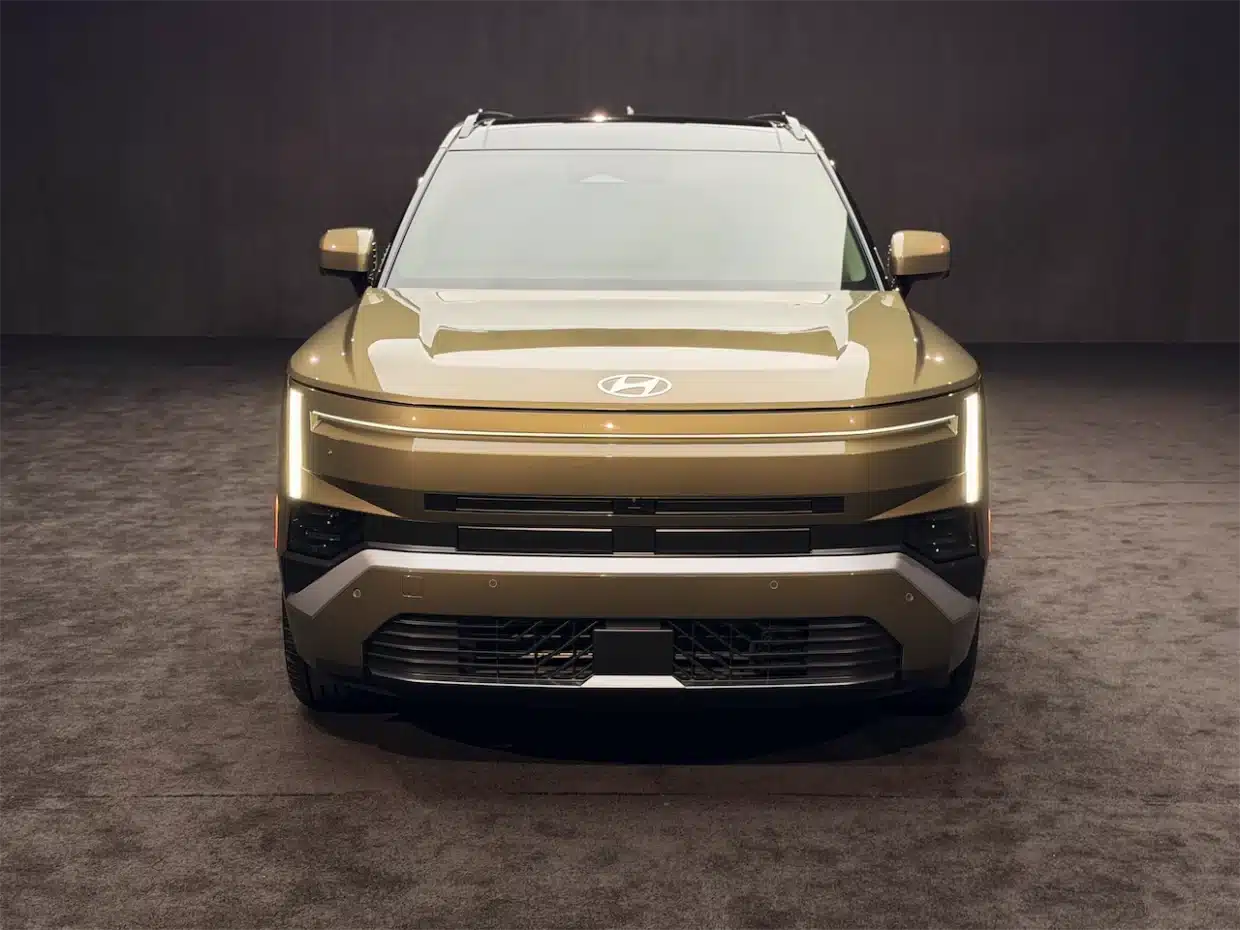
Hyundai calls its new design language the “Art of Steel,” and it’s the tough, aggressive look you will be seeing across the entirety of the Hyundai lineup. It’s muscular, angular, and chunky, and it’s designed to emphasize the overall width and strength of the vehicle. Just like steel: very strong, very capable.
The new face of the Tucson is going to become very familiar to Hyundai owners and fans over the next few years, as it is set to inspire other vehicles in the lineup. The 2027 Tucson is about 1.6 inches wider than the model it replaces, and Hyundai accentuates that even further with vertical LEDs at the corners and an LED light bar that runs across the front. Hyundai calls it H-Edge lighting, and it’s a bit of visual trickery that makes the Tucson appear even wider than it actually is. It has that strong, rugged appearance while staying maneuverable, parkable, and livable in daily life.
The headlights are mounted low on the fascia, and there are active grille flaps that open and close to help with fuel economy. Pop the hood and you’ll find a clamshell design that stretches all the way to the edges of the body, again playing up the width and boldness of this SUV.
Overall, the Tucson has grown about 2.4 inches in length (to roughly 185 inches) with 1.2 inches of that added between the wheels. More on why that matters when we get to the back seat. It also sits about 0.8 inch taller.
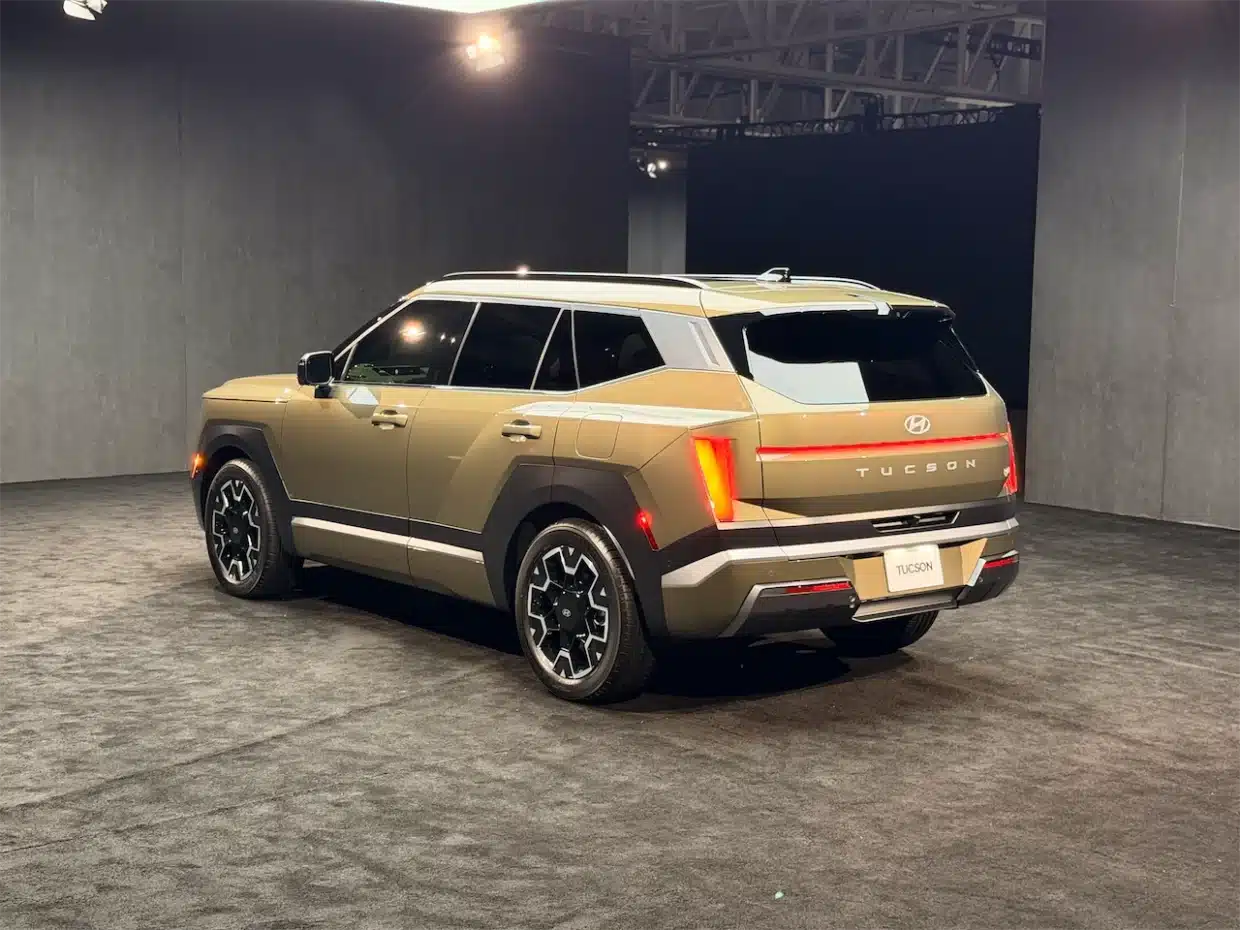
Wide-set fenders front and rear, a boxy overall shape, and blocky two-tone wheels all add to the ruggedness. The top trim I looked at rode on 19-inch wheels wrapped in Michelin tires, with wheel sizes ranging from 17 to 20 inches across the lineup. There’s also a floating roof design, with a metallic panel separating the body side from the roof.
Out back, the vertical taillights (Hyundai calls them Prism Rear Lamps) accentuate the width of the rear end, connected by a horizontal light bar. Are you noticing a motif here? Those are H’s for Hyundai, and you’ll find them all over this vehicle. The Hyundai logo has also moved out from behind the glass and back onto the rear hatch, with “TUCSON” spelled out very boldly underneath.
Hyundai is offering new nature-inspired paint colors as well, including Ranger Green Pearl and Red Rock Orange Pearl. The automaker says color availability may vary by market.
2027 Hyundai Tucson Hybrid: 233 Horsepower and Up to 42 MPG
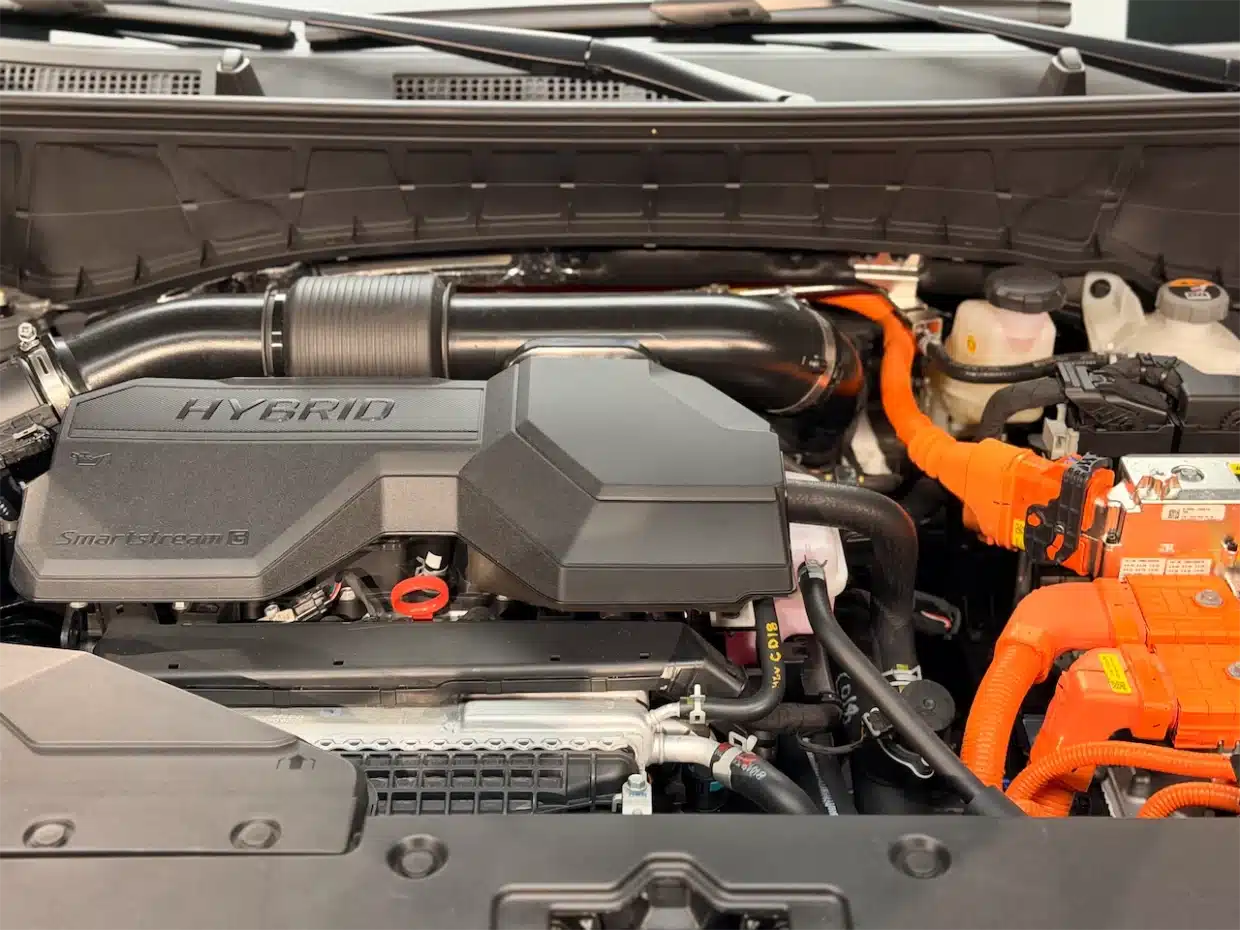
The Tucson I looked at was a hybrid model, which was already the pick of the lineup in the outgoing generation (we explained why the 2026 Tucson Hybrid kicks the gas model’s butt). Here’s how the U.S. powertrains break down, according to Hyundai:
Gasoline
- 1.6-Liter Turbocharged Four-Cylinder (1.6T-GDI)
- 184 Horsepower
- 195.3 lb-ft of Torque
- Eight-Speed Automatic Transmission
- 28 MPG (FWD), 26 MPG (AWD) Targeted
Hybrid
- 1.6-Liter Turbocharged Four-Cylinder with Two Electric Motors (13 kW + 47.7 kW)
- 233 Combined System Horsepower
- 279.9 lb-ft of Combined Torque
- 1.49 kWh Battery
- Six-Speed Automatic Transmission
- Up to 42 MPG (FWD with 17-inch wheels), 40 MPG (AWD with 17-inch wheels) Targeted
- 0 to 60 MPH in 8.5 Seconds
- Up to 3,000 Pounds of Towing, a 1,000-Pound Increase
That 42 MPG figure is very impressive for an SUV this size. Both front-wheel drive (FWD) and all-wheel drive (AWD) configurations will be offered.
The hybrid also gets a feature Hyundai calls HEV Stay Mode, which lets you run the air conditioning, heat, audio, and device charging with the engine off. If you’ve ever sat in a parking lot waiting on a kid’s practice to wrap up, you’ll appreciate that one. There’s also an E-Traction system on hybrid models that manages torque to cut down on wheel slip in corners.
How It Stacks Up Against the 2026 Toyota RAV4
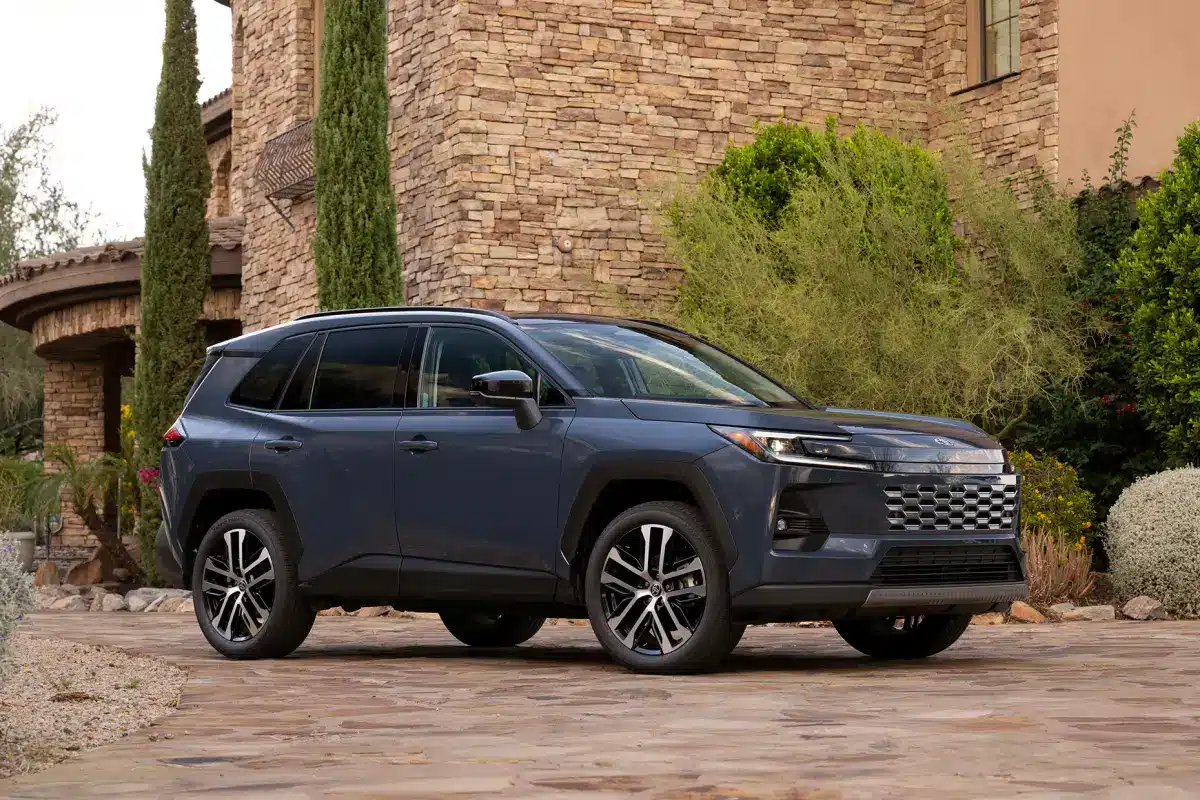
The Tucson’s biggest target is the Toyota RAV4, which Toyota calls the best-selling small SUV in America. For 2026, the RAV4 moved to a 100% electrified lineup, offering only hybrid and plug-in hybrid models. The RAV4 Hybrid pairs a 2.5-liter four-cylinder with two motor-generators and a continuously variable transmission (CVT), making 226 combined horsepower with FWD and 236 with AWD. Toyota estimates up to 43 MPG combined for FWD models and up to 41 MPG for AWD, and most grades tow up to 3,500 pounds (1,750 pounds on the LE AWD).
On paper, the Tucson Hybrid is right there with it. Its 42 MPG FWD target is within a single MPG of the RAV4, its 233 horsepower beats the FWD RAV4 Hybrid and nearly matches the AWD version, and it uses a conventional six-speed automatic rather than a CVT. The RAV4 still holds the edge in towing, at 3,500 pounds versus 3,000. If you’re shopping today, our 2026 Toyota RAV4 vs. Hyundai Tucson comparison breaks down the current models, and we’ve also put the current Tucson up against the Honda CR-V.
Where Hyundai really differs is choice. Unlike Toyota, which has been going all in on hybrids (it also made the Camry hybrid-only), Hyundai kept a gas-only Tucson in the lineup, which should help with affordability across the lineup and give budget-minded buyers a lower point of entry.
A Cabin Inspired by 1970s Italian Furniture
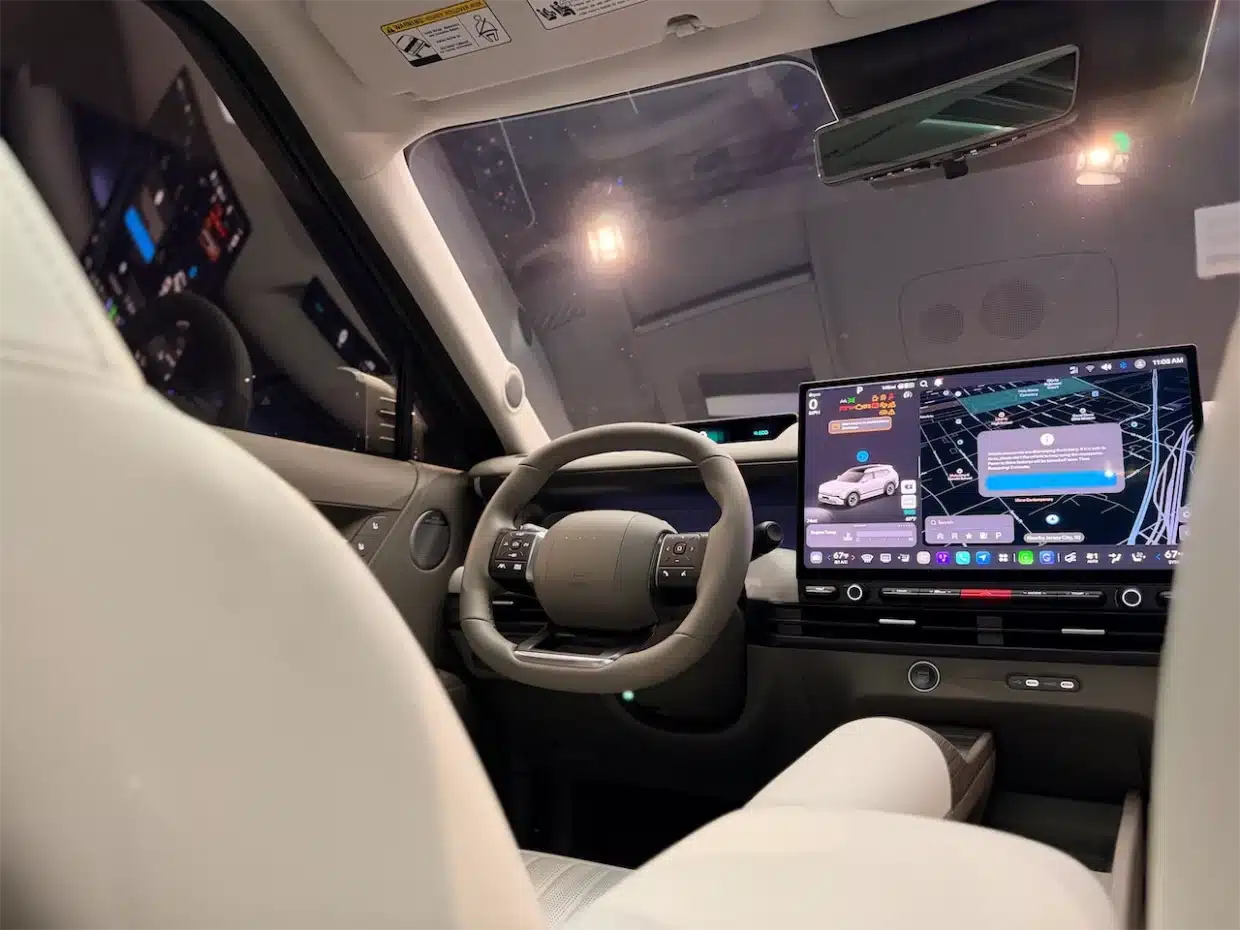
Walking up to the 2027 Hyundai Tucson, you’ve got passive entry on the front doors. Inside, the door panels have a lot going on: puddle lighting, two-person memory seats, a premium Bang & Olufsen sound system, nicely textured controls, and extra storage down low. The front seats are multiway adjustable, heated, and ventilated. Very nice.
Slide behind the D-shaped (flat top, flat bottom) steering wheel and it’s a very new look for Hyundai. Up top, there’s a head-up display for pertinent information. Above the steering column sits a slim 9.9-inch driver display where you can program different widgets, and the shape of the steering wheel makes sense once you sit there: it lets you see right over the top for a quick glance at that information. Hyundai also moved the gear selector to a column-mounted shift-by-wire stalk, freeing up space in the console.
Ambient lighting spans the entire width of the dash with a nice pass-through behind the screens, and that H motif runs across the front. It classes up the place.
Hyundai says it’s aiming for premium 1970s Italian furniture with this interior, and you can see it in the curvature of the armrests. I basically have armchair armrests on both sides of me. The center armrest is extended for an easier reach to the touchscreen, and when you open it up (it’s separate from the center console, with its own button), you’ll find a velvet-lined bin for things like lipstick and sunglasses so they won’t rattle around on you. The padding on top looks like tufted home furniture. Again, 1970s Italian furniture, and that soft padding is very welcome.
Storage is everywhere up front. There’s a floating bridge with rubberized storage underneath, set at a different level than the rubberized storage beside it. The cup holders have a little lip around the edge, so if a coin falls in there, it’s very easy to fish it out. You also get USB ports including a 100-watt USB-C port that can charge a laptop, plus not one but two wireless phone chargers on a rubberized mat so your phone won’t go sliding around. Hyundai lists them as dual 15-watt Qi2 pads, though I didn’t see any magnets in this one.
The glove box is typical Hyundai: damped, but not felt-lined.
At 5-foot-10, I had plenty of headroom up front, and I hadn’t even adjusted the seat yet. Hyundai lists front headroom at about 40.8 inches (39.0 with the sunroof).
Pleos Connect and Gleo AI Make Their U.S. Debut
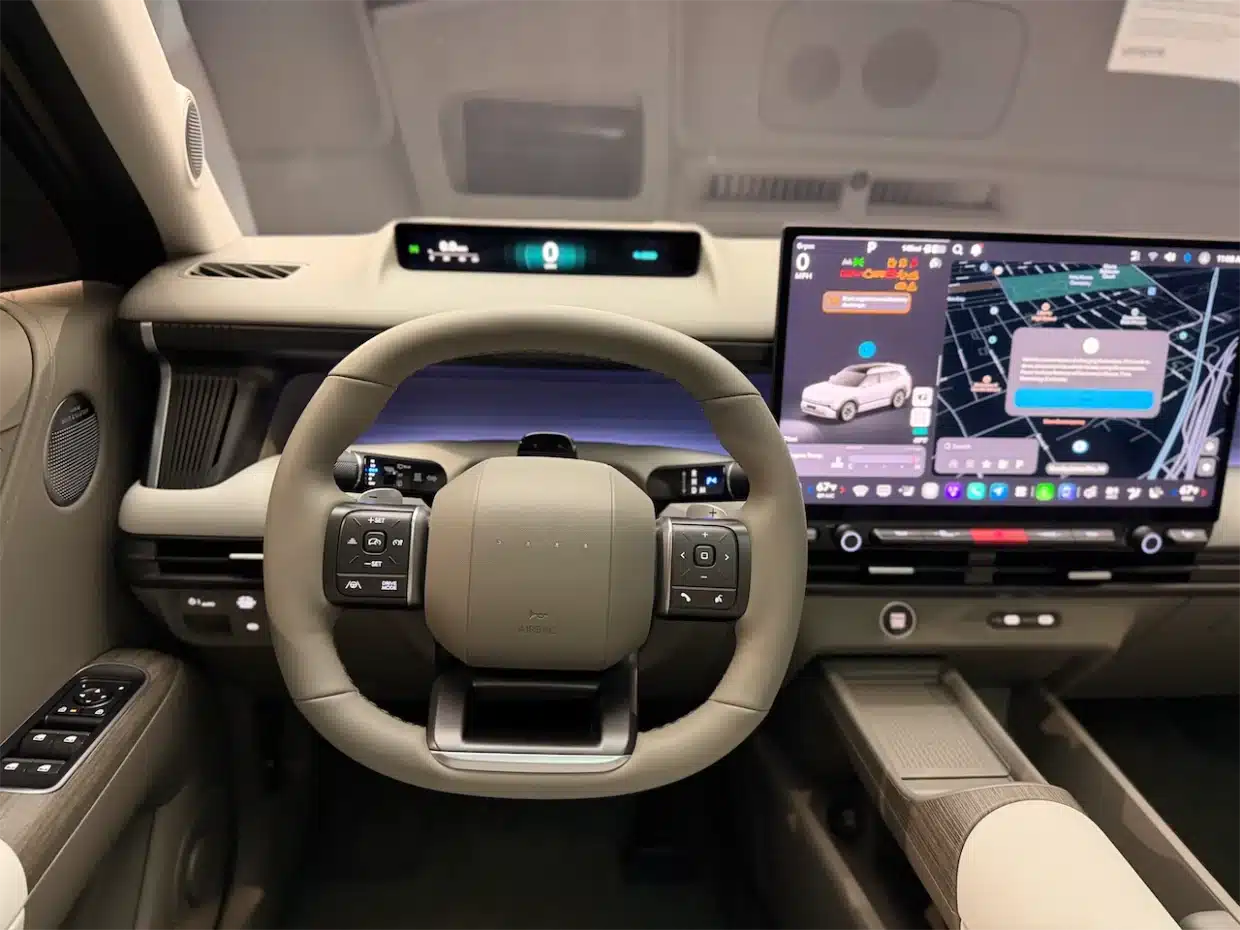
The big tech story here is Pleos Connect, Hyundai’s new infotainment system. The 2027 Hyundai Tucson is its introduction in U.S. Hyundai products, and we will start seeing it throughout the Hyundai lineup. In fact, Hyundai Motor Group says it plans to put Pleos Connect in about 20 million Hyundai, Kia, and Genesis vehicles by 2030.
Pleos Connect is built on Android Automotive OS, so Google systems are at its core, but it’s a proprietary system unique to Hyundai Motor Group. In the Tucson, it runs on either a 12.9-inch or 17-inch touchscreen. It also receives over-the-air updates, and Hyundai is opening an App Market so services like YouTube and Spotify can run natively without plugging in your phone.
Built into Pleos Connect is Gleo AI, an AI assistant that understands natural conversation. It can control everything from rolling down a window to turning on a heated seat. You name it, if it’s controlled electronically in this vehicle, Gleo can do it. It can also handle multiple commands in a single request and answer questions about the news, weather, and sports.
Here’s a neat detail. The single microphone for talking to the AI lives in the overhead console. It may only be one mic because Hyundai has to work around things like sunroofs across the entire lineup that will use Pleos moving forward. But Hyundai says that one mic can figure out exactly where a command is coming from. So if I’m driving and say, “I’m cold, turn on my heated seat,” and someone in the back seat says the same thing, Gleo will figure out who said it and take care of each request.
I also love that Hyundai didn’t go all in on the touchscreen. You can customize the home row buttons on the screen, and there are still physical, redundant controls down below: volume and tuning knobs, temperature controls, and buttons for the heated and ventilated seats. There’s a nice tactile click to these buttons as you work across them. I could already feel the seat working.
Wondering where the blind spot cameras went? They’re still here. Put your blinker on and a window pops up with your blind spot camera view. I couldn’t demo it since I wasn’t actually driving, but it’s there.
Overhead, the rearview mirror has a built-in camera on the back side, so you can flip to a digital camera view, which pairs with a rear camera mounted on the hatch. Lots of visibility all the way around, even with a nicely sized rear window.
We will be hearing and experiencing a lot more about Pleos Connect as time goes on.
Back Seat Comfort: Wider Doors, Sunshades, and Reclining Seats
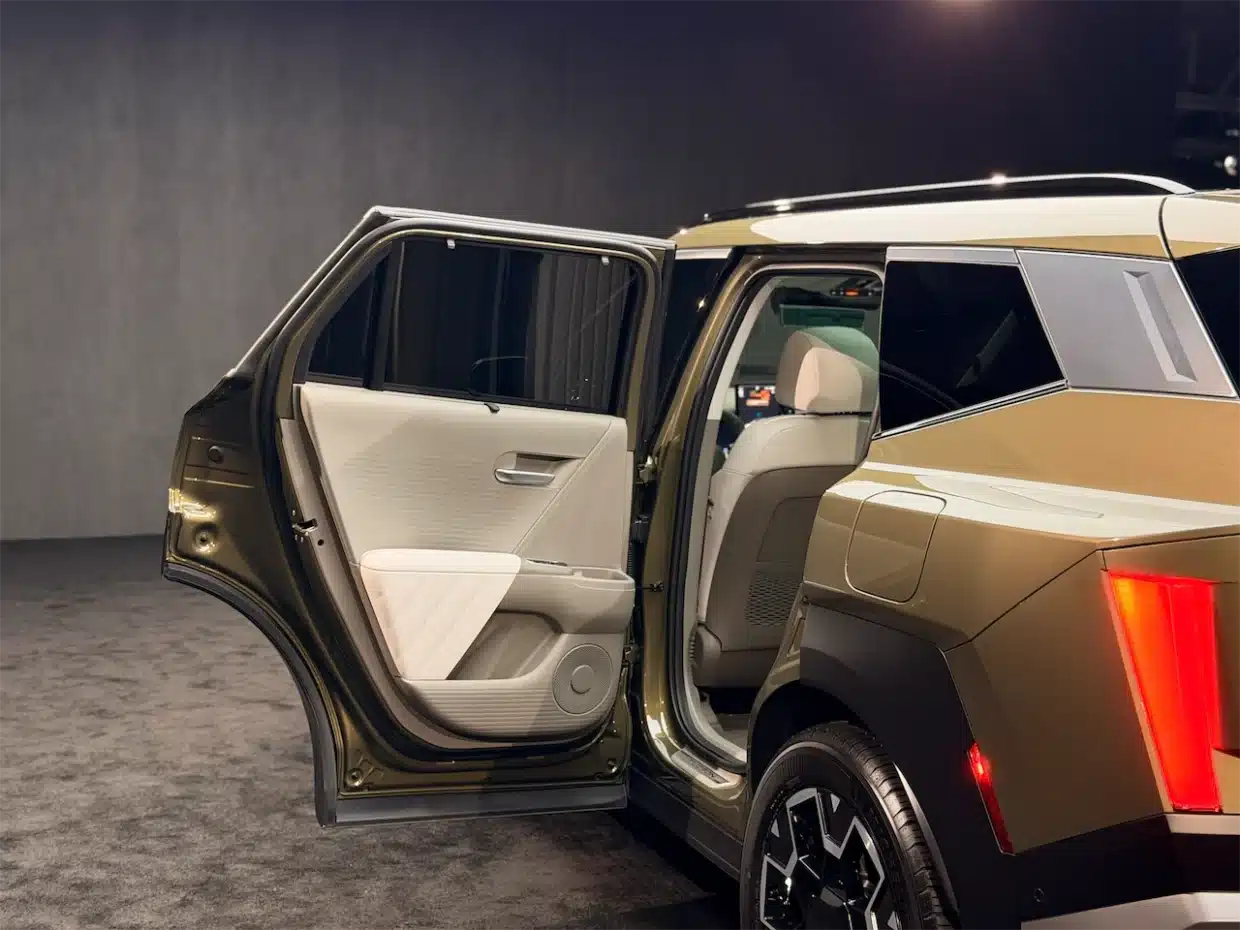
The rear doors don’t have passive entry, but just grab the front door handle and everything unlocks. Hyundai says the rear doors now open to 83 degrees, up from 73 degrees, so they swing wide for loading up passengers (and car seats).
Very unique for the segment, the rear windows have built-in sunshades, which we really like. You also get heated outboard rear seats, a cup holder with a cell phone holder, additional storage down low, air vents, a household-style power outlet, USB-C power, and map pockets and nets for more storage. The sunroof gives the back seat a great view, too.
Remember that extra 1.2 inches between the wheels? It shows. Sliding in behind my own driving position at 5-foot-10, I had plenty of legroom, and Hyundai lists rear legroom at about 41.9 inches. The rear seats recline, and they go way back. Out of the box, they were in their most upright position, and I don’t know of many people who are going to ride in it like that. Unfortunately, the 60% side of the 60/40 split is on the passenger side. But I could get very comfortable back there. And if I didn’t feel like reaching for the button, I could just ask Gleo to turn on my heated seat.
There’s also a nice little slot to tuck the seat belt into when the seats are folded in cargo mode, so it won’t rattle around or make a bunch of noise on you.
Cargo Space Built for Customization
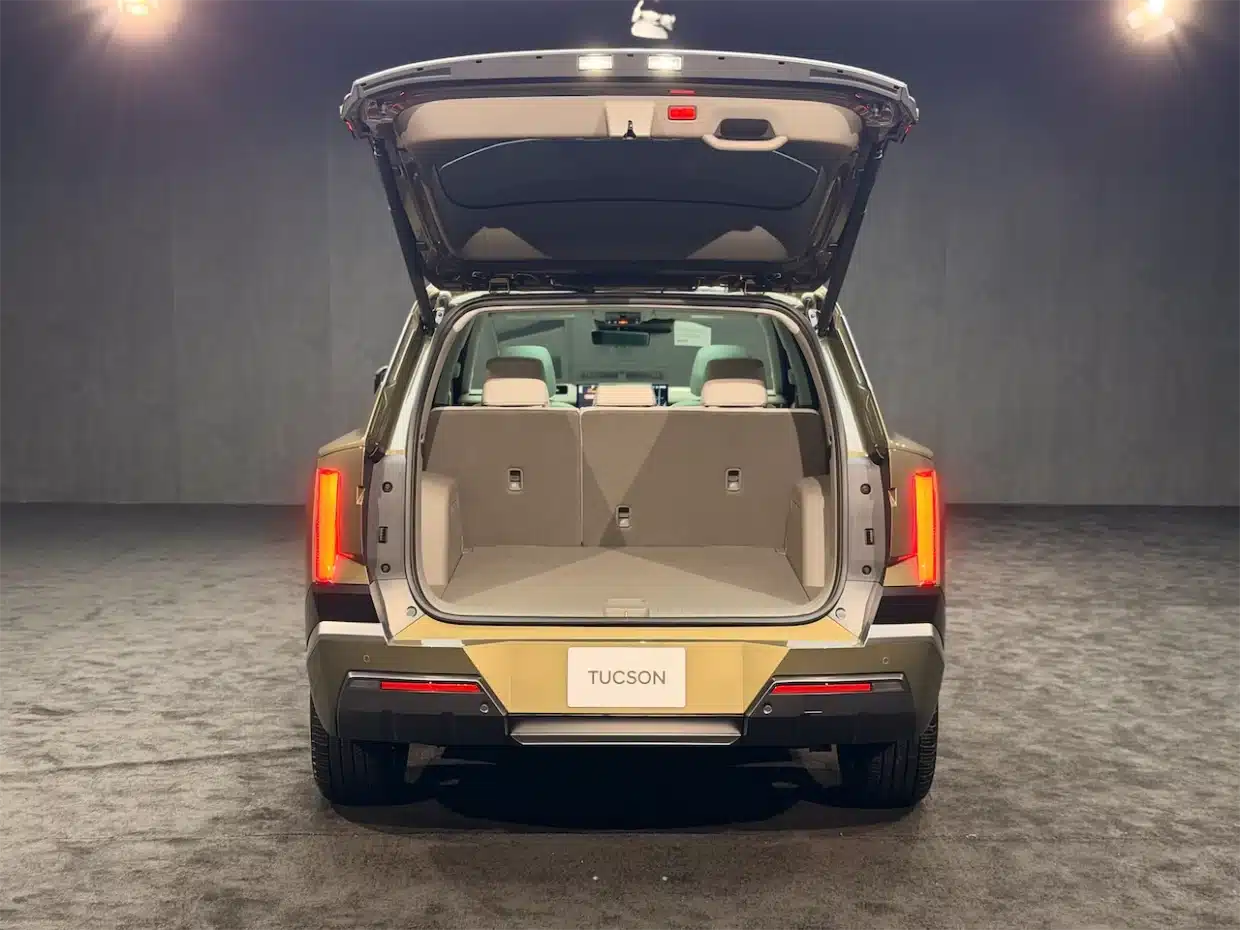
Open up the power-operated hatch and there’s lots of cargo space: 41.7 cubic feet, according to Hyundai. Hyundai has designed proprietary mounting points back here and opened them up to third-party engineers, developers, and 3D printers so they can create unique cargo management solutions.
There’s a false load floor with the temporary spare underneath. You can pull the floor out and drop it down for more vertical height. We’ve seen a lot of other brands do something similar lately, and competition is a great thing, is it not?
If that’s not enough room, two remote latches in the cargo area drop the 60/40 rear seats to expand the space even further. When you’re done loading up, there are illuminated buttons on the hatch that give you a couple of beeps to let you know to get out of the way before it closes.
XRT PRO and Safety Tech
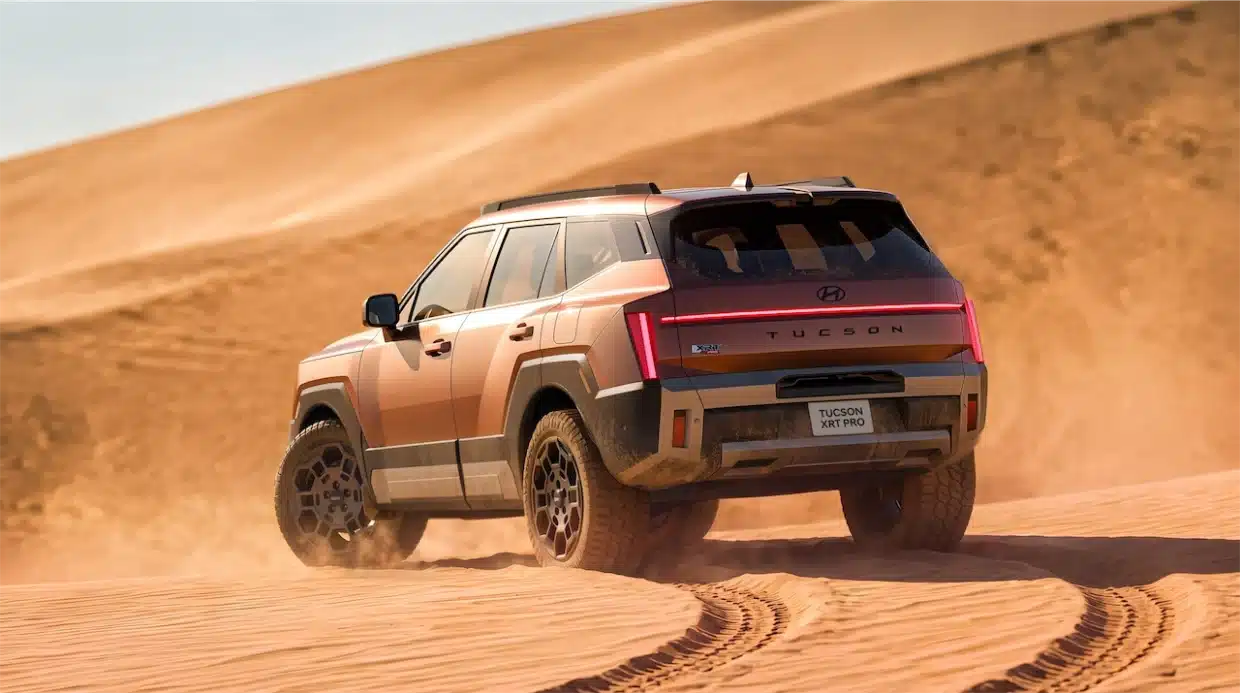
I didn’t get time with it in person, but Hyundai also announced a Tucson XRT PRO for buyers who want to get off the pavement. It comes with all-wheel drive, all-terrain tires, front recovery hooks, extra cladding, and about 8.3 inches of ground clearance (up 1.2 inches over the standard model). It’s also the first Hyundai with Smart Terrain Assist, a North America-only feature that reads traction and slip in real time and shows a green, orange, or red “stuck score,” paired with a low-speed Target Speed Control for off-road driving.
XRT Pro made its debut on the current Hyundai Palisade, replacing the prior generation’s mild off-road XRT model. Hyundai, much like Jeep’s Trail Rated badge, has a set of internal criteria the brand requires for the Pro to be added to XRT Pro on its vehicles.
On the safety side, the Tucson gets a driver monitoring system that watches for drowsiness, Child Presence Detection and Rear Occupant Alert to remind you if kids or pets are left in the vehicle, Intelligent Speed Limit Assist, and Navigation-Linked Smart Cruise Control that slows for upcoming curves and roundabouts. Hyundai says it’s targeting a five-star NHTSA rating and an IIHS Top Safety Pick+.
Final Thoughts on the 2027 Hyundai Tucson
That was a quick first look at the 2027 Hyundai Tucson, and I came away impressed. The cabin feels a class above, the tech is a big leap forward, and the hybrid numbers are strong. The Art of Steel design language is going to permeate the rest of the Hyundai family. It’ll be very familiar across other vehicles, but they won’t look like Russian nesting dolls, which is something the design team at Hyundai is very proud of.
The new Tucson launches in Korea later this year, with North America following in 2027. Hyundai hasn’t announced pricing yet, and a sporty new Tucson variant is set to debut at the Paris Motor Show on October 12. I’m looking forward to getting behind the wheel. Until then, I’ll see you down the road.