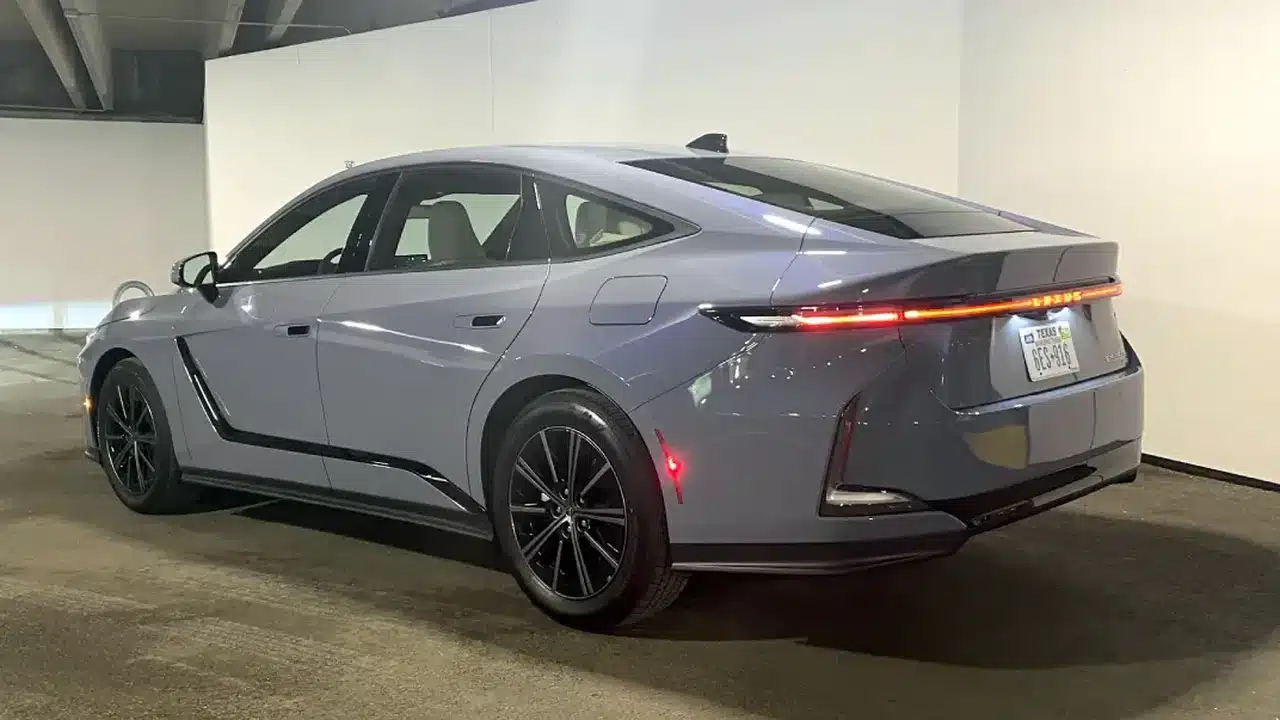
The 2026 Lexus ES marks the all-new eighth generation of the brand’s midsize luxury sedan in a time in which that category of vehicles inspires the excitement of exactly no one. That’s not to say it’s a waste of time or space. The ES now comes in two flavors, one hybrid and one fully electric, and the gas-only model has been completely culled from the lineup in keeping pace with parent company Toyota’s similar recent moves.
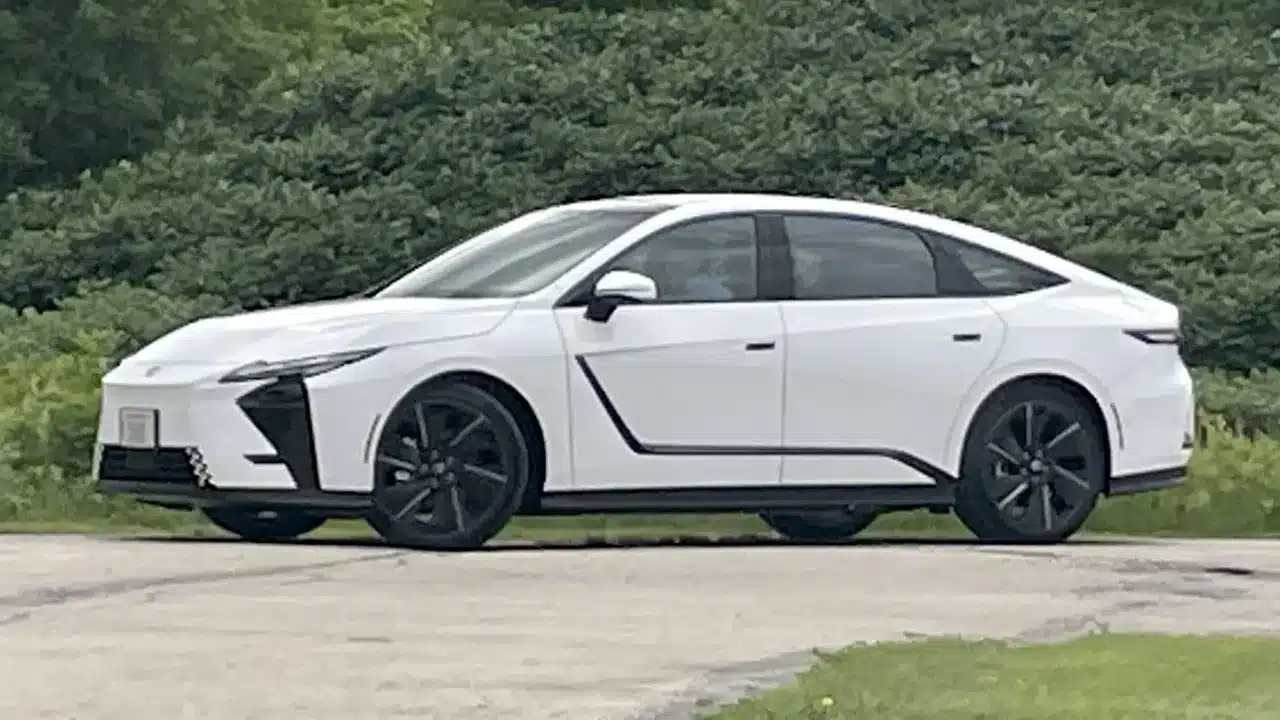
The ES features a sleek roofline and some kinky cutouts along the side, which look cool in person but make it extremely difficult to photograph in bright direct sunlight or in weirdly lit parking garages, the two environments available during my test drive, so, apologies. There’s a deeper dive into some of the ES’ more curious design elements here.
A generational shift, in more ways than one
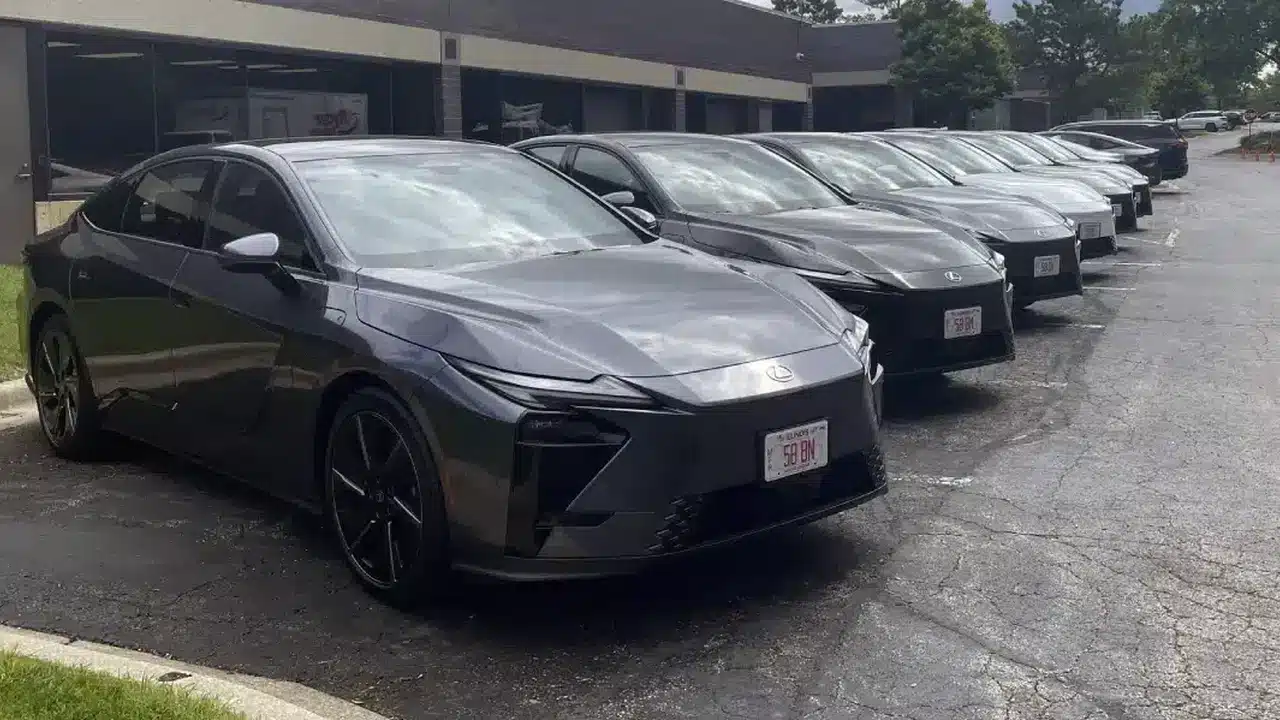
My drive of the new 2026 Lexus ES hybrid and electric cars was on a midsummer day in the most anonymous of Chicago suburbs. Lexus’ regional office blended right in, but for the line of nearly monochrome test cars basking in the sun like a dour group of seniors who rise at dawn to claim every lounger on the cruise ship deck.
Initially, it seemed like Lexus may have overthought this redesign. After all, I have long thought of the ES as a dressed-up Toyota Camry. Then Lexus mentioned a few key demographics during our pre-drive briefing, making my mental comparison all the more relevant.
Lexus told us during the pre-drive briefing that the average ES buyer is 70. That’s not snark on my end; it came straight from the brand. Not only that, many of those septuagenarian ES drivers previously owned an ES.
So, the challenge was thus cast in a new light: how to phase out the gas-only ES, add an EV to the lineup, significantly update the styling, and attract younger buyers without alienating the loyal buyers. Because Lexus loves a challenge, the new ES is also supposed to capture conquest buyers from Tesla who want a better-quality vehicle, or are perhaps just sick of being associated with Tesla.
The ES 250 launched alongside the LS 400 in 1989 for the 1990 model year, and as such, brand reps described the ES as the “spirit of Lexus,” which seems fair, and more accurate than, say, “heart” or “passion” or “pulse.” The first hybrid ES followed for the 2013 model year, with a 40-mpg combined EPA rating.
In pursuit of the younger buyers who have the potential to rally around the ES and see it through another generation, the ES features a longer wheelbase and a sleeker-looking silhouette. Lexus says the new model is actually taller, with a higher seating position. Inside, there’s more passenger space in nearly every direction; the updated Lexus Safety System+ 4.0 driver-assistance suite includes pedestrian detection and other collision-avoidance features. An integrated Drive Recorder is also included. Digital door latches come standard across the lineup, giving way to a cabin fitted with acoustic glass, extra sound insulation, and bamboo-inspired panels that glow from within, one of the more innovative applications of ambient lighting I’ve seen recently.
Lexus told us at the briefing that the ES lineup was simplified from 17 variations to eight across its three powertrains, and that it expects about 80% of buyers to opt for the hybrid. The EV model features a NACS (North American Charging Standard) port for compatibility with the Tesla Supercharger network, and includes adapters for CCS1 and J1772 chargers. The livery-ready Executive Package, which Lexus estimates will come with one or two percent of ES models built, is available only with the 350e, so if you want reclining, massaging seats and an ottoman, we hope your chauffeur doesn’t mind EVs.
Hybrid driving impressions
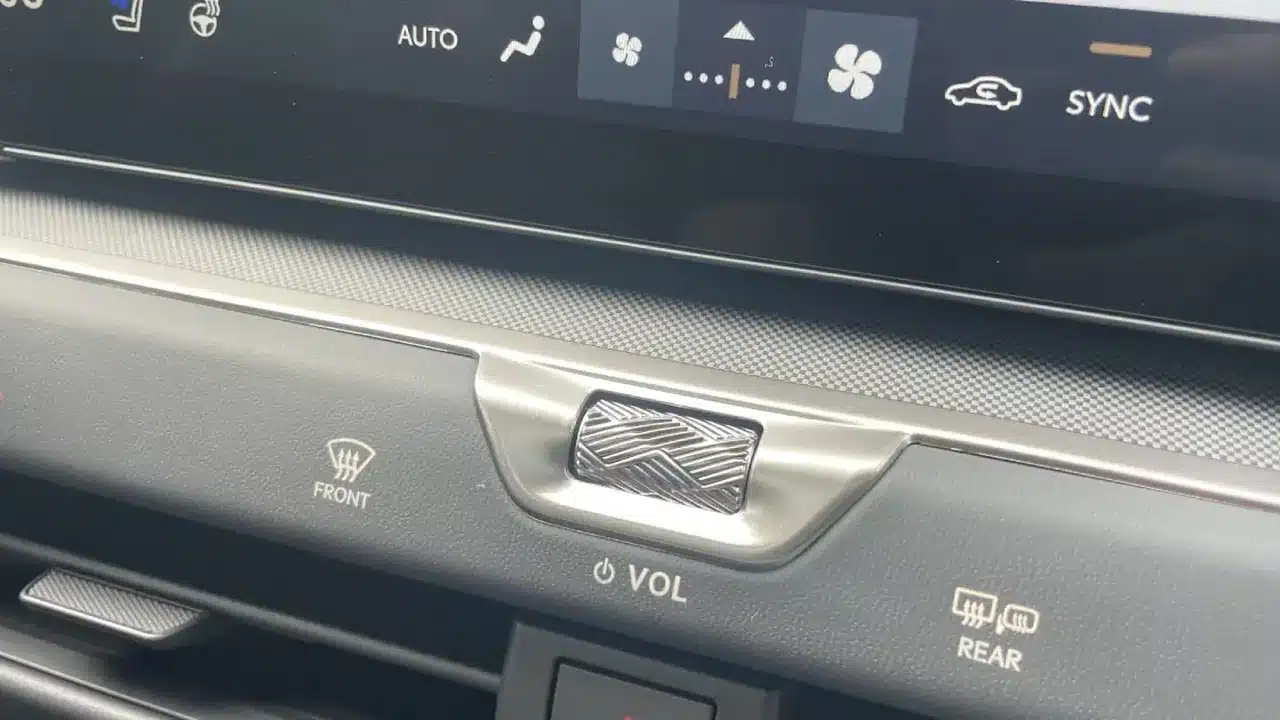
Both versions of the ES ride on an evolution of the TNGA-K platform, which features a low center of gravity and better rigidity, for better handling and a smoother ride. However, the “better handling” isn’t going to get owners’ hearts racing to a dangerous degree or anything. Ride quality, I’ll admit, is nice, and both have comfortable cabins.
The ES 350h is fine. It’s smooth and quick but not at all sporty, with a competent 244 horsepower. It does exactly what its buyers will expect of it, little more and nothing less. It’s available with front- and all-wheel drive, rated for 46 and 44 mpg combined, respectively, according to the EPA.
EV driving impressions

The Lexus ES 350e features a single motor, front-wheel drive, 221 horsepower, and a range of up to 307 miles on the standard 19-inch wheels. All well and good, if not particularly impressive compared to other luxury EVs.
I drove the 500e, which features a dual-motor setup with all-wheel drive, total output of 338 horsepower, and range of up to 276 miles on the standard 19-inch wheels.
It’s snappy enough from a stop, but not especially responsive. The AWD provides good stability and traction from a practical standpoint, but it’s not sporty. If you want to add some interest to the driving experience, both EV models feature regenerative braking that can be adjusted with the steering wheel-mounted paddle shifters, but our test drive wasn’t long enough to get the hang of it. I’m questioning the usefulness of this feature among a bunch of septuagenarians, but you know, it’s nice to have, anyway.
Pricing: Place your bets
The 2026 Lexus ES lineup is on sale now, in its three flavors. Right off the bat… this is an expensive-ass car. It’s nice, and it’s comfortable, and all of the things about it I’ve already said. It’s also expensive.
Let’s do a little exercise. There’s no Toyota Camry equivalent to the electric ES variants, but for comparison, the Camry comes standard as a hybrid, starting at $30,895 including destination. The Lexus ES 350h starts at $51,095 with destination. The Camry and ES 350h both come standard with a 2.5-liter four-cylinder hybrid engine. The Camry makes 225 horsepower with front-wheel drive or 232 hp with all-wheel drive. Lexus rates both ES 350h drivetrains at 244 hp.
I’d be willing to bet that most of the older owners who buy a Lexus on autopilot don’t know the ES is a dressed-up Camry, and those who do know, don’t care enough to comparison shop. I’d also be willing to bet that Lexus knows this, and that Lexus is also playing the betting game, here.
I’d buy the Camry, personally, if I was shopping for a midsize hybrid sedan. Maybe that’s why Lexus isn’t appealing to younger shoppers. It’s not $20k nicer. Oh, the quoted Lexus ES destination charge is $100 more than the quoted Toyota Camry charge, but that’s minor in the grand scheme of things. A rounding error.
That said, the ES 350e makes a decent case for itself, starting at $48,895 with destination, and then the 500e isn’t much more. It starts at $51,895. I’m trying to do the math here and it’s really not working. Looking at individual trim levels within each variant is even more disorienting. And making sense of this stuff is literally my job.
I guess, if you’re 70 and reading this, you’ll probably be pretty happy with your next new Lexus ES.