

The Honda Civic Type R’s wing gets plenty of attention. The less obvious engineering work is what makes the car an interesting case study: a body designed to support the chassis, cooling intended for hard use, and aerodynamic pieces that have jobs beyond looking aggressive.
In savagegeese’s 2023 Civic Type R review, published in November 2022, chief engineer Hideki Kakinuma discusses the car’s development goals. The hosts then explore the FL5 generation’s hardware and driving behavior. This is a look back at that engineering discussion, with Honda’s technical material providing additional context.
The body is part of the handling system
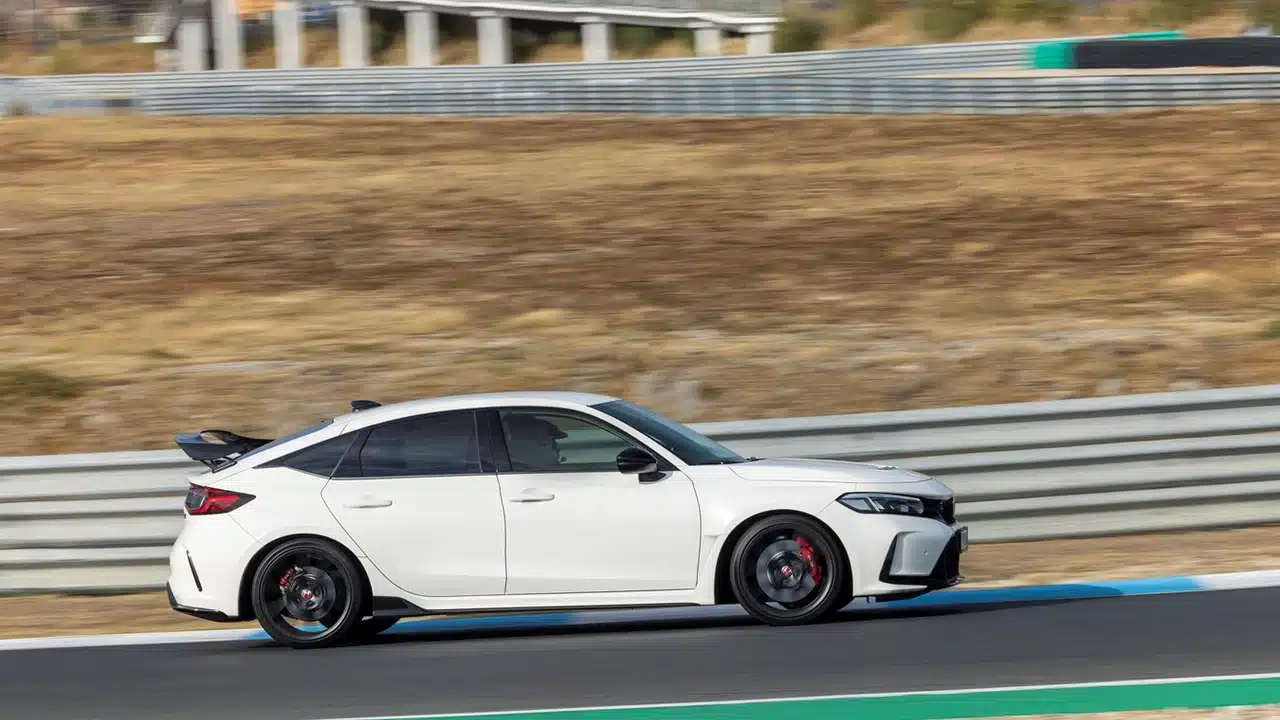
Kakinuma’s explanation connects outright speed with the pleasure of driving. In their technical walkthrough, the savagegeese hosts describe the stiffer body and revised chassis as parts of that wider effort, rather than treating the engine’s output as the whole story.
Honda’s 2023 technical release describes extensive structural adhesive use and chassis development. The engineering logic matters: suspension parts need a stable foundation. If the body flexes, it becomes another moving part in the system the engineers are trying to control.
For buyers, this is why two cars with similar power can feel very different. Steering response, body movement and how clearly a car communicates through a corner are not captured by a horsepower comparison. Those qualities deserve time on a test drive, within safe road speeds.
Cooling supports repeatable performance

Honda identifies an upgraded radiator and a larger cooling opening as part of the Type R’s thermal-management work. The savagegeese technical discussion also emphasizes cooling changes for repeated hard use. It is an important distinction from building a car that feels quick during one short acceleration run.
A turbocharged engine working hard produces heat that must be managed. The question for a track driver is not only what the car can do once, but how consistently it can perform as a session continues. Cooling hardware is less visible than a bigger power number, yet it addresses that different problem.
That does not make the Type R immune to heat or eliminate the need to follow Honda’s maintenance and operating guidance. It explains why cooling belongs in an engineering discussion about performance, even when it is not the headline specification.
The vents and wing have specific jobs

Honda’s aerodynamics guide identifies the vented aluminum hood, front spoiler, rear wing and diffuser as functional components. They manage heat and airflow, including producing downforce rather than simply decorating the body.
It is tempting to judge these pieces individually: a large wing looks serious, while a vent looks sporty. The better engineering question is how they work together. Air entering the car must leave somewhere, and changing one surface can affect airflow farther downstream.
For an owner considering cosmetic changes, that is a useful reason to pause before blocking an opening or replacing an aerodynamic part solely for appearance. A piece can have a purpose that is not obvious while the car is parked.
The firmest setting is not always the best setting

The savagegeese hosts found the most aggressive suspension setting too stiff for parts of their bumpy track session. That is their review observation, not our own road test. Honda also provides an Individual mode, allowing drivers to combine settings instead of accepting one preset for everything.
Our takeaway is that a performance car should be evaluated on the roads you will actually use. A setting that feels impressively firm for the first minute may become tiring during a commute. More grip and sharper responses can bring compromises, and engineering does not make those preferences disappear.
The full savagegeese video is worth watching for the interview and technical walkthrough, particularly the development discussion beginning around 5:10. For more on the decisions behind everyday cars and enthusiast models, visit Engineer Explains.