
The Toyota Prius used to explain itself the moment you saw it. The shape was unusual. The dashboard was unusual. Even the silence at a stoplight felt unusual. It was not merely a Toyota with a hybrid option. It was Toyota’s hybrid.
That distinction once looked strong enough to support an entire family of vehicles. Today, it is getting harder to find.
Toyota has pushed hybrid power into the heart of its lineup. The Camry and RAV4 no longer offer a conventional gasoline-only engine. The three-row Sienna and Sequoia are hybrid-only, too. Meanwhile, the next Highlander skips past hybrid power and arrives as a battery-electric SUV.
Toyota won the argument the Prius started. Now the Prius must answer a tougher question: What is it for when nearly every popular Toyota can deliver some version of the same idea?
Toyota Once Wanted a Prius for Everyone
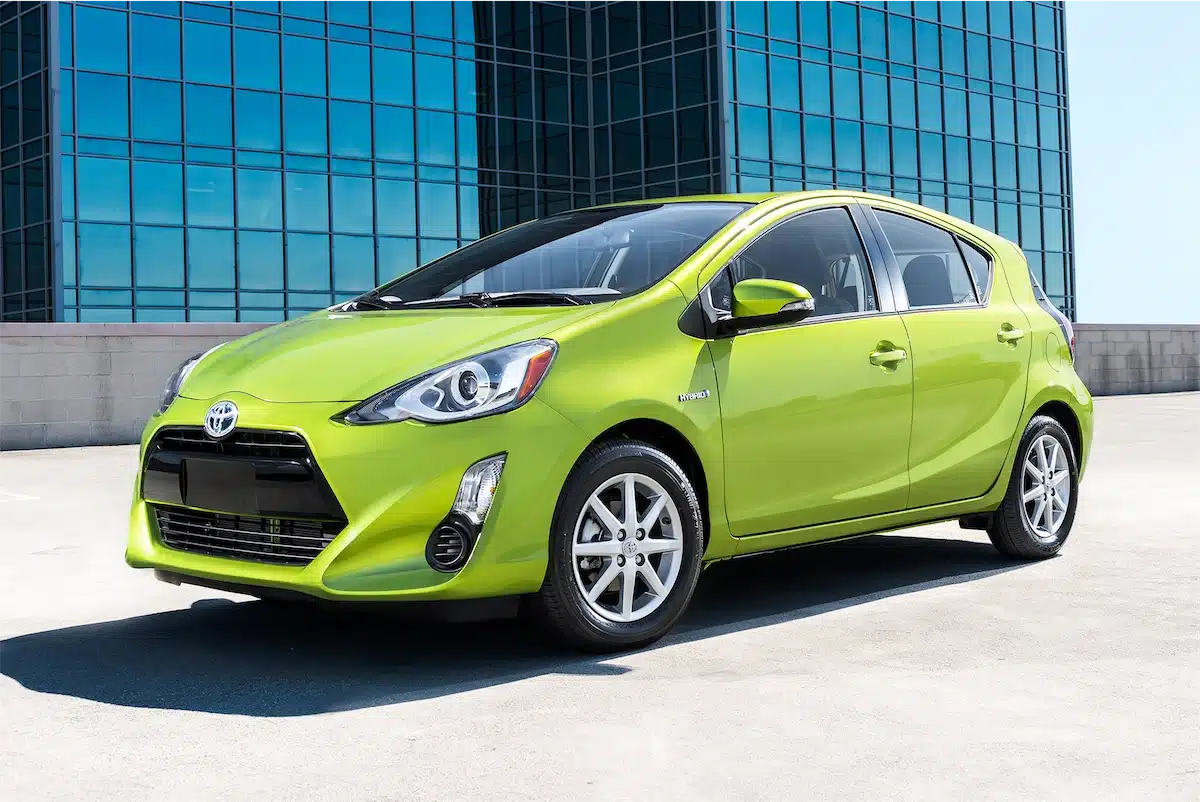
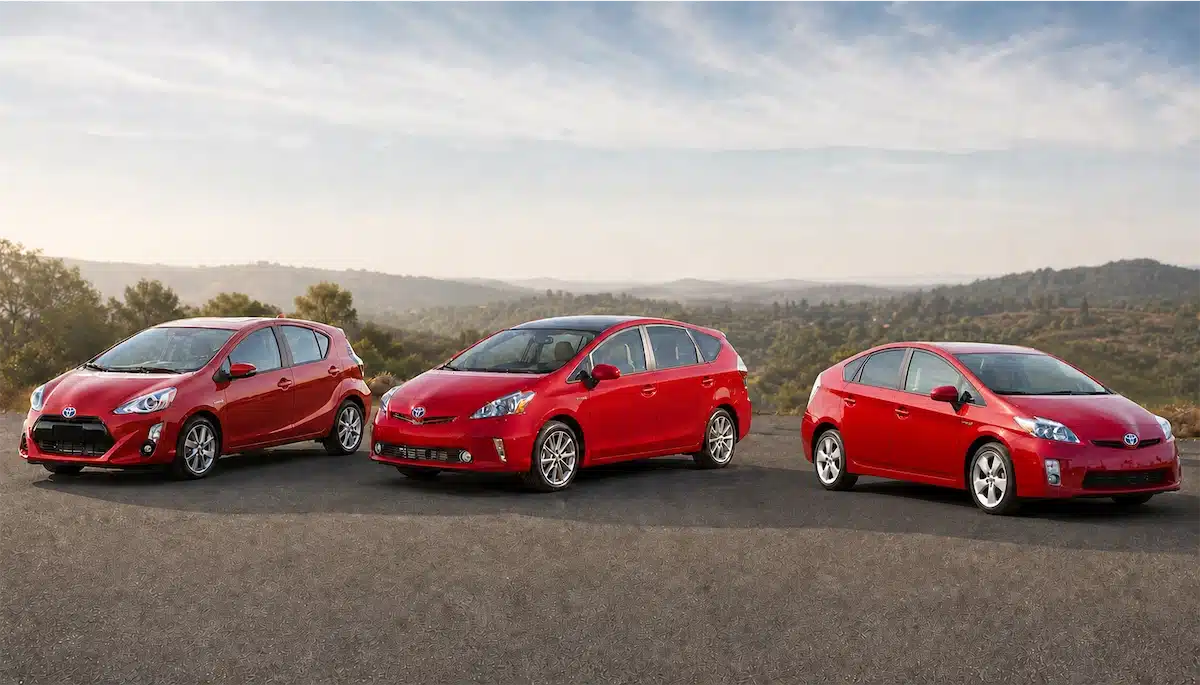
In 2011, Toyota unveiled what it called the Prius family. The familiar liftback would sit beside a Prius Plug-in Hybrid, the larger Prius v wagon, and the smaller Prius c hatchback. Toyota said the expanded range would bring the Prius name to more ages, lifestyles, and price points.
For a moment, the plan looked like the beginning of a Toyota sub-brand. There would be a Prius for commuters, a Prius for young buyers, and a Prius for growing families. Toyota even ran a campaign, complete with a dedicated webpage that has since been redirected, asking the public to choose the plural of Prius. The winner was “Prii,” because one Prius was no longer enough.
Toyota stopped short of turning Prius into a standalone marque. In 2011, company executives told Car and Driver that the name was too important to Toyota’s broader image to separate it from the brand. Still, the strategy treated Prius as more than a single model. It was a halo, a technology statement, and a shortcut for environmental credibility.
That confidence made sense. Prius sales reached 236,655 units in the United States in 2012. The car had become so closely tied to hybrid technology that “Prius” often stood in for the entire category.
Then Toyota made a choice that would eventually weaken the Prius brand while strengthening Toyota itself. It stopped asking buyers to choose a special hybrid car. Instead, it began putting hybrid power into the cars and SUVs they already wanted.
Then Toyota Put Prius Technology in Everything
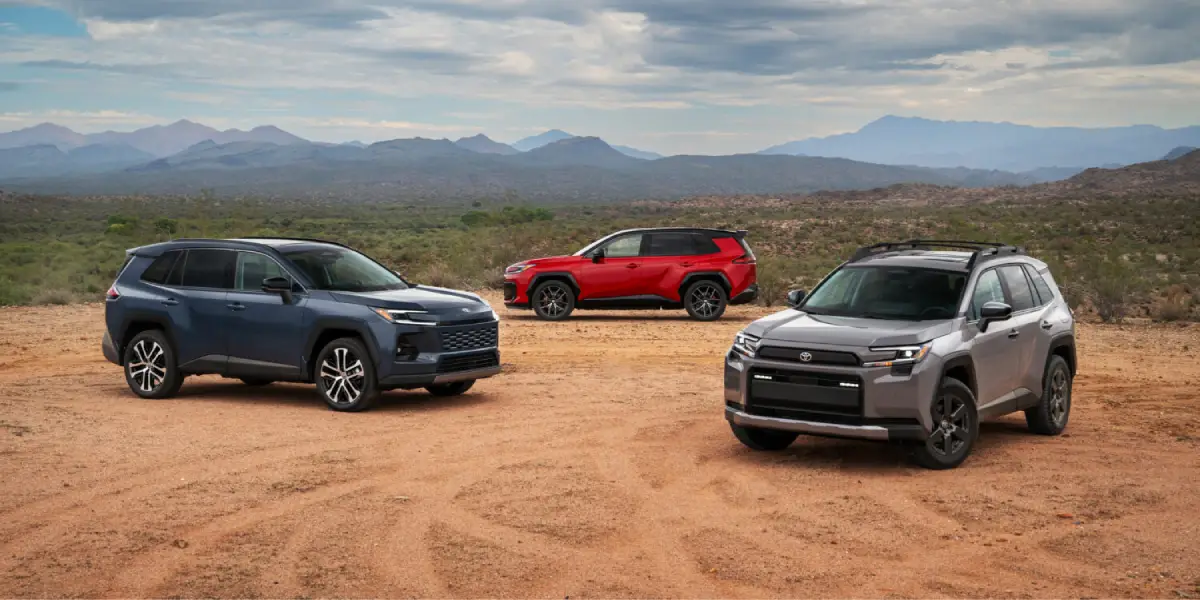
The latest RAV4 is the clearest example. For 2026, America’s best-selling Toyota is available only as a hybrid or plug-in hybrid. Buyers can choose front-wheel drive, all-wheel drive, rugged styling or even a GR Sport model. They cannot choose a gas-only engine.
The Camry went exclusively hybrid for the 2025 model year. The Sienna offers hybrid power exclusively, and every 2026 Sequoia uses Toyota’s i-FORCE MAX hybrid. Toyota did not hide hybrid power in low-volume compliance models. It put the technology into family sedans, minivans, and full-size SUVs.
MotorTrend now describes hybrids as common across most vehicle segments. That is the market the Prius helped create. It is also the market that makes a dedicated Prius less essential.
A shopper no longer has to accept a low roofline, unusual controls or a conspicuous eco-car image to save fuel. A Camry can return strong fuel economy while looking like a normal sedan. A Sienna can carry the family and still be a hybrid. A RAV4 can deliver crossover space, available all-wheel drive and the powertrain that once made Prius special.
Toyota is stretching that logic even further. The 2027 Highlander will be an all-electric three-row SUV with up to 320 miles of manufacturer-estimated range in some versions. Toyota is using a familiar mainstream name for its first U.S. three-row battery-electric vehicle. It does not need a new eco sub-brand to explain the technology.
That may be the Prius’s most important legacy. Electrification no longer needs to arrive in a strange package with a new identity. It can simply be the powertrain inside a RAV4, Camry or Highlander.
Prius Sales Show How Far the Center Has Moved
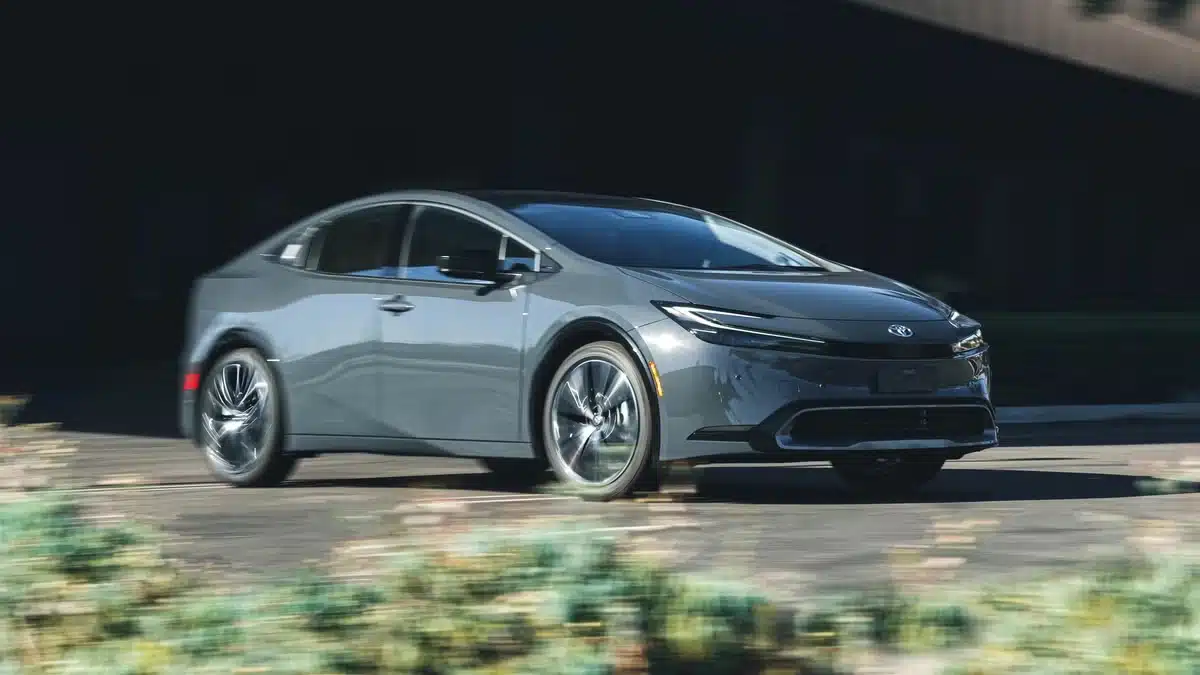
The sales numbers do not say the Prius is dead. In fact, according to Good Car Bad Car, U.S. Prius sales increased from 44,711 in 2024 to 56,488 in 2025, a gain of roughly 26 percent. The latest generation clearly found buyers, thanks in part to its well-praised styling.
However, that result is still about 76 percent below the model’s 2012 peak. Through July 2026, Prius sales reached 22,657 units, down 40.3 percent from the same period a year earlier. A partial-year result can reflect supply, production timing, and model-year changeovers, so it should not be treated as a pure measure of demand. Even so, the longer trend is difficult to ignore.
The comparison with RAV4 is more revealing. Toyota sold 479,288 RAV4s in the U.S. in 2025, or about 8.5 times the Prius total. Now every new RAV4 carries either a hybrid or plug-in hybrid powertrain. Toyota can put far more electrified vehicles on the road through one mainstream crossover than it can through a dedicated hybrid icon.
This does not mean RAV4 stole every Prius buyer. Crossovers have replaced cars for millions of shoppers across the market. Yet that shift is exactly the problem. The Prius family tried to cover several shapes and lifestyles under one electrified name. Toyota later discovered it was more effective to electrify the names buyers already knew.
Prius c and Prius v disappeared from the U.S. lineup. The main Prius survived, but the family strategy moved elsewhere. Today, the Toyota showroom itself is the Prius family Toyota imagined in 2011. The badges simply say Camry, RAV4, Sienna, and Sequoia.
The Prius Is Still Good. Its Purpose Is the Problem
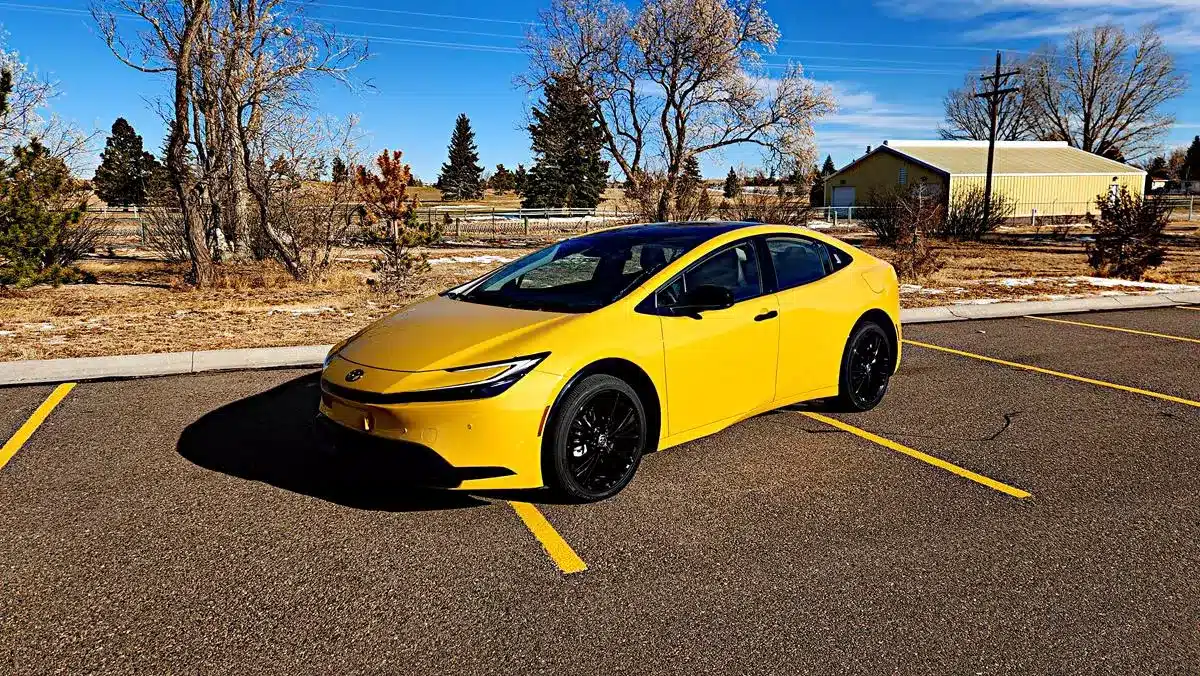
None of this makes the current Prius a bad car. Toyota rates the front-wheel-drive model at up to 57 mpg combined. It produces 194 horsepower, offers all-wheel drive, and finally has styling that gives buyers a reason to look back after parking it. MotorTrend named this generation its 2024 Car of the Year.
The Prius also remains one of Toyota’s purest efficiency plays. It is lower and more aerodynamic than a crossover. It asks buyers to carry less size and weight. For commuters who value fuel economy above ride height and cargo volume, that focus still matters.
Yet the case is narrower than it used to be. Hybrid power alone is no longer enough. A buyer must specifically want the Prius shape, the Prius image and the last few miles per gallon that come from choosing a purpose-built efficiency car over a more practical hybrid Toyota.
That puts Toyota in an unusual position. The company does not need Prius to prove hybrid technology works. The RAV4, Camry, and Sienna already do that at a much larger scale. It does not need Prius to introduce electrification, either. The Highlander can now carry that message with no gasoline engine at all.
The Prius once existed to make Toyota’s future visible. Now Toyota’s future is visible across the entire showroom.
Perhaps that is not failure. Perhaps it is the final proof that the Prius completed its mission. Toyota did not turn Prius into a sub-brand. It turned Toyota into the brand Prius promised it could become.