Alfa Romeo has offered a glimpse of what comes next for its midsize lineup, although the Italian brand still can’t say when its next-generation sedan and SUV will arrive, or precisely how they will be developed.
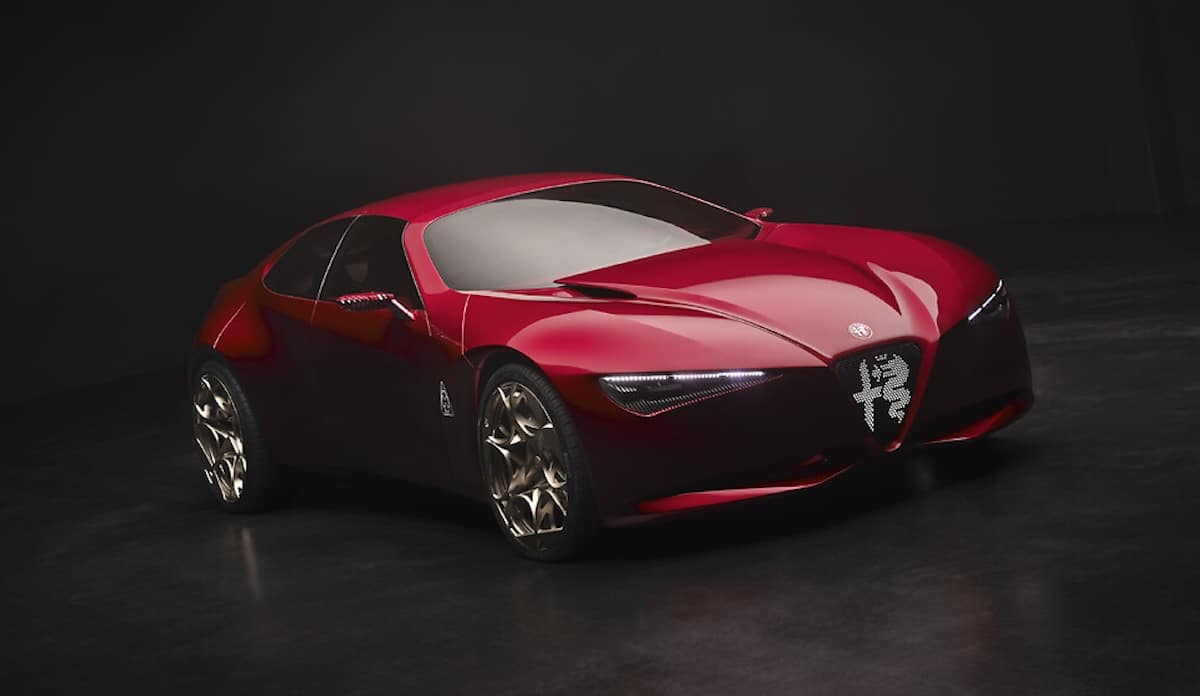
Unveiled at the Paris Auto Show, the Cuorerosso concept previews design themes for successors to the Giulia sedan and Stelvio SUV. Both models have been on the market for roughly a decade, and neither offers an electrified powertrain option. Yet firm plans for their replacements remain elusive.
That uncertainty reflects a larger challenge for Alfa Romeo and parent company Stellantis. The automaker is evaluating two to three potential partnership solutions to develop its next midsize models, leaving the future of two key products dependent on decisions that haven’t been finalized.
A Sleek Design With a Performance Focus
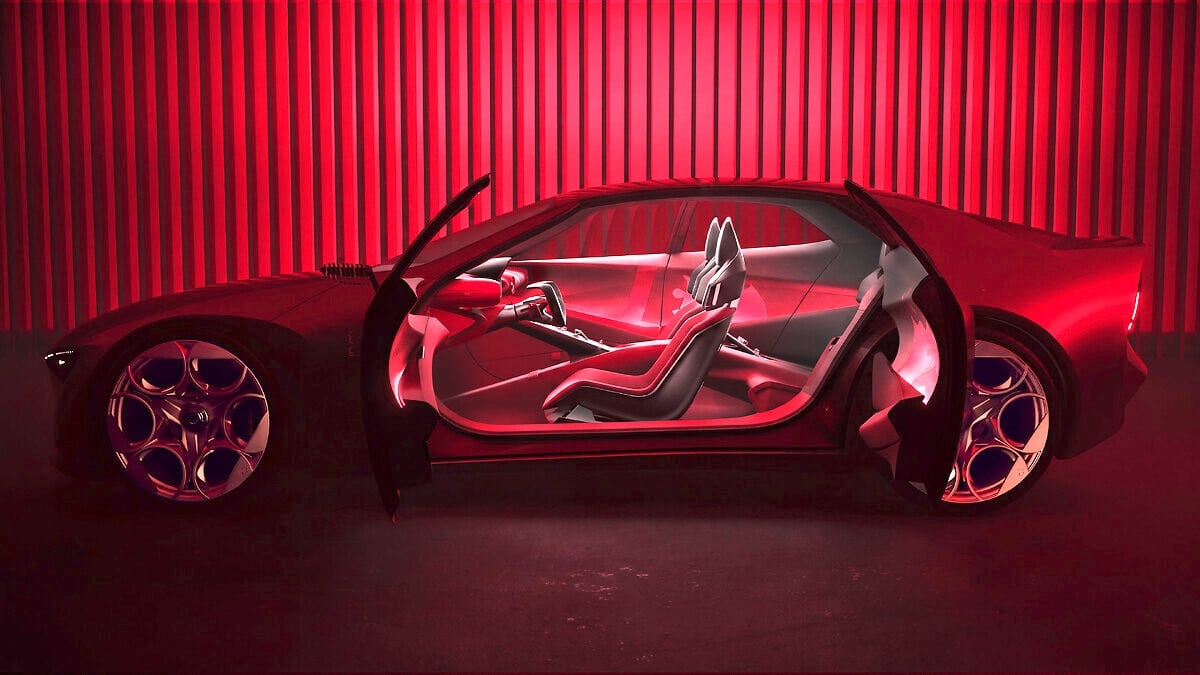
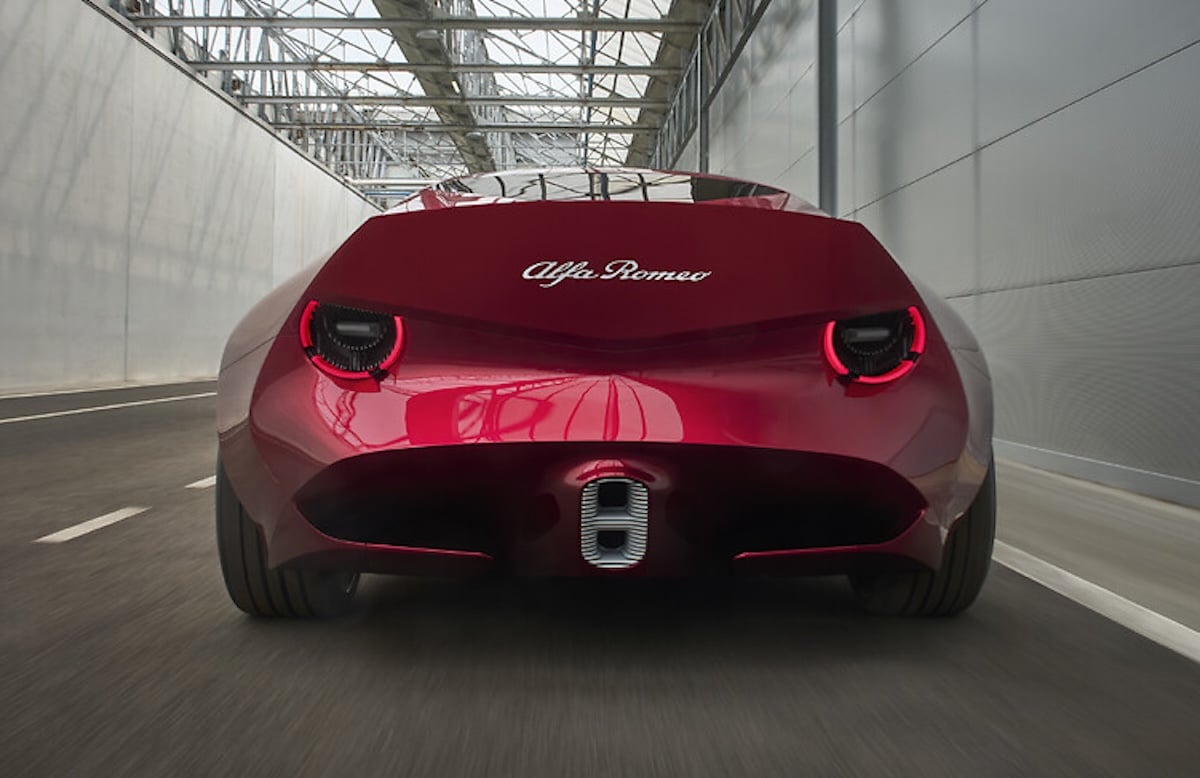
The Cuorerosso, Italian for red heart, was developed under Alejandro Mesonero Romanos, who joined Alfa Romeo in 2021 after working for Renault Group’s Dacia brand. The four-door 2+2 coupe combines the character of a grand tourer with the dynamism of a supercar, according to Alfa. Its rear doors are hinged below the C-pillar rather than at the conventional B-pillar to improve rear-seat access. Measuring 185 inches long, 78 inches wide and 52.4 inches tall, the concept’s low hood, truncated tail and integrated rear diffuser help deliver a claimed drag coefficient of 0.28.
Quadrifoglio Performance Meets Electrification
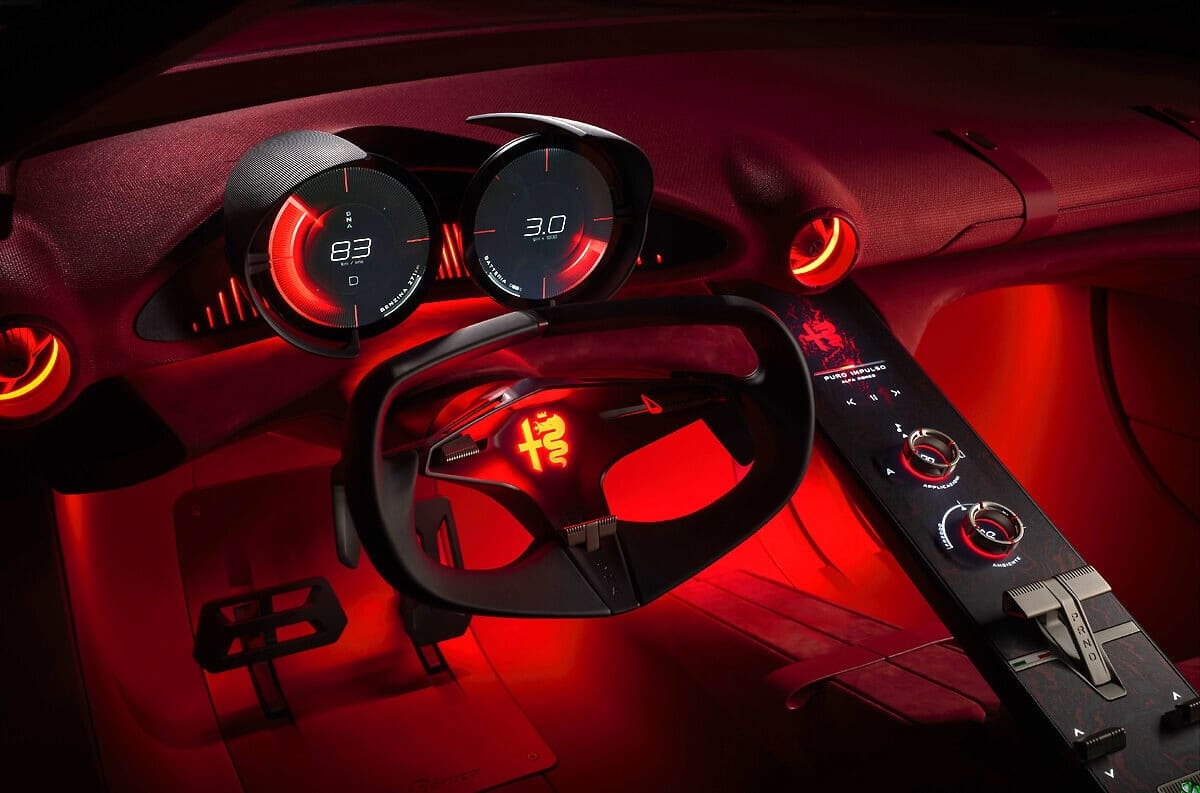
Underneath, the Cuorerosso borrows from Alfa’s performance-oriented Quadrifoglio models while adding electrification. Its full-hybrid powertrain combines the Giulia Quadrifoglio’s 2.9-liter, twin-turbocharged V-6 gasoline engine with electric assistance. The concept also features all-wheel drive, an automatic transmission with a torque converter and a carbon-fiber driveshaft intended to reduce weight. Alfa puts its weight at 3,858 pounds. The electrified powertrain offers a glimpse of how Alfa might address a conspicuous weakness in its current midsize lineup, but the company hasn’t confirmed it will reach production.
Two Big Questions
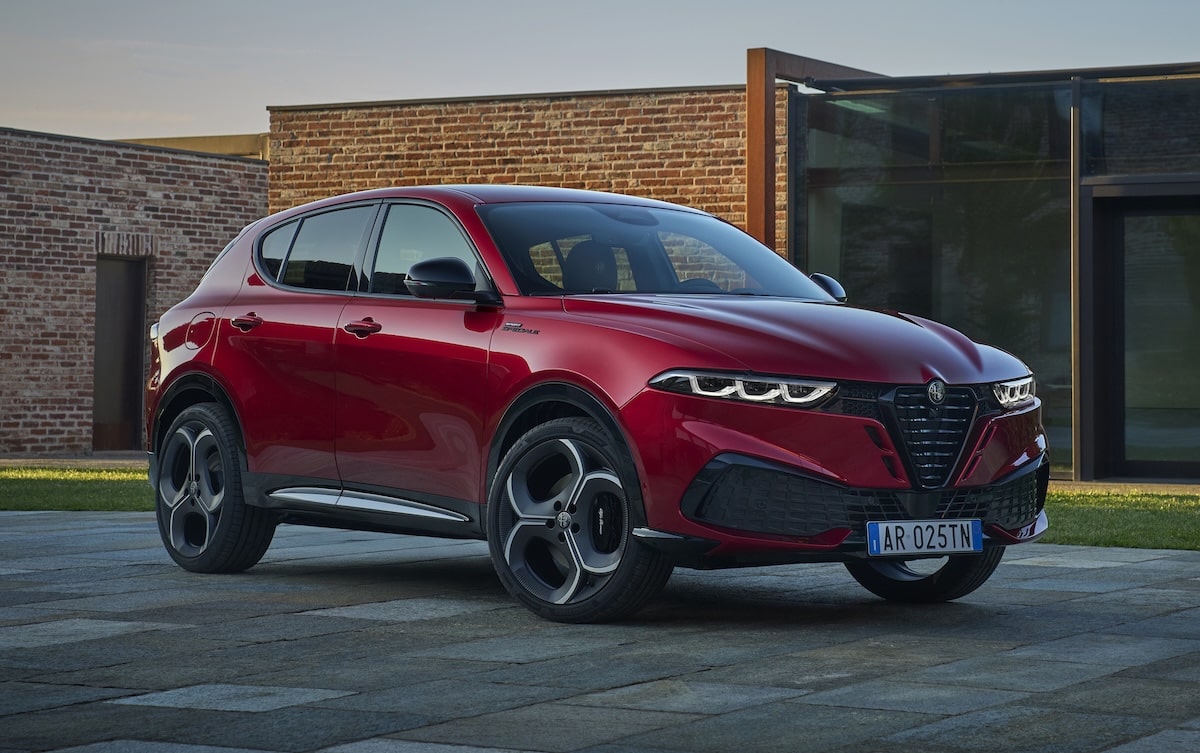
Earlier this year, Alfa Romeo announced a Tonale’s successor and a new compact hatchback. The former will use Stellantis’ STLA Medium platform and be built in Italy alongside the DS No. 7 and No. 8, Lancia Gamma and Jeep Compass. Unlike the current Tonale, the replacement will offer a battery-electric variant.
The compact hatchback will mark Alfa’s return to the segment after the Giulietta was discontinued at the end of 2020. It will use Stellantis’ STLA One platform, which accommodates small, compact and entry-midsize vehicles with battery-electric or internal-combustion-based powertrains.
New Midsize Models Are Plagued By Partnerships
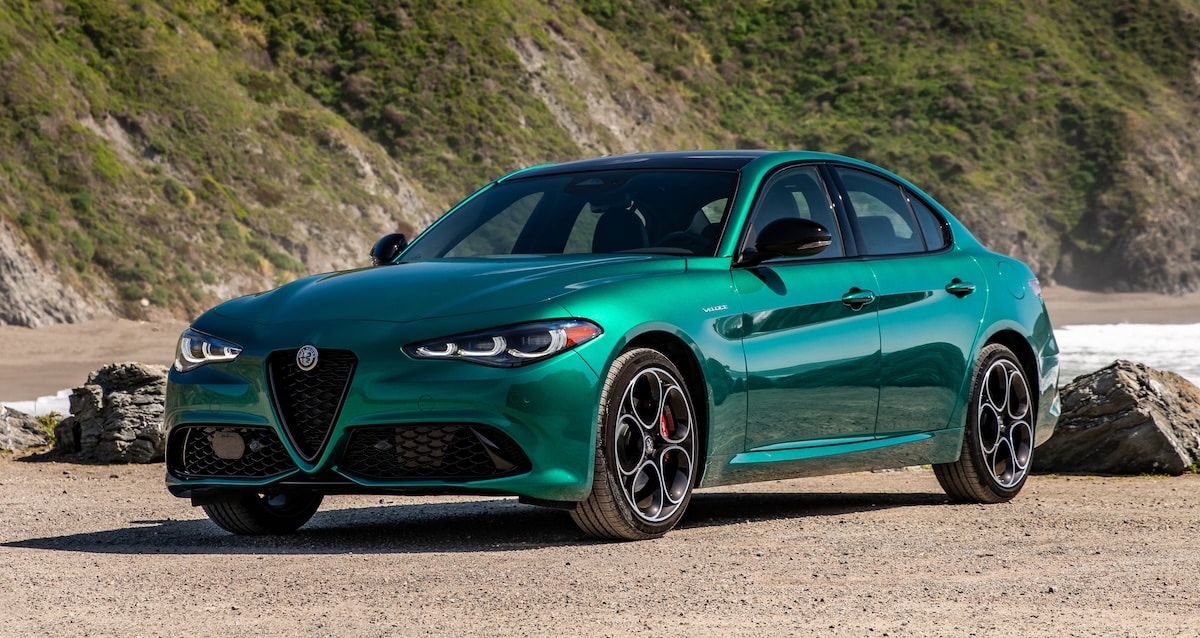
The larger Giulia and Stelvio replacements present a more complicated problem. “We are currently evaluating two to three solutions to launch new D-segment (midsize) models, some coming from our engineering department and some from external partners,” Stellantis Enlarged Europe COO Emanuele Cappellano said May 29.
“Partnerships permit us to accelerate the launch of new models and to increase the scale of their core components. This is what we are currently evaluating for Alfa Romeo and Maserati,” he added.
Partnerships have become central to Stellantis CEO Antonio Filosa’s turnaround strategy. Peugeot and Jeep are collaborating with Dongfeng in China, which will also share factory space at a Stellantis plant in western France. Opel, meanwhile, will develop an electric compact SUV using Leapmotor underpinnings for production in Spain.
The Upshot
For Alfa Romeo, the underlying question is whether those arrangements can deliver fresh products before its aging lineup further erodes sales. Alfa Romeo sales in Europe fell 22% through August to 31,924 vehicles, while lackluster U.S. sales add to the pressure on the brand to revive demand.
And while the Cuorerosso establishes a design direction and demonstrates that electrification need not mean abandoning performance, it lacks a launch date for vehicles that Alfa needs most. The brand has shown its heart. Stellantis still needs to determine how to get it into showrooms and on buyers’ shopping lists.