There are car shows, and then there is Pebble Beach. A car show has a parking lot, folding chairs, a warm can of soda, overweight sunburned men in T-shirts, and Dave explaining why his intact-but-dilapidated 1975 Bricklin SV-1 is actually an important automobile. Pebble Beach has the Pacific Ocean, the 18th fairway at Pebble Beach Golf Links, beautiful people, and automobiles worth more than most houses being judged on whether their door handles are historically correct.
One is a car show. The other is an international tribunal for chrome.
The Pebble Beach Concours d’Elegance turns 75 on August 16, 2026. That’s an impressive age for anything, especially an event devoted to machinery supposedly designed to make the future arrive faster. Seventy-five years suggests permanence, tradition and gravitas. It also suggests the institution has existed long enough that nobody asks why it exists anymore. They ask whether the upholstery is original.
But Pebble Beach wasn’t born as a monument to automotive history.
The Starting Line
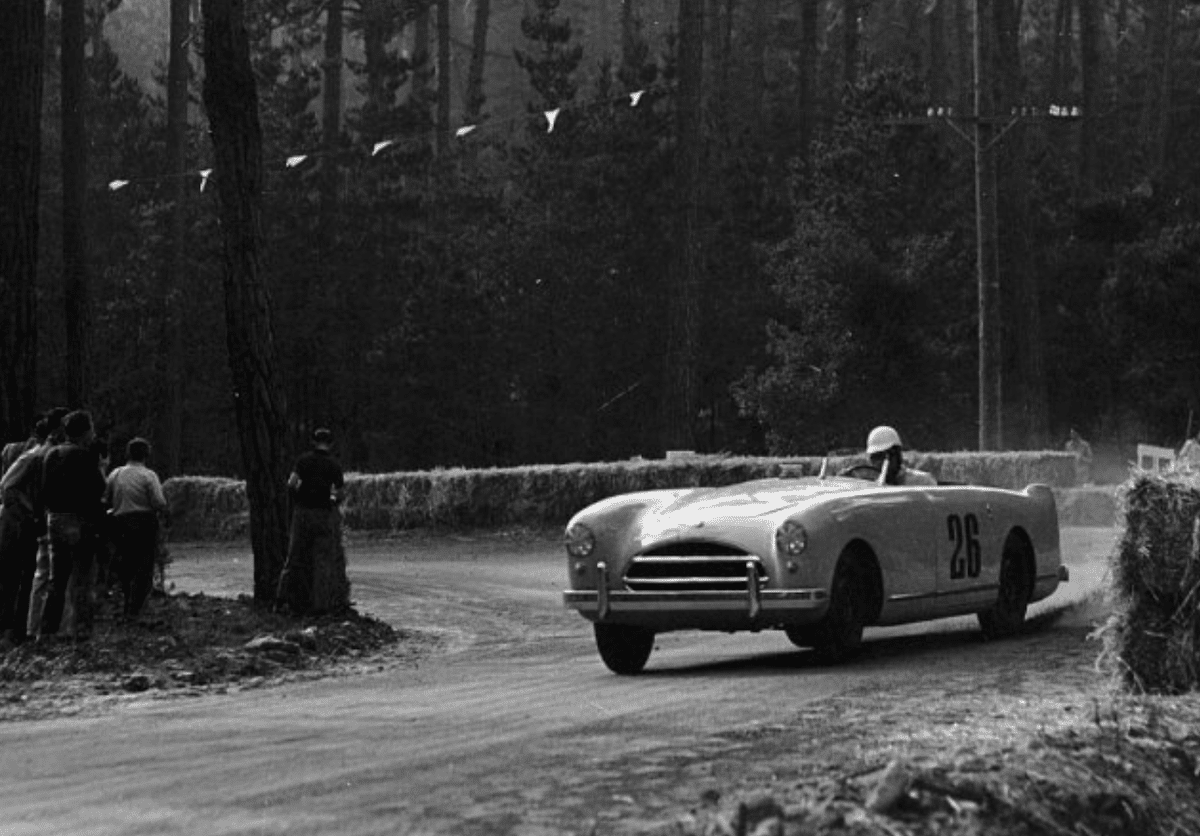
It’s 1950, and Sterling Edwards wants a road race.
It’s understandable. Postwar America was discovering European sports cars, speed, and the intoxicating possibility that a respectable person could spend Sunday afternoon driving a tiny, expensive machine toward a hay bale at 90 mph.
Edwards approaches Del Monte Properties about staging a race at Pebble Beach. He gets his race and, almost as an afterthought, a concours for people who prefer automobiles as objects of admiration. At the last minute, Edwards enters his own R-26 Special Sport Roadster in the concours, hoping to manufacture it. It wins Best of Show.
Among the road race competitors is a young Phil Hill. “We were driving through this forest,” Hill said. “It was a real road race and I hadn’t been in one before. There really hadn’t been any such thing on the West Coast.”
Hill wins the road race in a Jaguar XK120. Ironically, the man who creates the race wins the beauty contest while the man who wins the race goes on to become America’s first World Drivers’ Champion.
The Golf Course Becomes a Museum
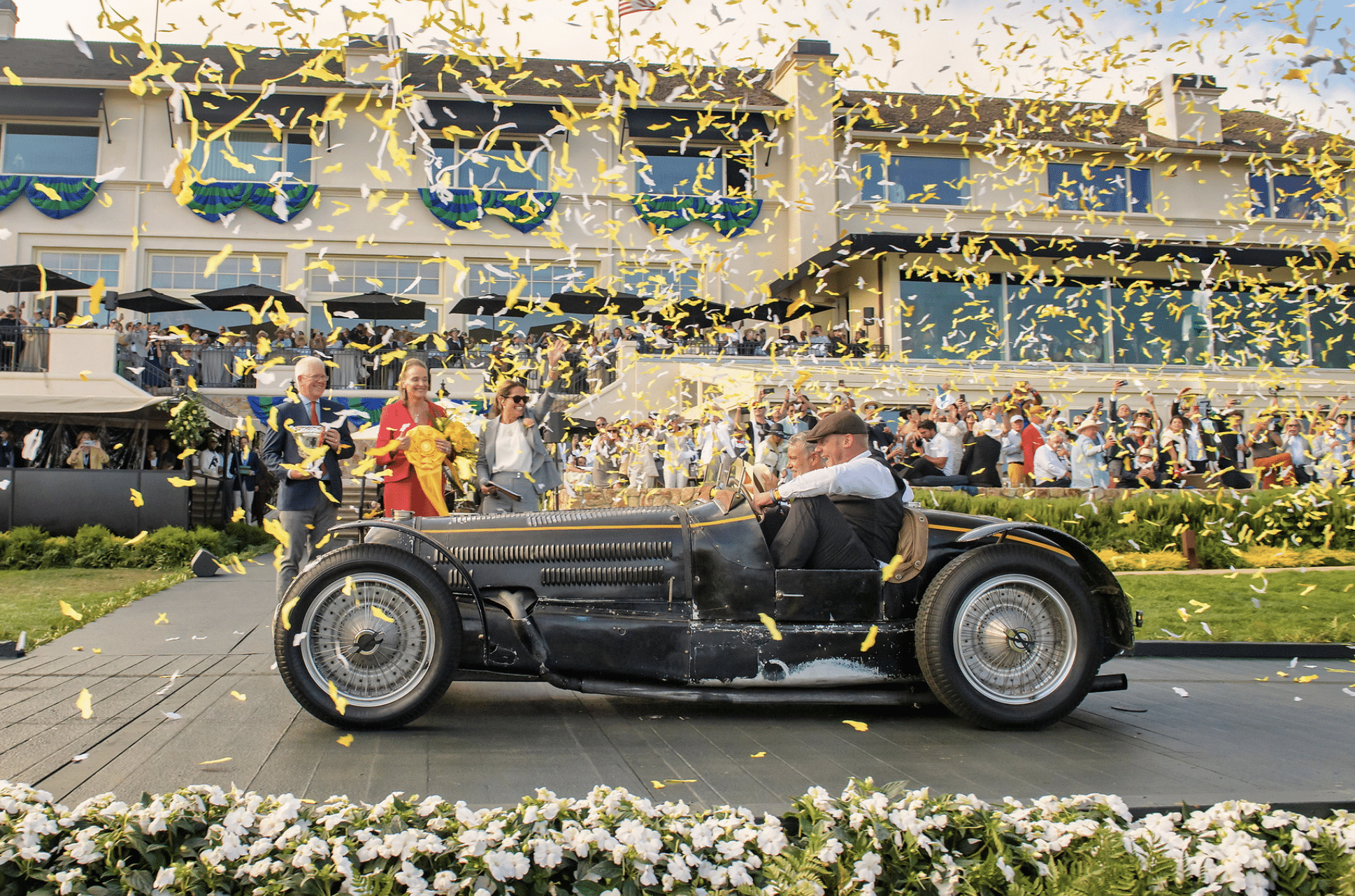
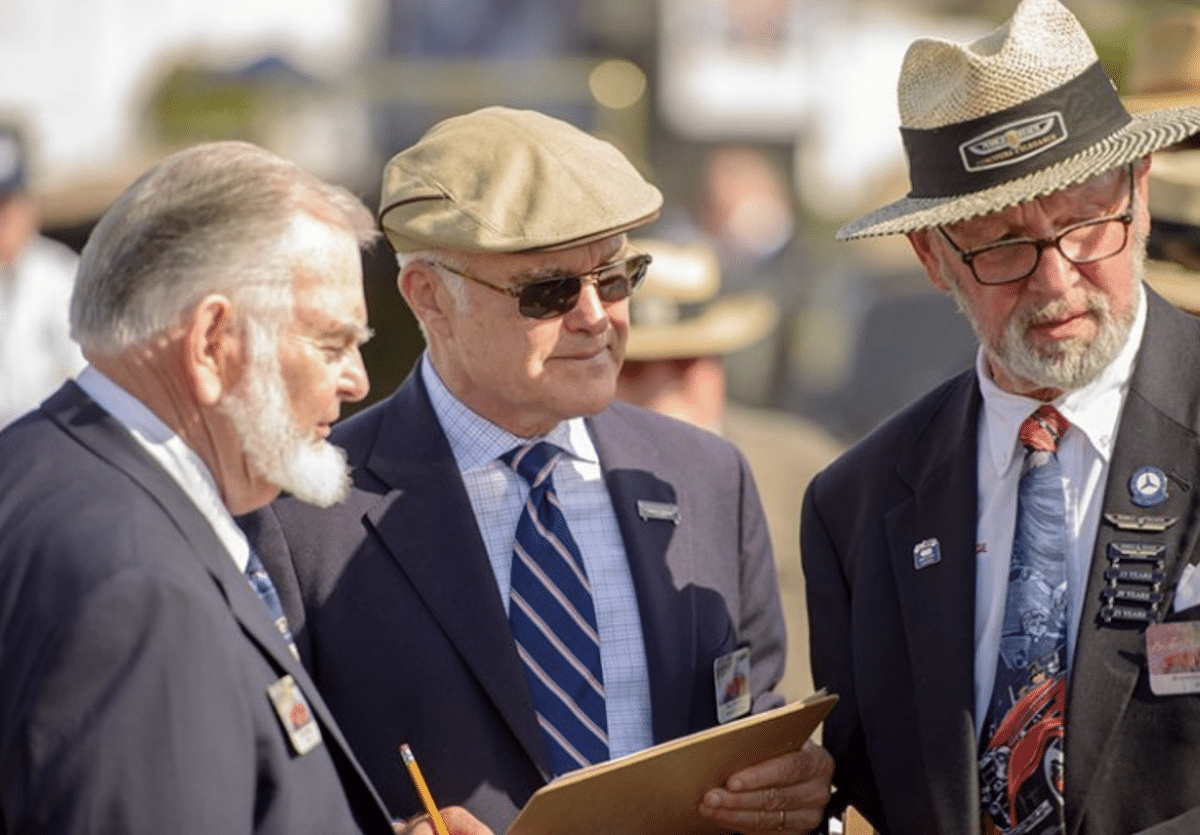
Now, every third Sunday in August, cars gather on the 18th fairway of the Pebble Beach Golf Links, With the Pacific Ocean behind them, there’s enough natural beauty on the Monterey Peninsula to make adding a vintage Ferrari seem almost unnecessary. Almost. Owners, collectors, designers, historians, restorers and the hoi polloi circulate among the cars as judges inspect coachwork, engines, interiors, hardware and details most people have never noticed, much less care about.
It’s where a billionaire can spend $20 million restoring an automobile and still lose because of the wrong hose clamp.
This is Pebble Beach.
The concours is the jewel of Monterey Car Week, which temporarily turns the peninsula into a Vatican for the automotive faithful: auctions, historic races, driving tours, displays and enough concentrated automotive wealth to make the IRS briefly consider taking up golf.
Pebble Beach Discovers the Past
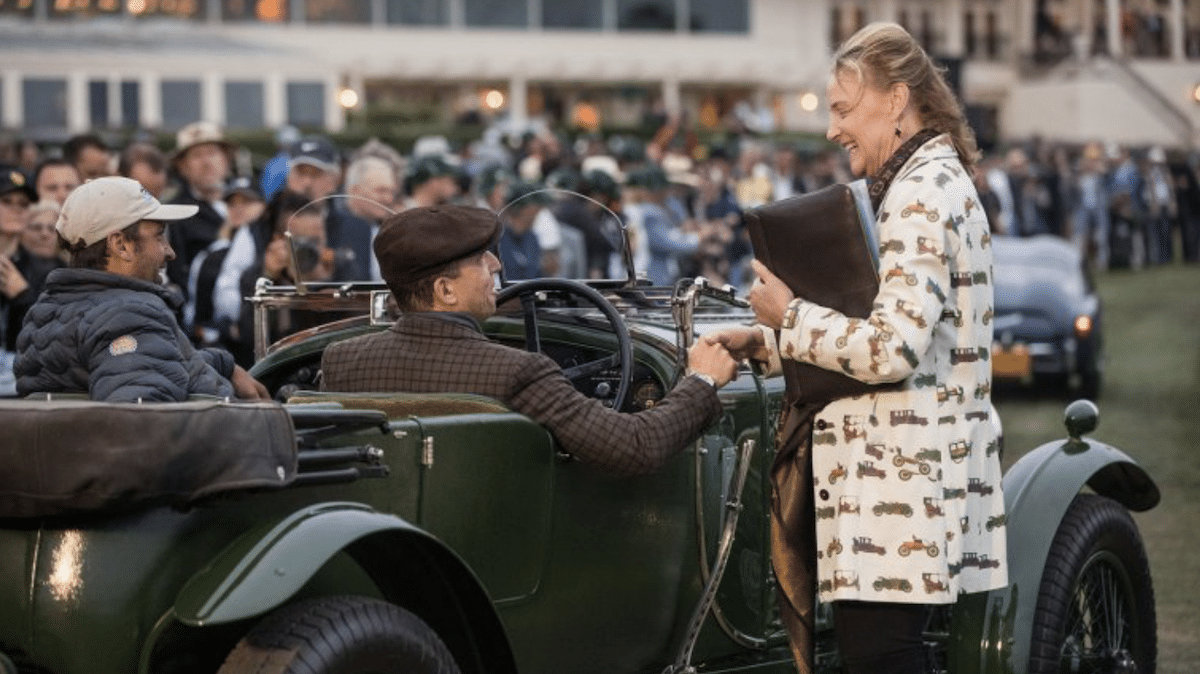
At first, Pebble Beach focused largely on new automobiles. Then, in 1955, Phil Hill’s 1931 Pierce-Arrow wins best of Show and Pebble Beach discovers the past. This is useful because automobiles have an annoying habit of becoming old while their owners insist they remain perfectly current.
Vintage cars gradually transform Pebble Beach from an automotive new car showcase into an archaeological dig conducted by people wearing Italian loafers. The cars are no longer merely cars. They are documents. A Duesenberg reveals American industrial ambition. A Bugatti reveals European engineering eccentricity. A Ferrari reveals that somebody, somewhere, had decided ordinary transportation was insufficiently dramatic.
The automobile becomes evidence. Pebble Beach is its courthouse.
Rolling Sculpture, With Receipts
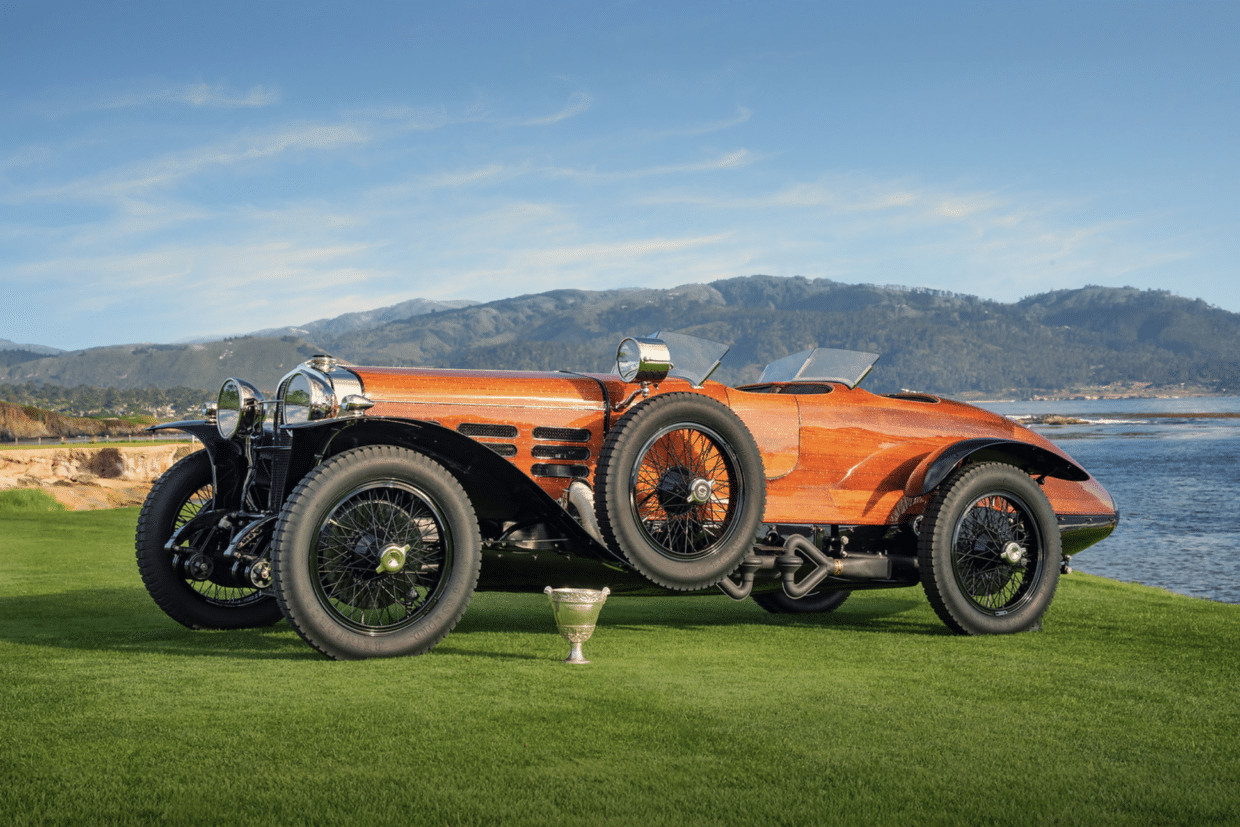
The cars are extraordinary. The obsession surrounding them may be even more so. Certainly, money helps. But money doesn’t make your car correct. That’s one of Pebble Beach’s great consolations. You can own a magnificent automobile and still be told the wrong fastener is hiding underneath it. This is how civilization advances.
Yet the definition of automotive perfection has changed. For decades, the immaculate restoration ruled. The goal was a car that looked as though it had just left the factory, except the factory had been demolished 60 years ago and everyone involved was dead.
Increasingly, preservation matters. Original materials matter. Patina matters. Evidence of a car’s actual life matters. And that makes sense. A car that survives decades of racing, touring, neglect, restoration and ownership possesses something a freshly reconstructed automobile cannot: a past.
You can restore a car until it’s flawless. You can’t restore history. It’s only original once.
The Upshot
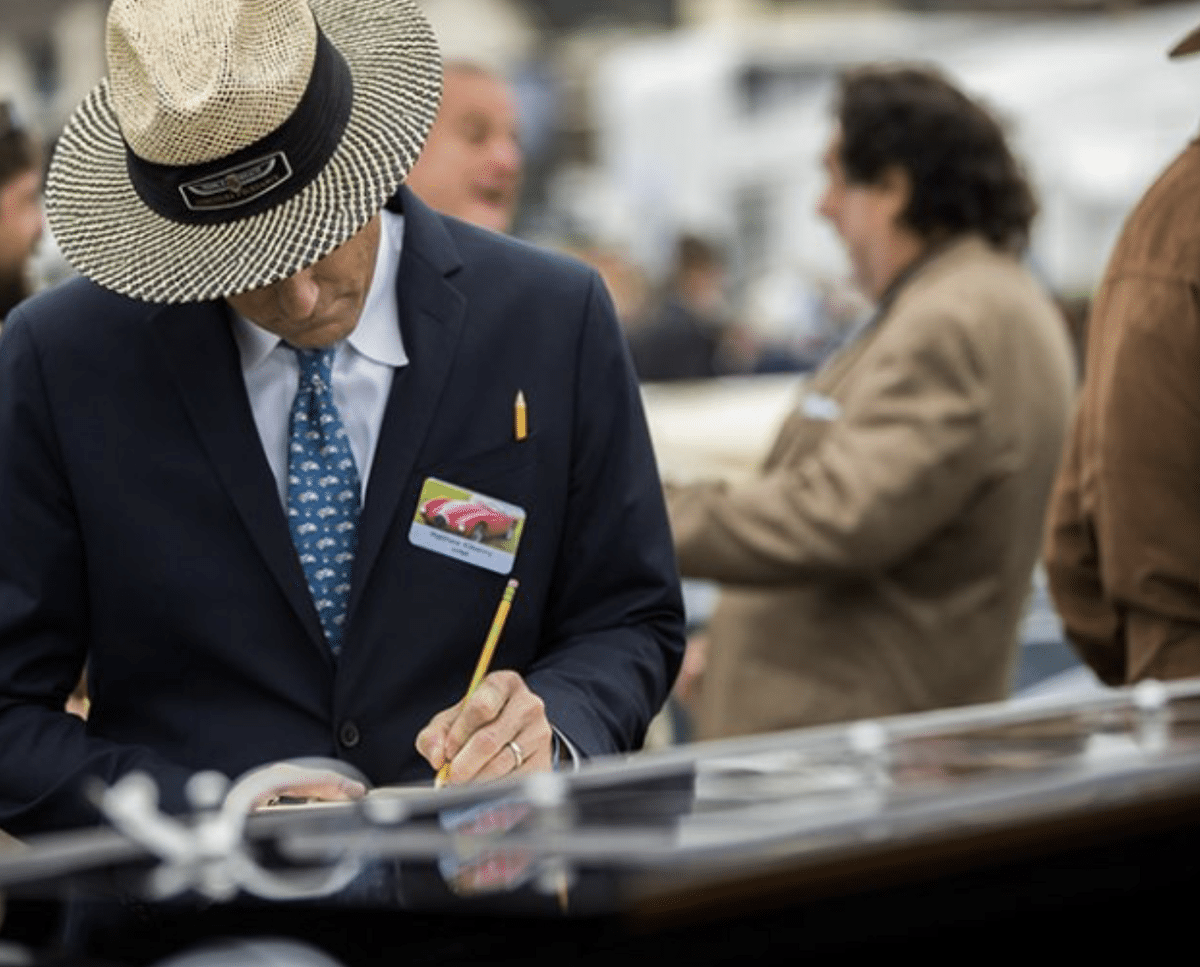
Pebble Beach reminds us what modern automakers mostly forget: transportation can be beautiful, engineering can be theatrical, and going somewhere can be an event. Pebble Beach simply put a judging sheet on the idea. Meanwhile, somewhere nearby, a child sees a Ferrari for the first time and unknowingly makes a terrible financial decision about his future. That’s the manifestation of Pebble Beach.
Three-quarters of a century after Sterling Edwards put a race on these roads, the automobiles and their owners still arrive, submit to judges, endure the scrutiny and accept the trophies. Then, the judging ends, the spectators go home and the machines do what they were built to do. They move.
After 75 years, Pebble Beach still refuses to let the automobile become furniture.
(Editor’s note: This column originally appeared in The Car Collective Substack. )