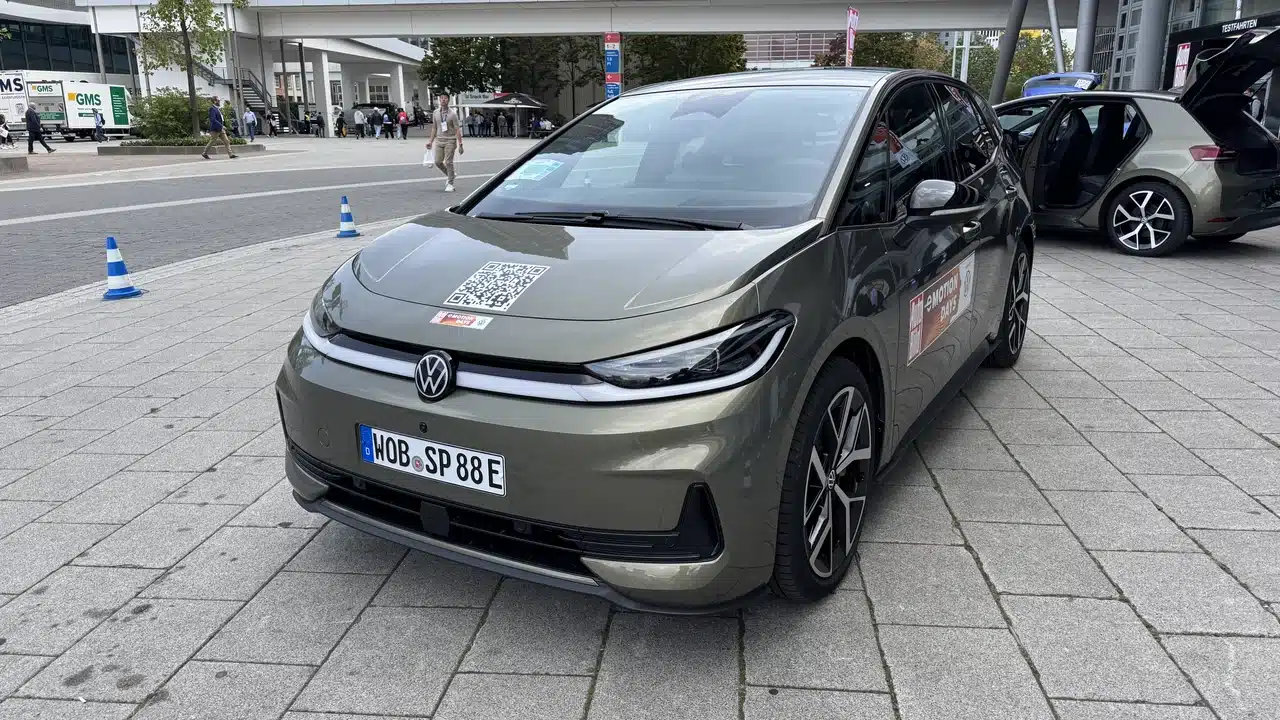
I went to Germany for Automechanika Frankfurt and came away with a question for Volkswagen: Why can’t American buyers have an electric hatchback like this? My VW ID.3 Neo review took me from a walkaround at the show to Frankfurt streets and a stretch of Autobahn, giving me a first taste of a small EV with a surprisingly welcoming interior.
This was a short first drive, not a long-term range or charging test. Still, the comfortable ride, useful cabin and return of actual buttons made a good impression. Here are the four things that stood out.
The cabin wins me over with actual buttons
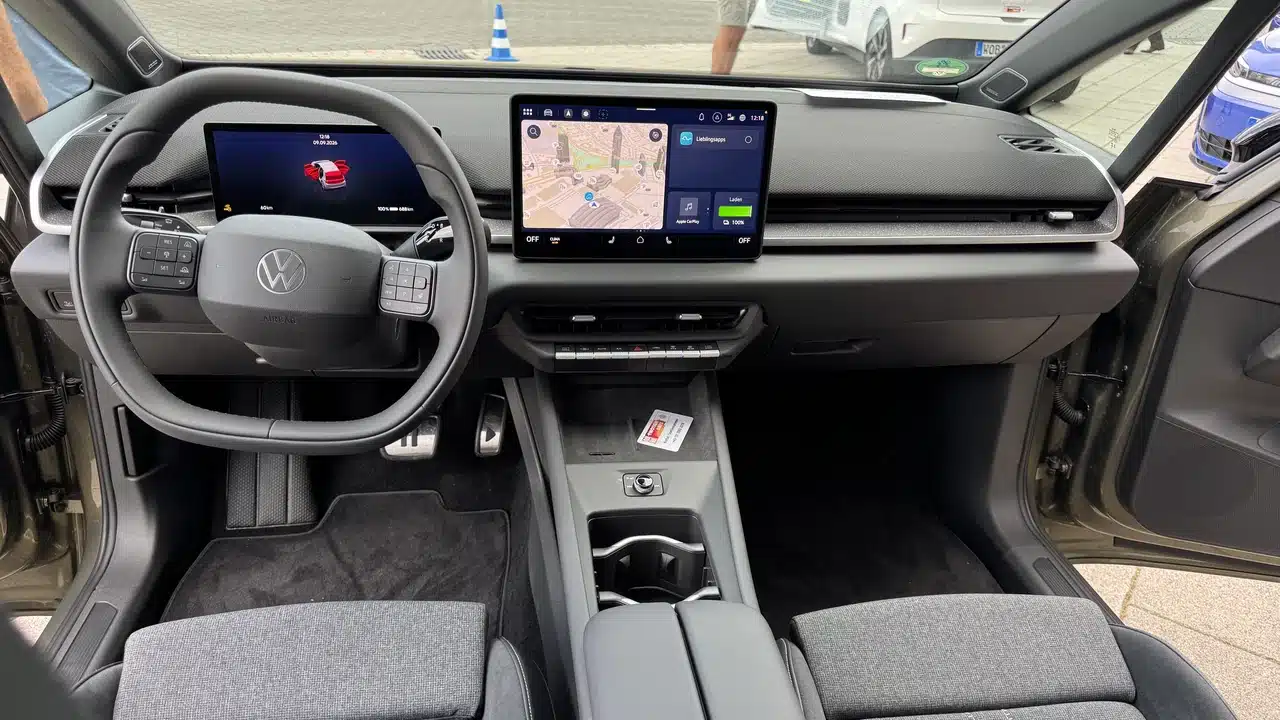
The first thing I appreciated was something pretty basic: buttons. There are four window switches on the driver’s door, physical controls on the steering wheel and straightforward controls around the cabin. That might not sound exciting, but it matters when you are learning an unfamiliar car in an unfamiliar country.
The front seats were comfortable during my drive, and the combination of cloth and bolstering looked good. I also liked the adjustable cupholder arrangement and the useful space around the center console. These are the details you notice every day after the excitement of a new vehicle wears off.
There is plenty of technology, too. The digital instruments include a retro-looking display that reminded me of an older Volkswagen Rabbit. The head-up display and camera views add modern conveniences without making the entire experience feel like a touchscreen exercise.
A small footprint with useful passenger space
This is the kind of compact hatchback that makes sense on European streets. According to Volkswagen’s ID.3 Neo specifications, it measures about 169 inches long, with a roughly 109-inch wheelbase. That corrects the longer measurement I mentioned during the walkaround in the video.
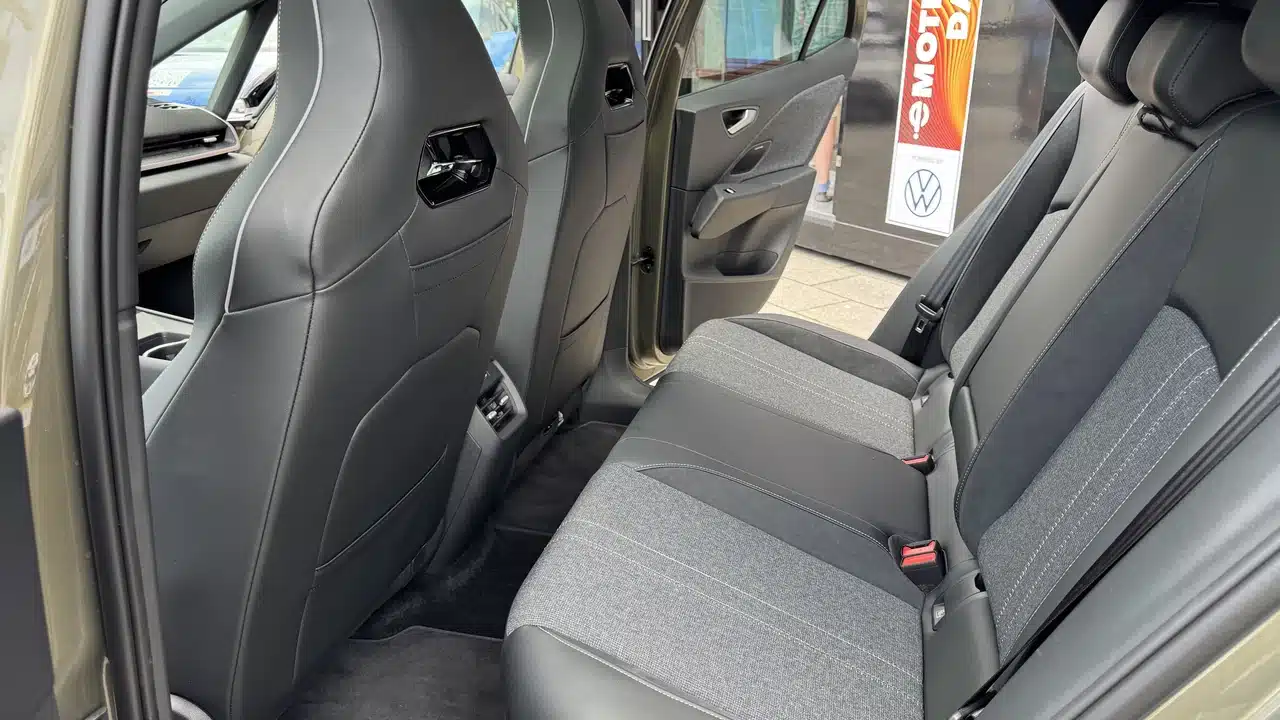
Inside, I found good headroom, including beneath the panoramic roof. I am 5 feet 7 inches tall, so keep that in mind when watching me check the back seat. My experience is useful context, but taller passengers should do their own sit test. Rear passengers also get air vents and USB-C connections.
The hatch area swallowed my bag, and lifting the cargo floor revealed storage for items such as the charging cable. It is a practical arrangement for a small car. I would want more time with luggage and passengers before calling it a family road-trip solution, but the initial packaging impressed me.
Smooth power on Frankfurt streets and the Autobahn
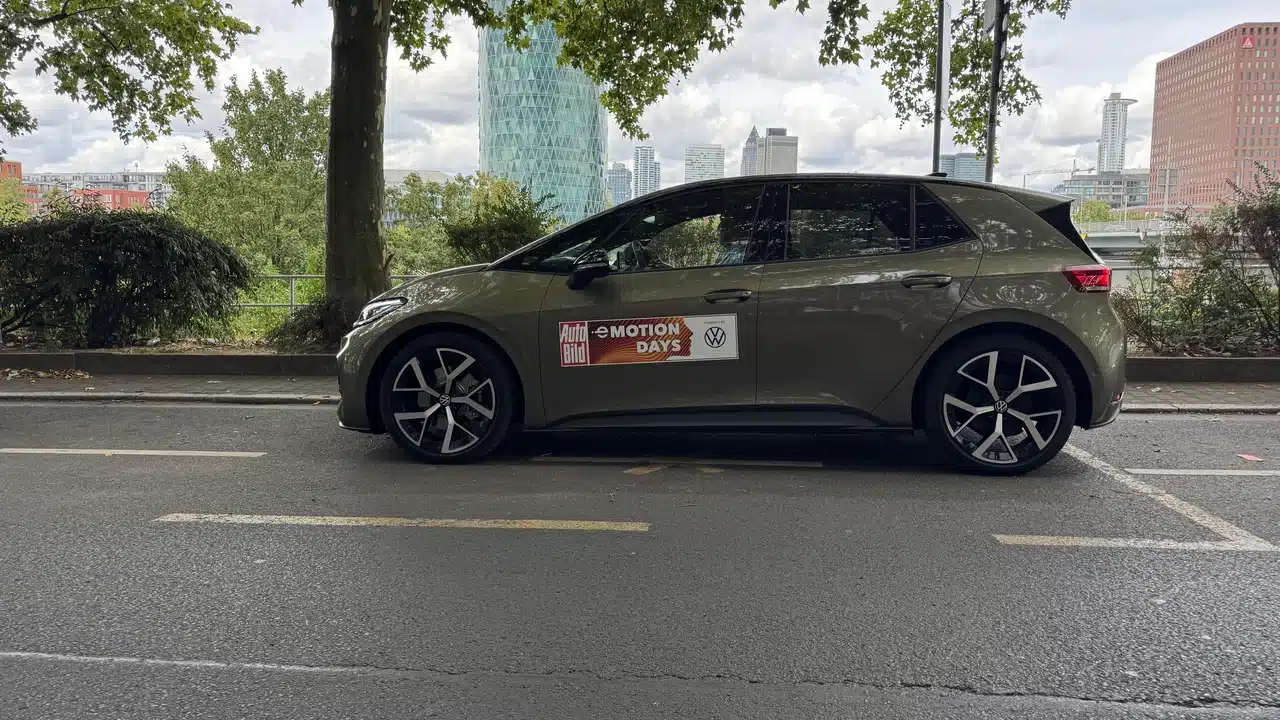
This was my first time driving in Europe, so I had plenty to absorb before worrying about performance numbers. Along the Main River and over some bumpy pavement, the ID.3 Neo felt smooth and comfortable. Acceleration was easy to manage, and I liked the visibility and seating position.
We also went through the D and B driving settings before getting underway. The stronger lift-off regeneration changes how the car feels when you ease off the accelerator. It is worth trying the settings yourself instead of assuming every EV behaves the same way.
On the Autobahn, the display reached an indicated 163 km/h, or about 101 mph, before we slowed for a posted limit. That is a speedometer observation, not a measured top-speed test. For me, the more relevant takeaway was how comfortable this small hatchback felt during a brief mix of city streets and faster driving.
Volkswagen lists rear-wheel drive and outputs up to 170 kW, approximately 228 horsepower, depending on version. My first drive was about getting acquainted with the car; I did not conduct instrumented acceleration testing.
Could this electric hatchback work in America?
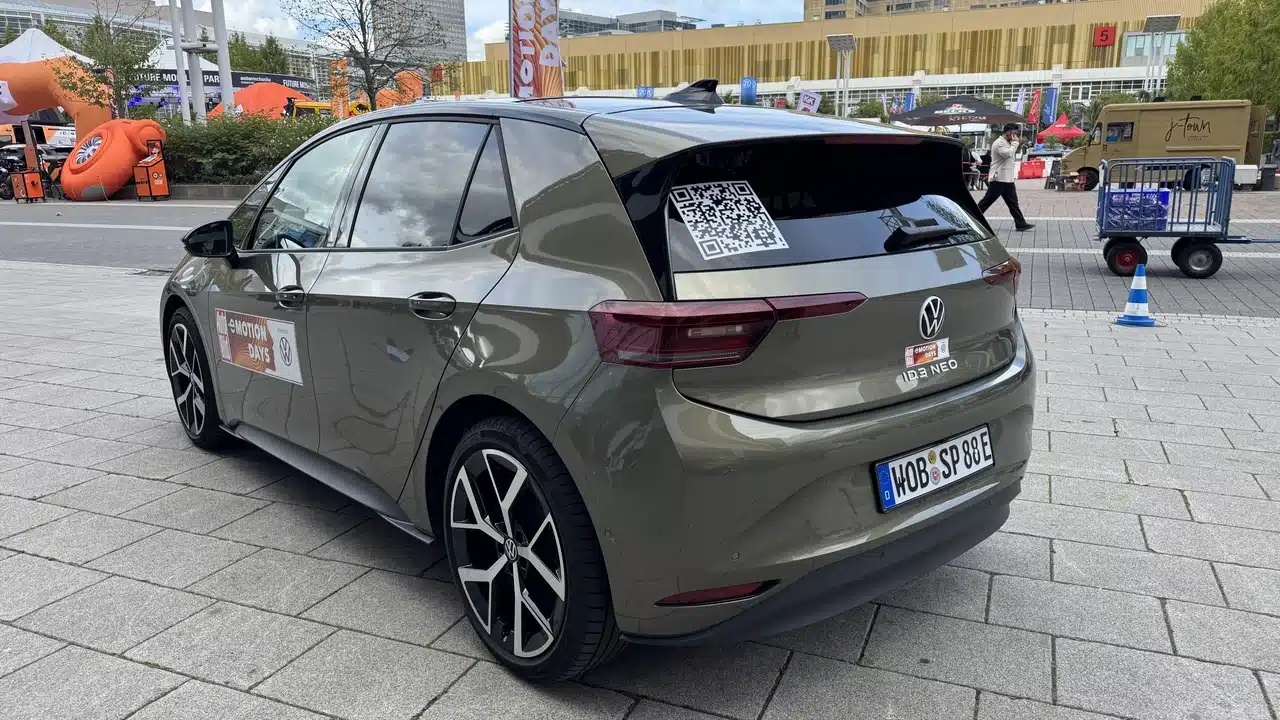
I think a car like this could find an audience in American cities. During the drive, I kept coming back to places such as Chicago and Los Angeles, where a manageable footprint is useful. The same argument is harder to make for every driver in a place like Wyoming. How and where you drive still matters.
Volkswagen offers 50-, 58- and 79-kWh usable battery capacities and quotes up to 630 kilometers, about 391 miles, under the European WLTP test cycle. That is not a U.S. EPA rating, and I did not test that range. Likewise, the dollar comparison in the video is an estimate, not an announced American sticker price.
An American version would need the right price and a charging setup that fits buyers’ lives. Those questions remain separate from whether I enjoyed driving it. After this first taste, I would like to see Volkswagen give U.S. shoppers the choice. A comfortable, practical electric hatchback deserves a place in the conversation alongside all the SUVs.
Watch my full Frankfurt walkaround and first drive below. The video includes a sponsored segment for ScreenProTech.