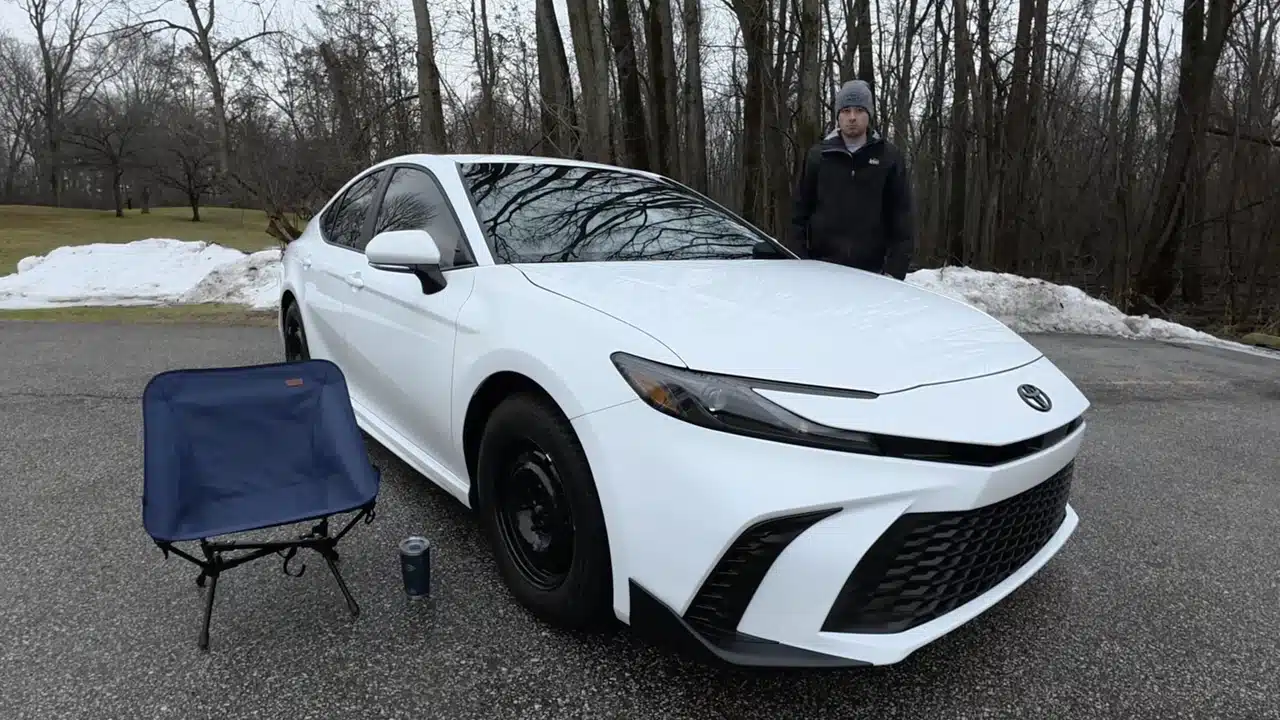
A car can be easy to recommend and still have a few things that bother its owner every day. That is the picture Travis, the creator behind the YouTube channel yoopercharged, paints of his 2025 Toyota Camry SE AWD after about 10 months and nearly 15,000 miles.
In his January 2026 ownership update, the hybrid sedan earns praise for fuel economy, comfort and straightforward controls. The complaints are more about living with the car: a chipped front bumper, intermittent interior noises and driver-assistance behavior he finds irritating. This is his experience with one Camry, rather than a We Talk Cars road test or a measure of how frequently other owners have the same issues.
The useful number is 42.1 mpg
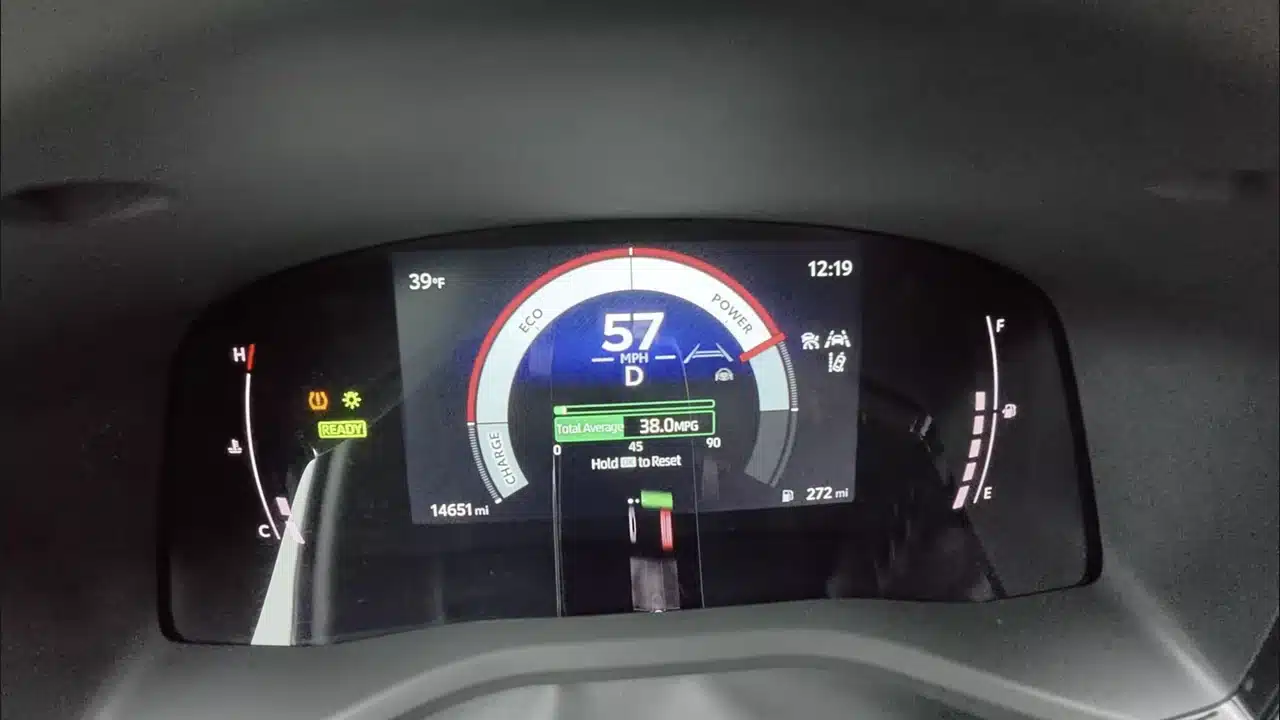
Travis says he tracked fuel use for about 13,500 miles and calculated an average of 42.1 mpg. His seasonal results matter as much as the overall figure. He reports getting 46 mpg or better in summer, with winter driving closer to 37 mpg in Michigan. His best tank came in just under 50 mpg.
He also says the dashboard readout often shows a higher figure than his hand calculations. For a shopper comparing running costs, the lesson is to ask how an owner measured fuel economy and what conditions produced it. A winter commute and a warm-weather trip should not be treated as interchangeable tests.
Comfort makes a stronger impression than sportiness
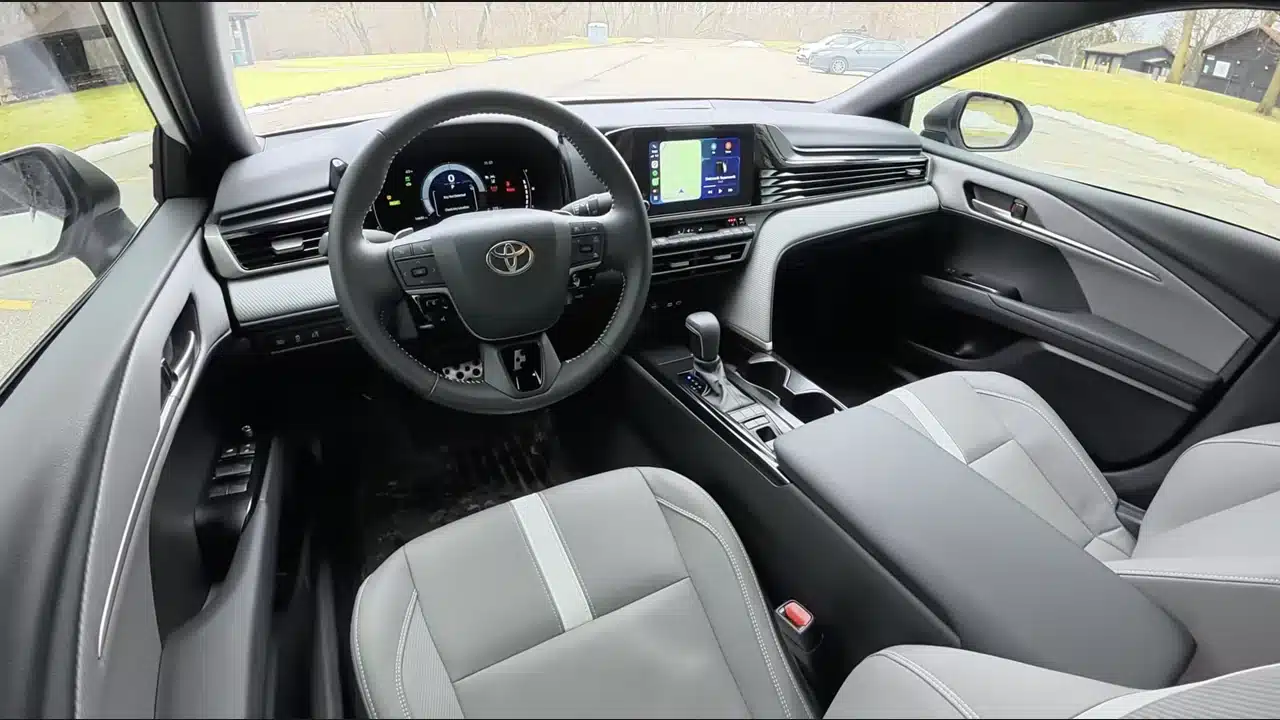
The SE badge does not turn this Camry into a sports sedan in Travis’s telling. He describes light steering, limited feedback and noticeable engine noise under hard acceleration. The ride, however, is a selling point: he finds it comfortable, with enough rear-seat room to make traveling with four adults realistic.
He also appreciates being able to adjust the climate controls with physical switches. Those are the details that can disappear in a specification comparison but become important after hundreds of commutes. Try the seat, controls and rear bench yourself before deciding that a higher trim is necessary.
Paint chips and rattles deserve a closer look
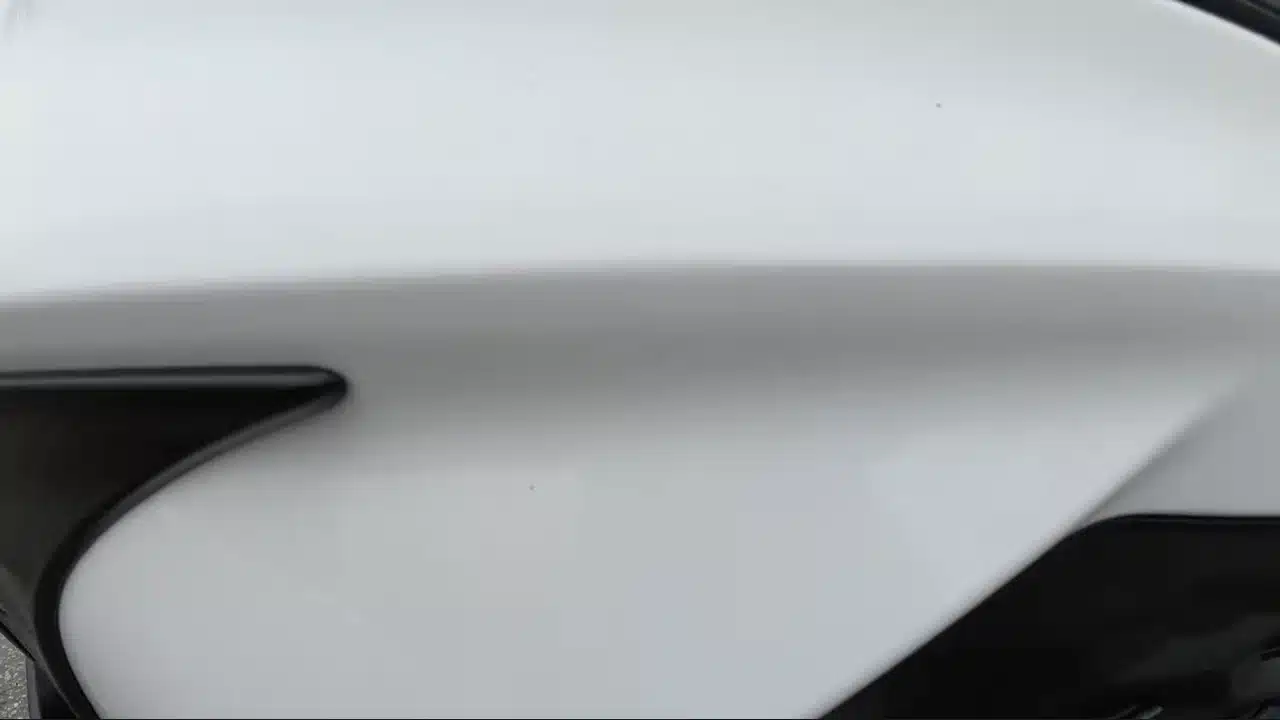
His biggest frustration is chipping on the front bumper. Travis describes driving between Wisconsin and Michigan’s Upper Peninsula, where road crews spread gravel and salt. His car does not have paint-protection film, and he says the hood has held up better than the bumper. That context matters: the video documents wear on his car, but it does not establish a paint defect across the Camry lineup.
Inside, he reports dashboard creaks, a rattle near the driver’s door or B-pillar, and a popping sensation in the seatback. At the time of filming, he says the dealer had not been able to reproduce the latter two concerns. There is no confirmed repair or diagnosis in this update, so buyers should treat these as inspection prompts, not guaranteed faults.
Try the assistance features on roads you actually use
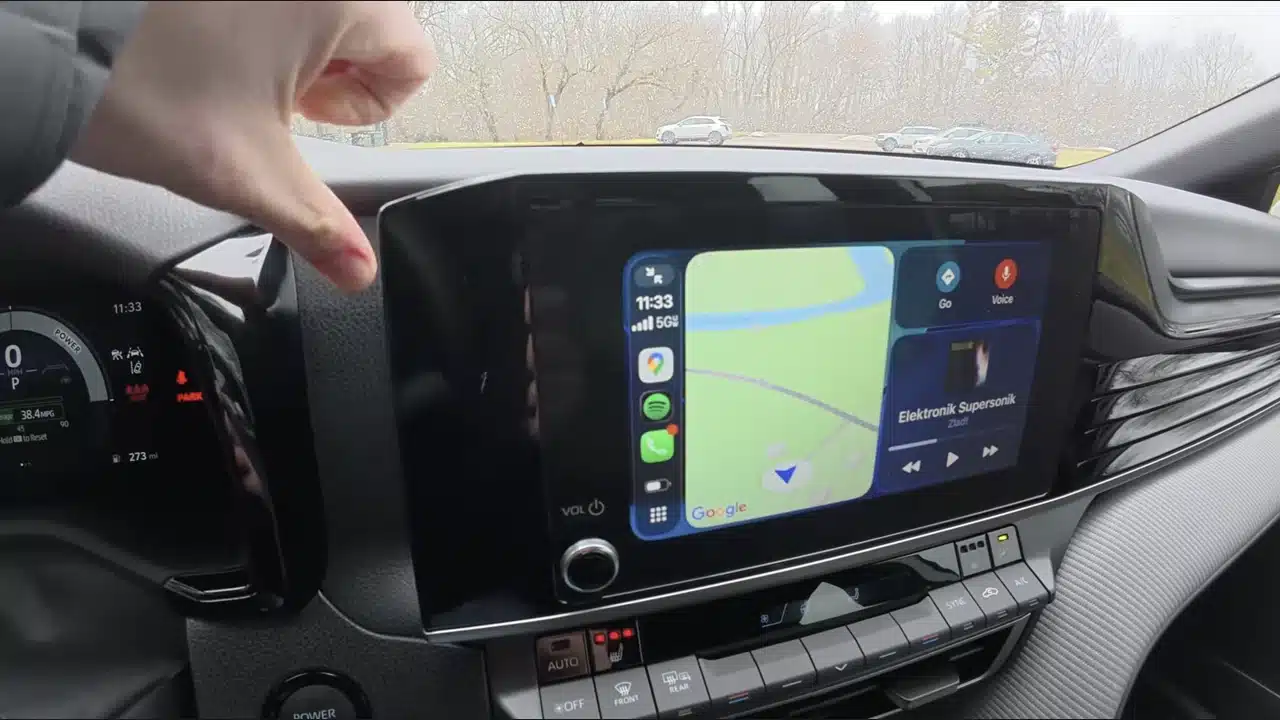
Travis finds the lane-centering system helpful on an uncomplicated highway, but says it can pull toward a right-side line around exits and intersections. He also finds the automatic high beams too eager to dip around reflective signs. Those are his observations, rather than an independent evaluation of the systems.
On a test drive, learn how the assistance settings work and keep control of the car throughout. A feature that feels useful on one road may be distracting on another. Any unexpected steering behavior warrants a discussion with the dealer rather than an assumption that it is normal.
The strongest takeaway is that economy and comfort can outweigh small frustrations without making those frustrations irrelevant. Travis’s report gives shoppers specific things to check: front-end paint condition, seatback movement, cabin noises and whether the trunk accommodates their usual cargo. His praise for the controls and ride deserves the same attention.
Watch the original video below for his full account, including the positives that keep the Camry appealing. If you own a 2025 Camry, tell us your mileage, driving conditions and what has held up well—or needed attention.