
A car that won’t start can still be shipped — but it’s not the same job as shipping one that runs, and treating it as one is the most common way to run into problems at pickup. Here’s how to do it right.
Disclose it at booking, every time
This is the one non-negotiable. Tell the shipping company your vehicle is inoperable before you book, not when the driver shows up.
Loading a non-running vehicle requires a winch, a forklift, or a roll-back tow truck to get it onto the trailer. Not every carrier has this equipment on every truck. A driver who arrives expecting an operable vehicle and finds one that can’t be started has two options: charge additional fees on the spot to source loading equipment, or decline the load.
If the driver declines, you’ve lost your pickup window. Rebooking with a different carrier — this time disclosed as inoperable — means starting over. The timing and cost consequences of this are real enough that there’s no reason to risk it.
What “inoperable” means to a carrier
Carriers need three pieces of information to load a non-running vehicle:
Does it roll? A vehicle that rolls freely — wheels turn, vehicle moves under a gentle push — can be positioned on the trailer with a winch or tow dolly. A vehicle that’s seized and won’t roll at all is a more complex loading job.
Does it steer? If the steering is locked or the front wheels won’t turn, the driver can’t maneuver the vehicle into position on the trailer without additional equipment.
Does it brake? Functional brakes are needed to hold the vehicle in position once it’s on the trailer.
Give the carrier these specifics at booking. “The engine is dead but everything else works” is very different from “the wheels are seized and the steering doesn’t engage.”
Equipment and trailer type
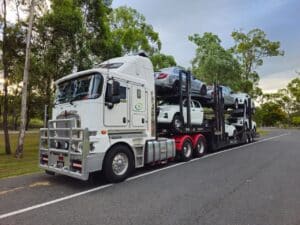
Standard multi-car carriers — the open trailers holding 8 to 10 vehicles — can accommodate most inoperable vehicles if they roll and steer. The winch pulls the vehicle onto the trailer.
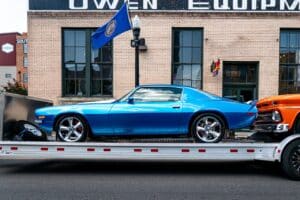
If the vehicle is fully seized and won’t roll, or is damaged in a way that prevents standard loading, a flatbed or roll-back may be needed. These are available through specialized carriers. Tell the company exactly what you have, and they can confirm which equipment applies.
Inoperable vehicle shipping costs
Most companies charge an additional $100 to $200 for inoperable vehicles above the standard rate. On some routes or with some vehicle types, the premium is higher.
Typical cost ranges for inoperable vehicle shipping:
- Under 500 miles: $500 to $900 (open carrier)
- 500 to 1,500 miles: $800 to $1,200
- Cross-country: $1,100 to $1,600
These are estimates for open carrier. Enclosed adds $300 to $600 on top, same as any vehicle type.
Insurance considerations for damaged or salvage vehicles
Carrier cargo insurance covers damage that occurs during transport — not pre-existing damage. A vehicle that arrives in salvage condition is shipped in that condition; insurance applies to any new damage incurred during transit.
At pickup, the Bill of Lading documents the vehicle’s condition before loading. For a damaged or salvage vehicle, photograph everything thoroughly before the carrier arrives. A detailed pre-shipment photo record protects you if there’s any question about what’s new versus pre-existing.
Common situations involving inoperable vehicles
Salvage auction purchases: Copart, IAAI, and similar auction platforms move large volumes of non-running vehicles. Carriers on these routes are accustomed to inoperable loads and typically have the right equipment. Disclose the vehicle’s condition at booking and confirm the carrier can handle it.
Non-running collector cars: A classic car that hasn’t run in years but is otherwise in good physical condition can be shipped without issue. The driver needs a vehicle that at minimum rolls and steers.
Accident-damaged vehicles: Damage that affects the wheels, suspension, or frame can complicate loading. Be specific about what’s damaged. The company may need to arrange specialized transport if standard loading equipment won’t work.
Who handles it well
RoadRunner Auto Transport ships inoperable vehicles across all 50 states, plus Alaska, Hawaii, and Puerto Rico. Their in-house dispatch team matches your vehicle with a vetted carrier equipped for non-standard loading — not a shared marketplace where you hope the right equipment shows up. No deposit required until carrier assignment. Get an accurate quote at roadrunnerautotransport.com.