With more than 400,000 sales annually, the Honda CR-V occupies the sort of market position automakers dream about and competitors resent. It’s one of America’s default vehicle choices—the automotive equivalent of ordering a cheeseburger at a diner. You know what you’re getting, it’s probably going to be good, and there’s comfort in its predictability.
But the CR-V is an SUV in the same way a Labrador Retriever is a wolf. There may be some shared ancestry, but one is much more likely to spend its life in suburban comfort than stalking rugged terrain. That’s perfectly fine because most CR-V buyers are looking for reliable transportation, not a companion vehicle for an expedition across the Rubicon Trail.
HONDA’S CR-V HEADS OFF-ROAD
Still, Honda wants some of the outdoorsy credibility that has become fashionable among crossover buyers. Hence the arrival of the 2026 CR-V TrailSport. And that’s where things become complicated.
Honda’s powersports division knows how to build legitimate off-road machines. The company has decades of experience producing dirt bikes, ATVs, and side-by-sides that spend their lives bouncing across terrain most CR-V owners wouldn’t walk across. Yet when Honda applies the TrailSport badge to its SUVs, the result tends to be more lifestyle accessory than backcountry weapon.
HONDA CR-V UPDATES FOR 2026
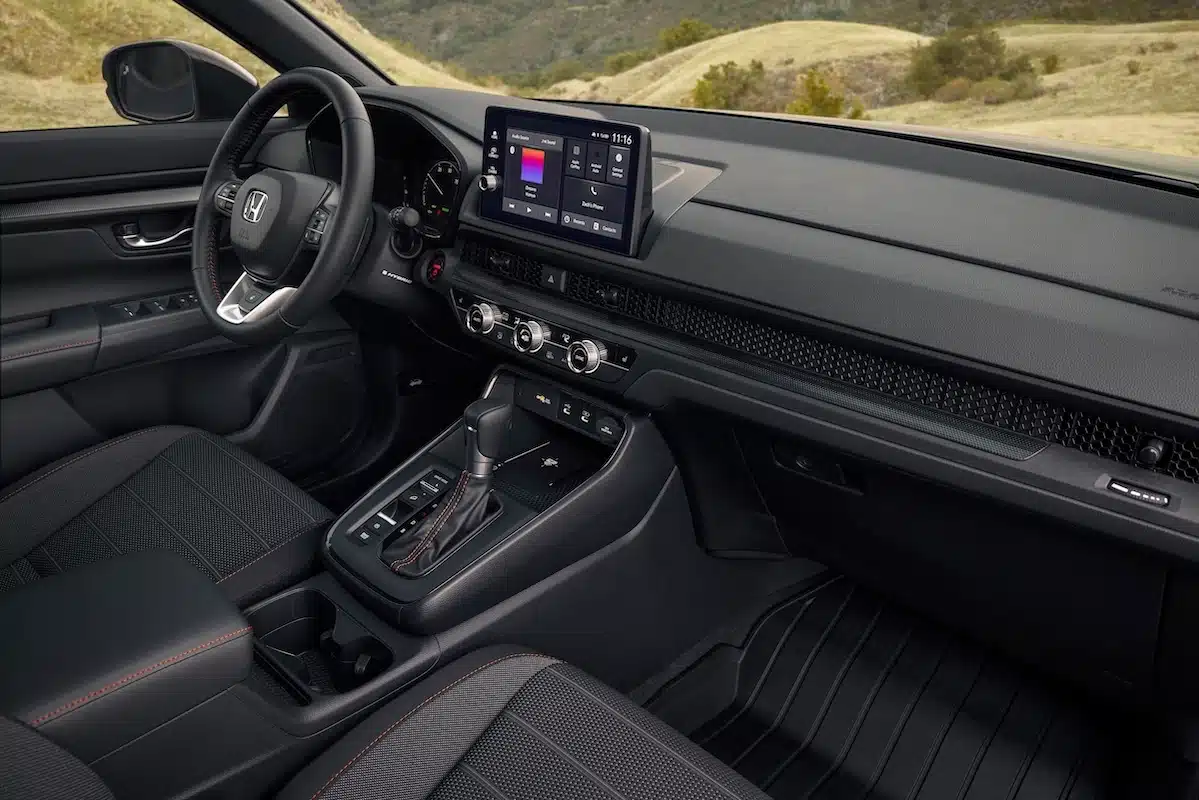
Before discussing the CR-V TrailSport, it’s worth noting that Honda has given the entire 2026 CR-V lineup a modest refresh. Technology receives most of the attention. The infotainment system grows larger, wireless Apple CarPlay and Android Auto are now standard, and wireless phone charging is included across the range. Hybrid models pick up additional black exterior trim, while traction management software receives some revisions intended to improve low-speed grip.
The TrailSport sits near the top of the CR-V hierarchy, below only the Sport Touring Hybrid. Yet its upgrades are largely cosmetic and incremental rather than transformative.
THE HONDA CR-V’S UPDATED WARDROBE
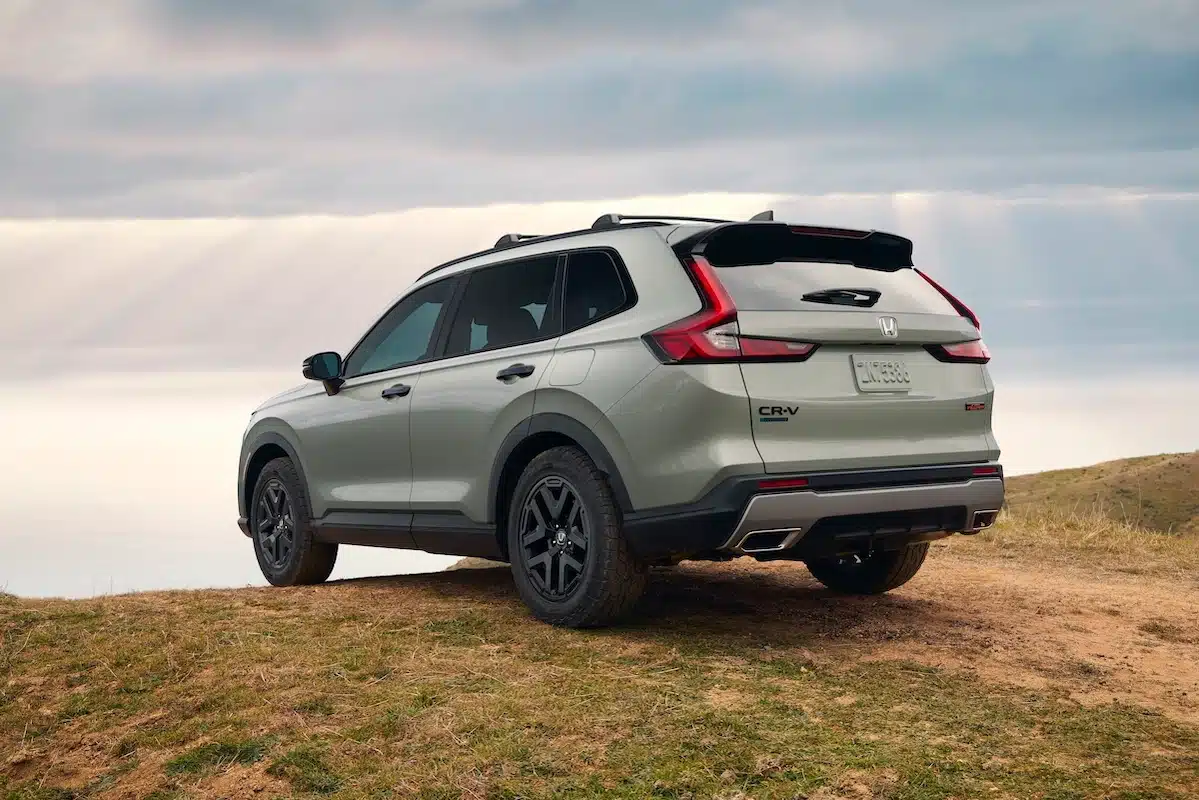
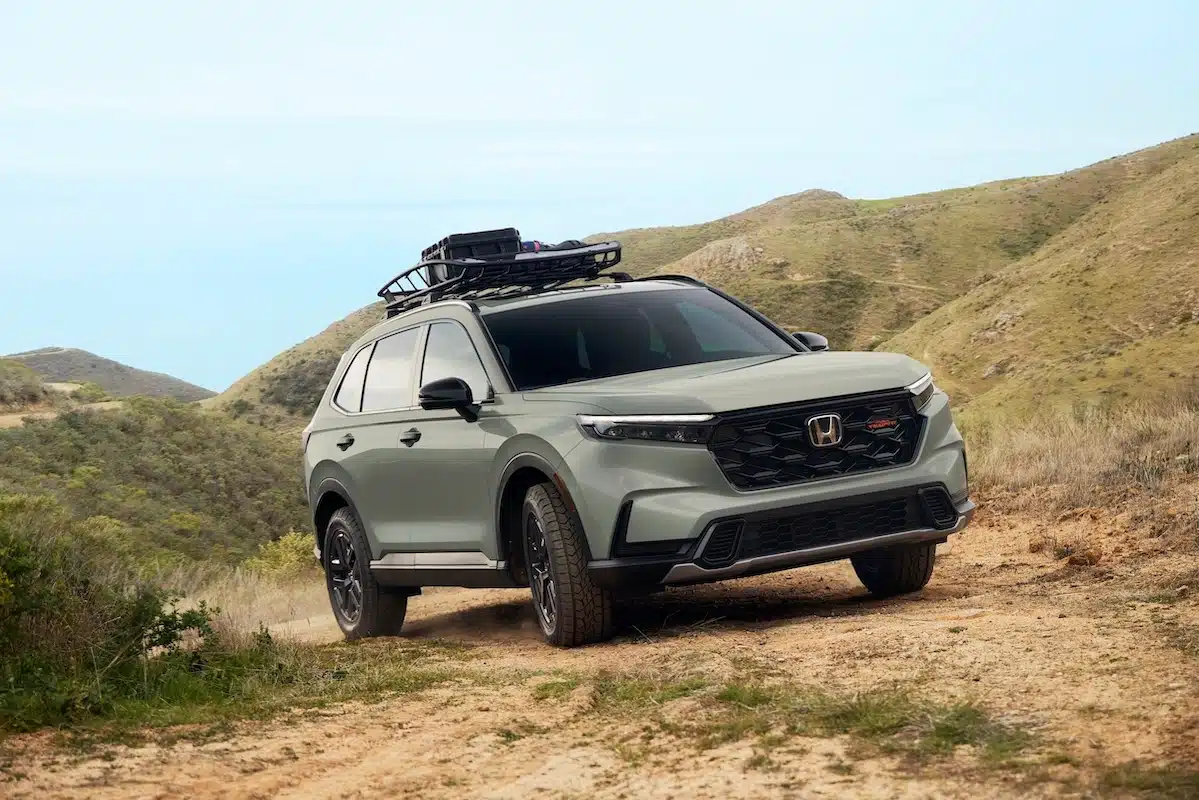
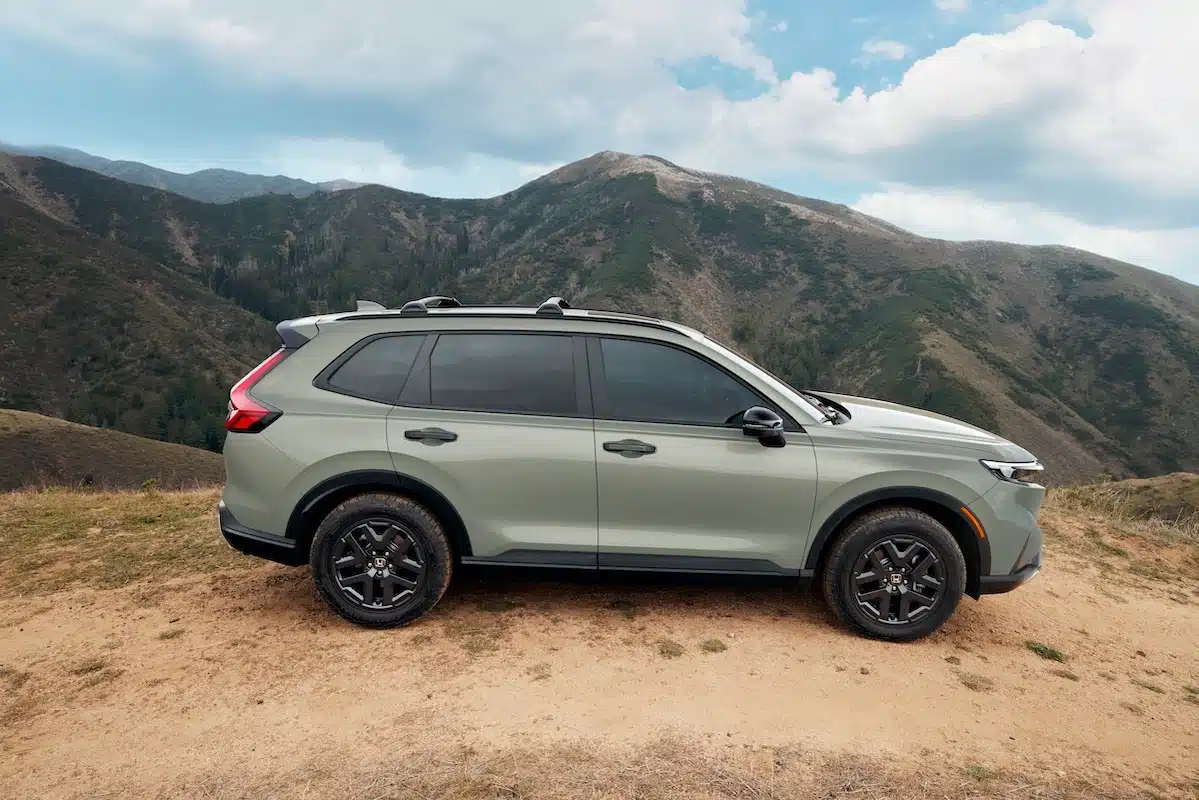
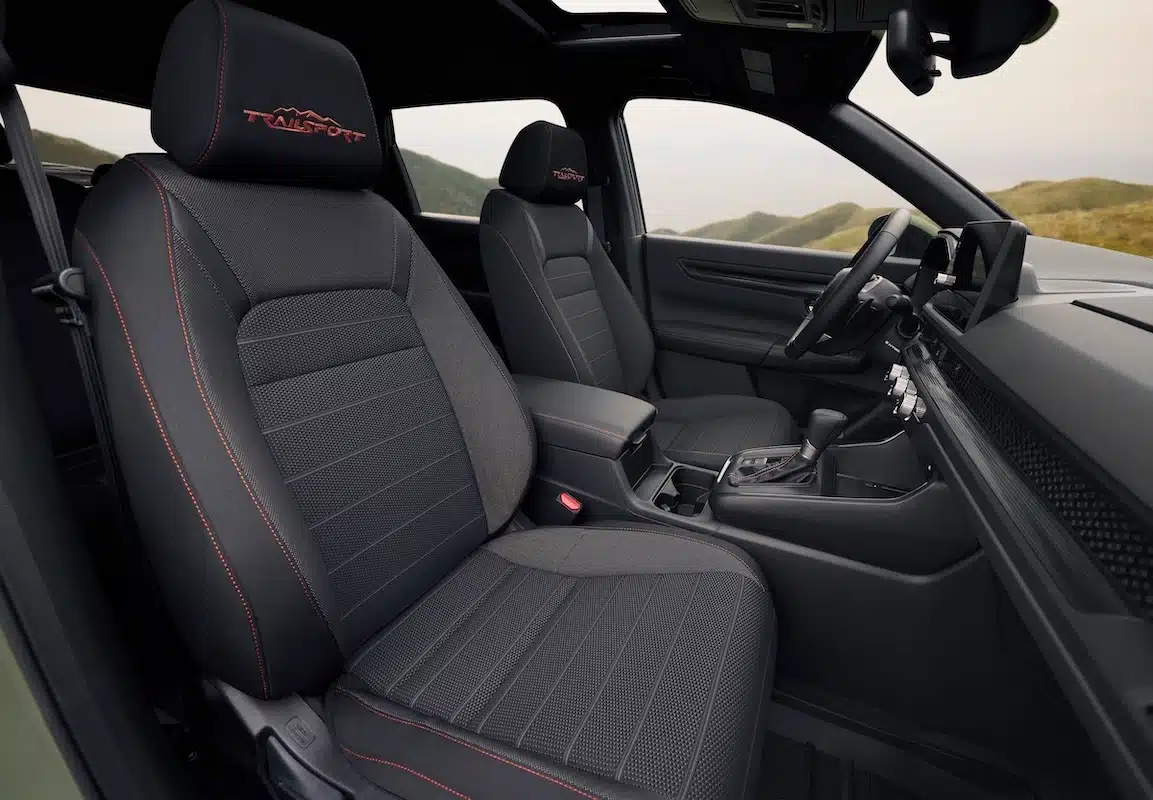
The visual changes are easy to spot. There are unique wheels wrapped in all-terrain tires, exclusive Ash Green paint, TrailSport badging, orange interior accents, and mildly revised front and rear styling. Standard all-wheel drive, hill descent control, and revised low-speed driveline calibration round out the package.
What’s missing is arguably more important than what’s included.
There are no skid plates protecting vital components. There are no exposed recovery hooks. Ground clearance remains essentially unchanged. Suspension travel isn’t meaningfully increased. The TrailSport doesn’t fundamentally alter the CR-V’s capability. But neither do competitors such as the Toyota RAV4 Woodland Edition or Nissan Rogue Rock Creek. This is a segment built around appearance, not bashing over boulders.
HOW IT PERFORMS
Mechanically, the TrailSport is simply a CR-V Hybrid underneath. Power comes from Honda’s familiar 2.0-liter four-cylinder hybrid system producing 204 horsepower and 247 pound-feet of torque. Buyers can also choose the turbocharged 1.5-liter four-cylinder with 190 horsepower. As with other CR-Vs, a continuously variable transmission handles power delivery.
Fortunately, the underlying CR-V remains one of the better-driving vehicles in its class.
The all-terrain tires don’t significantly compromise road manners. Turn-in remains crisp, body control is well managed, and steering offers more feedback than most compact crossovers. You can feel the tires working harder during aggressive cornering, but the CR-V never feels clumsy or reluctant. Honda’s engineers deserve credit for preserving much of the vehicle’s athletic character despite the tougher-looking rubber.
The hybrid powertrain remains smooth and responsive. Unlike some CVTs, Honda’s setup doesn’t feel perpetually confused about its mission. Throttle response is immediate, acceleration is adequate, and driveline refinement is generally excellent. Only in Sport mode does the powertrain become notably vocal, and even then the soundtrack promises more excitement than the actual performance delivers.
Fuel economy naturally suffers somewhat when driven enthusiastically. An observed 32 mpg isn’t bad considering the circumstances, although it falls short of the EPA estimate.
HOW IT HANDLES
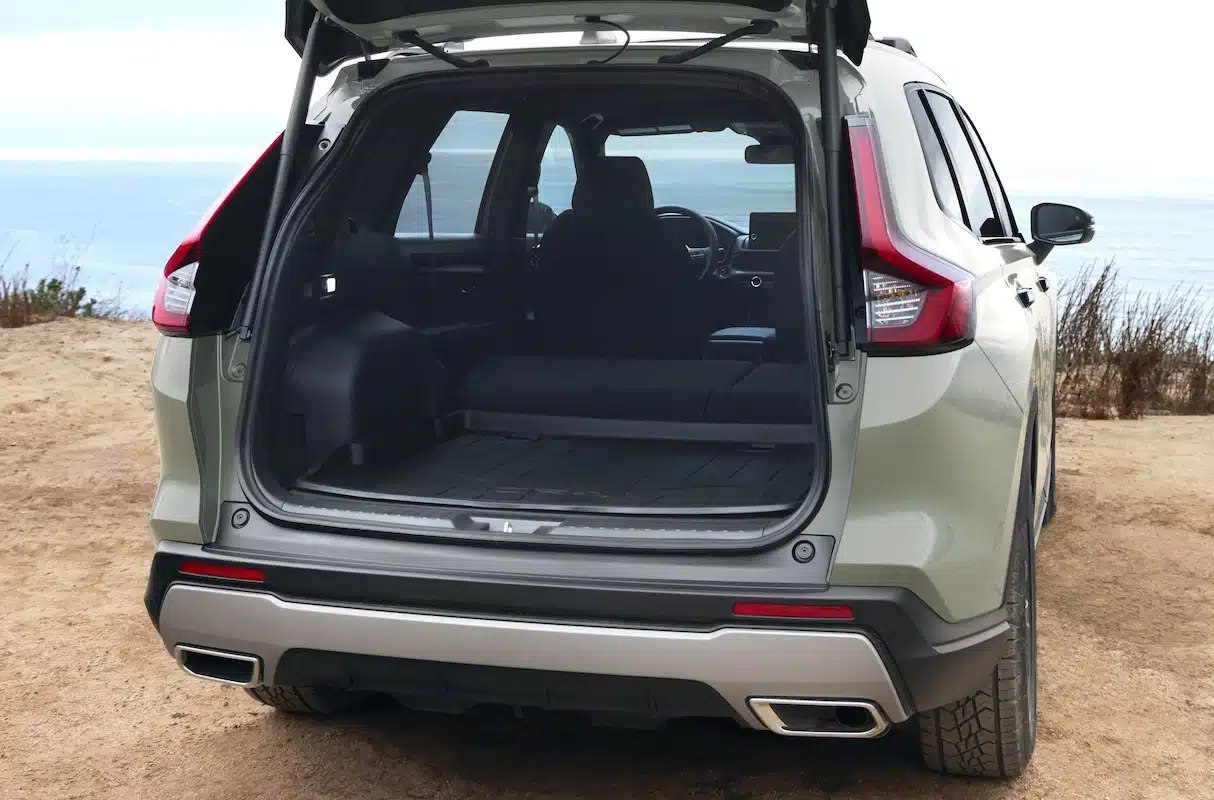
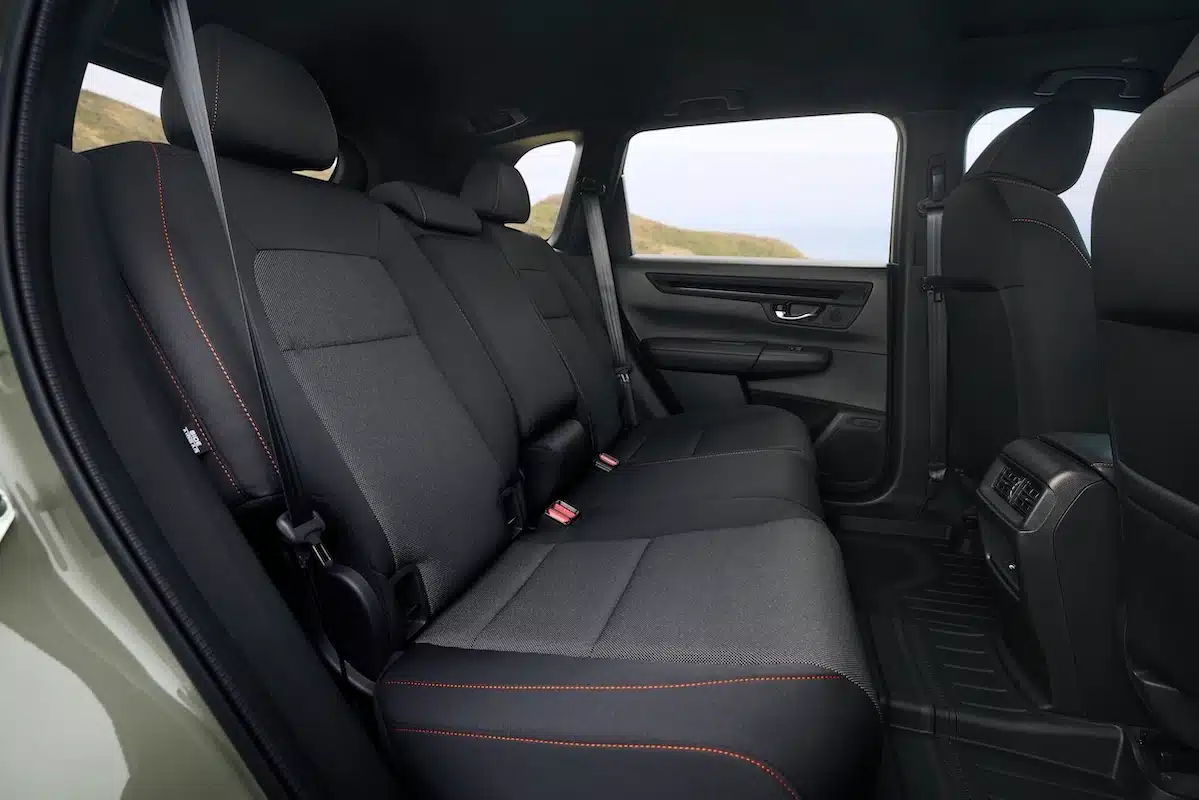
Ride quality lands squarely in the CR-V sweet spot. There’s a bit of firmness over broken pavement, but the suspension remains composed and well controlled. The seating position is excellent, visibility is good, and the doors open nearly 90 degrees, making entry and exit remarkably easy. It’s a vehicle engineered by people who understand that owners will use it every day.
And that’s really the point.
THE UPSHOT
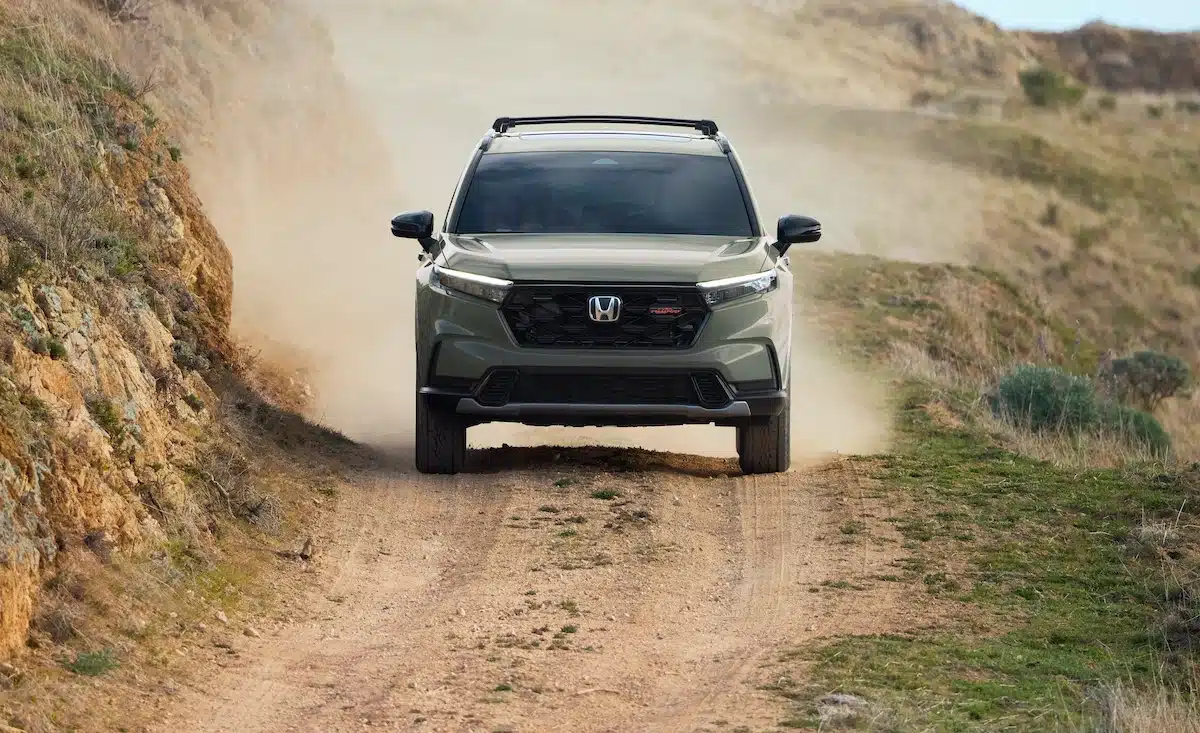
The CR-V TrailSport isn’t an off-road vehicle. It’s a CR-V wearing hiking boots. Those boots may prove useful on a muddy campsite road, a snow-covered driveway, or an unpaved trail leading to a fishing spot. But they’re mostly there to complete the outfit.
For buyers seeking genuine off-road capability, the TrailSport badge promises more than it delivers. A regular all-wheel-drive CR-V fitted with quality all-terrain tires would be nearly as capable in most situations. Without meaningful hardware upgrades, the TrailSport is essentially an appearance package wrapped around an already excellent crossover.
That doesn’t make it bad. Just make sure the trail you’re sporting isn’t too ambitious.