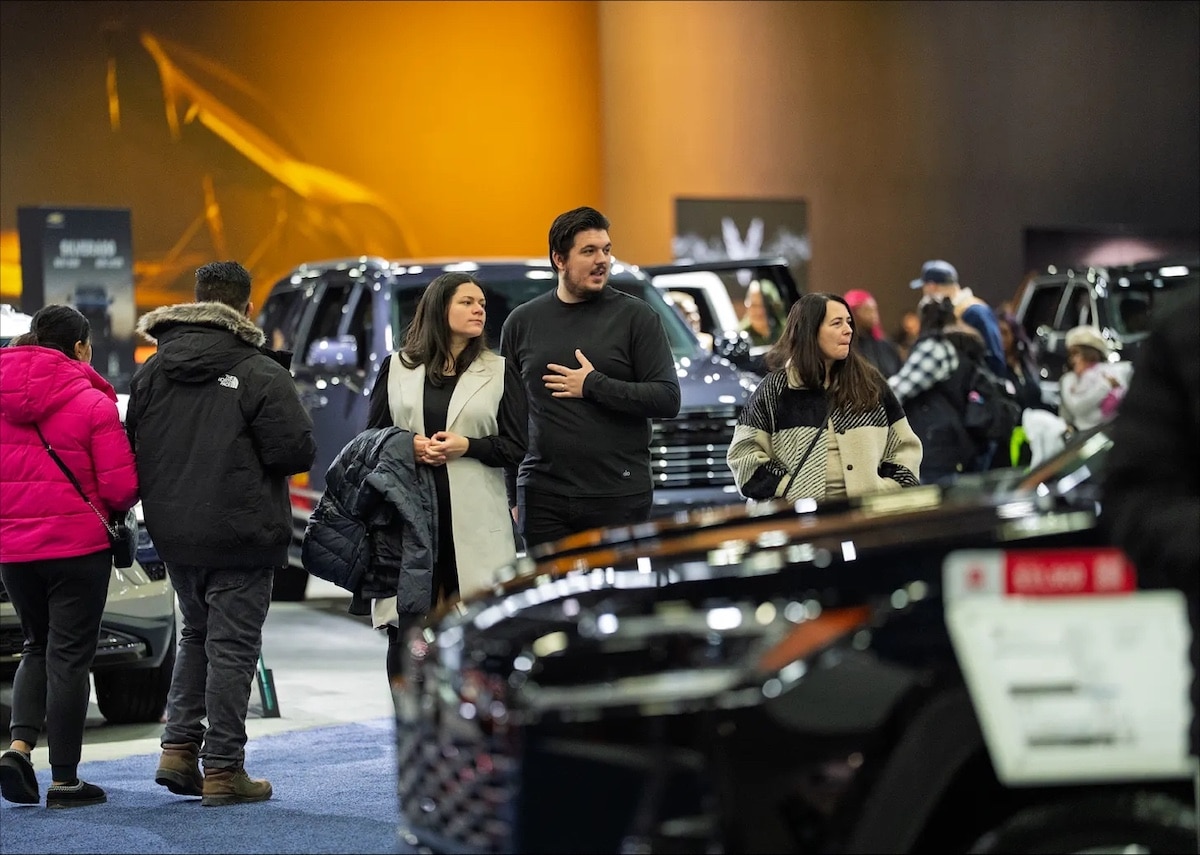
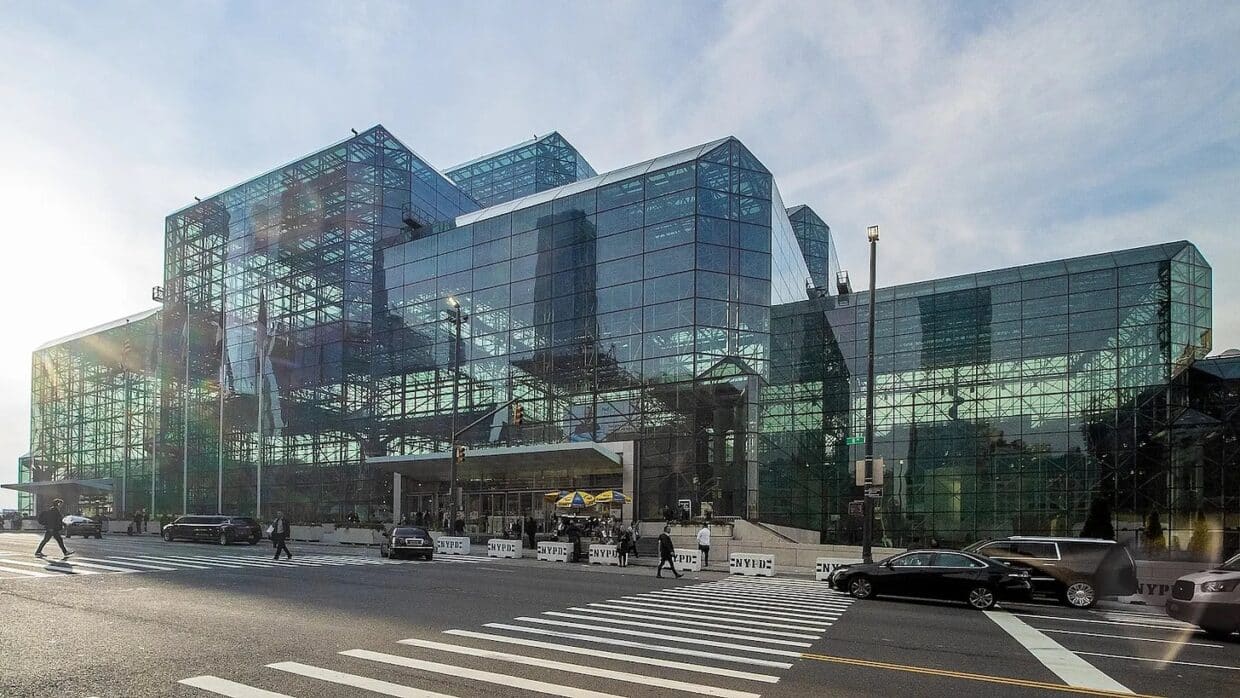
The 2026 New York International Auto Show has opened beneath the soaring glass-and-steel canopy of Manhattan’s Jacob Javits Center. But walk the aisles and you’ll hear a murmur among the media. There’s a sense of melancholy. According to them, this isn’t the show it once was.
There was a time, not so long ago, when auto show media previews in New York, Detroit, Chicago, and Los Angeles unfolded like great operas. Automakers spared no expense. Journalists jetted across continents, whisked from five-star hotels to intimate dinners, their minds blown at extravagant unveilings. The cars themselves seemed secondary to the choreography. Everyone played their part in the ritual and it all moved with perfect rhythm.
Today? Now stripped of excess, auto shows are quieter. What was once a stage for new car debuts has reverted to its original intention: presentation, not revelation.
AUTO SHOWS’ ANCIENT ANCESTORS
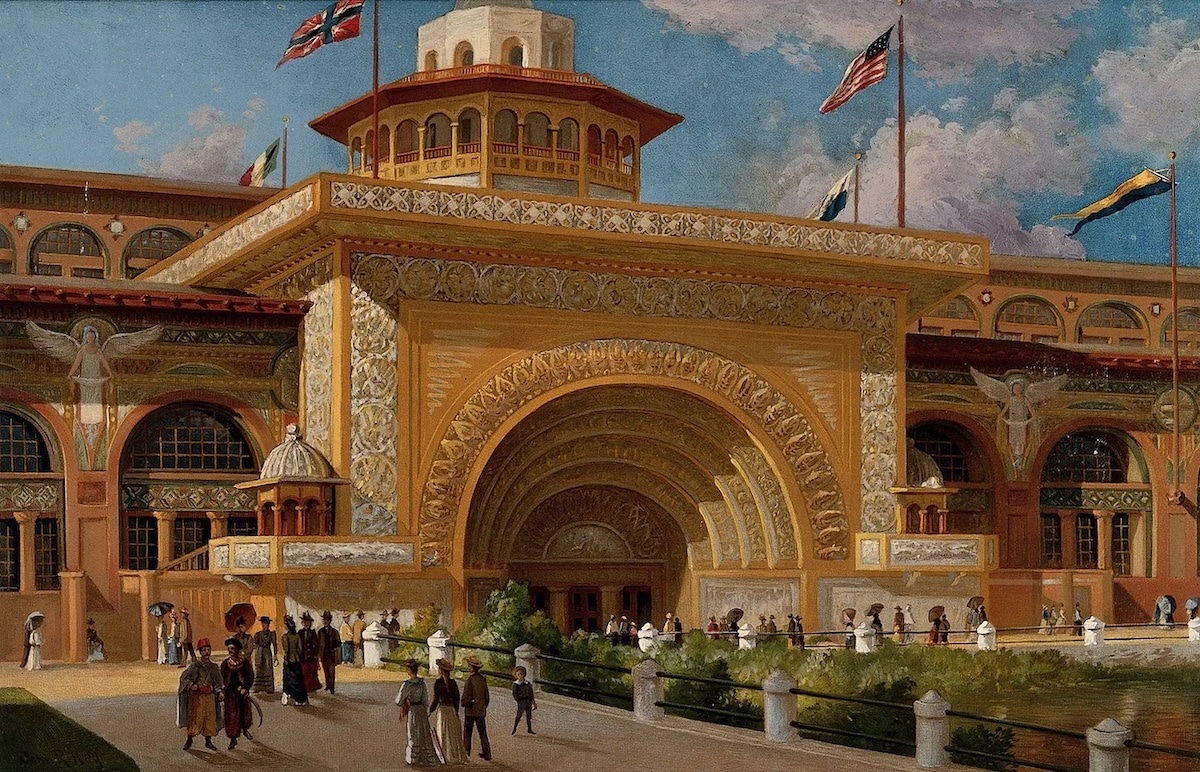
Long before the internal combustion engine roared to life, the carriage reigned supreme. Its makers, much like the automakers that follow, understood the theater of display. Exhibitions mattered, particularly London’s Great Exhibition of 1851 and Paris’ Exposition Universelle in 1878. By 1893, the World’s Columbian Exposition in Chicago dedicates nearly nine acres of Beaux-Arts splendor to transportation.
Naturally, railroads dominate, as they are the lifeblood of the era.
But at the northern portion of the immense hall, carriage makers hold court, among them Studebaker Brothers, Brewster & Company, along with many others. Bicycles are there too, thanks to the safety bicycle craze that hints at a forthcoming mechanized age. And somewhere among them sits something truly groundbreaking: a Daimler-Benz Victoria automobile. It commands no attention. It merely waits, patient and unassuming, as if anticipating its turn in history.
AUTO SHOWS PREVIEW A NEW WAY TO TRAVEL
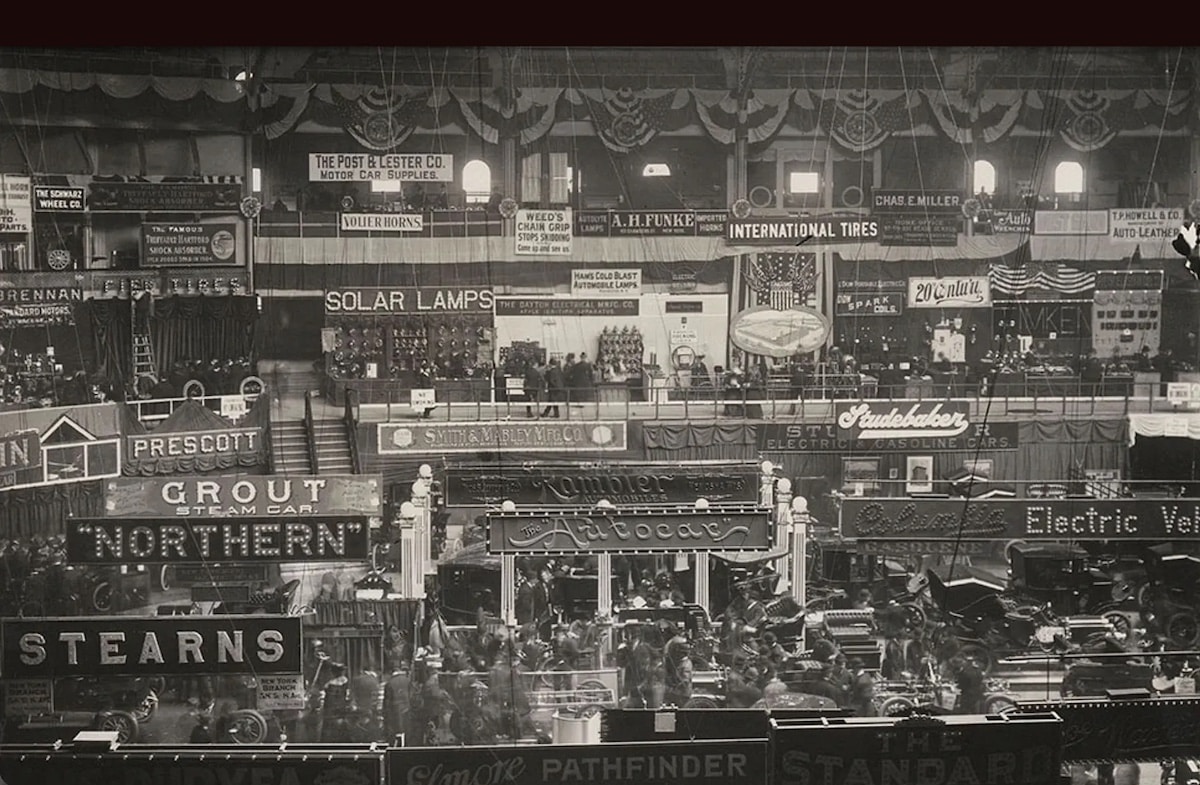
Given the scarcity of automobiles at the time, it’s surprising that the automobile has its cotillion in Paris the following year. Organized by the French automotive pioneer Albert de Dion, what becomes the biennial Paris Motor Show begins modestly with a mere four automakers. Across the Atlantic, New York’s Madison Square Garden hosts the first major American auto show in 1900. Sponsored by the Automobile Club of America, it gathers seventy manufacturers of gasoline, steam, and electric vehicles, each competing to define the future.
The New York Times, eyes wide, marvels at the “bewildering array” of trucks, cabs, carriages, broughams, victorias, surreys, phaetons, buckboards and runabouts. There are so many variations, that exhibitors must constantly explain every detail. To prove capability, show organizers build a fifty-foot mound on the Garden’s roof as an improvised proving ground. The age of the automobile has begun, and it’s nothing if not audacious.
AUTO SHOWS CAPTIVATE A NATION
Other automobile shows follow quickly in New York’s wake. First comes Chicago in 1901, then Philadelphia, Boston, and Denver in 1902; by 1907 car shows are established in Los Angeles, Detroit, Kansas City, Minneapolis, and San Francisco. Atlanta and Portland follow in 1909, Norfolk in 1912, Dallas and Seattle in 1913, and Charlotte and Washington, D.C. in 1921, among many others.
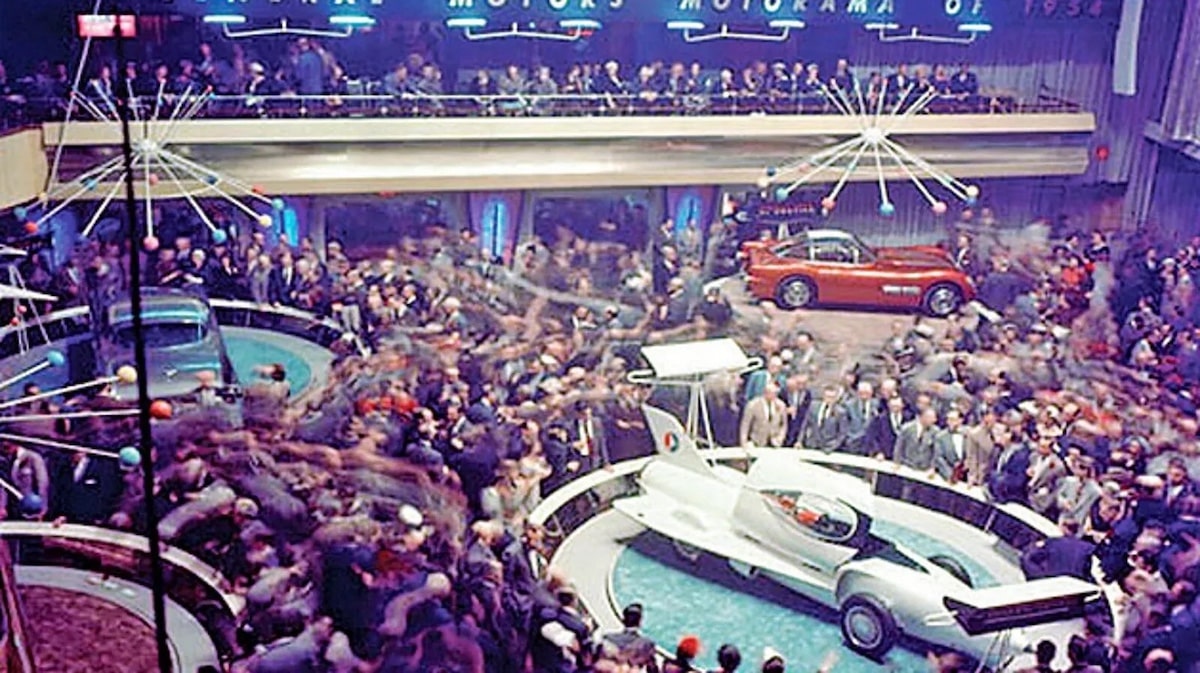
Typically, car shows are staged in the frozen months when sales slow to breathe life into quiet showrooms. Some are experiments. Norfolk’s 1951 International Auto Show, capitalizing on the increasing interest in foreign cars, seeks to promote shipments through its ports by exhibiting cars from Volkswagen, Jaguar, Renault, Hillman, Singer, Austin, MG, Nash-Healey, Sunbeam, and Ford of Britain, among others. There’s also GM’s Motorama, an extravagant, traveling auto show staged by General Motors between 1949 and 1961 featuring concept cars, celebrity performances, and fashion shows as the auto show becomes theater.
AUTO SHOWS BECOME A MEDIA SPECTACLE
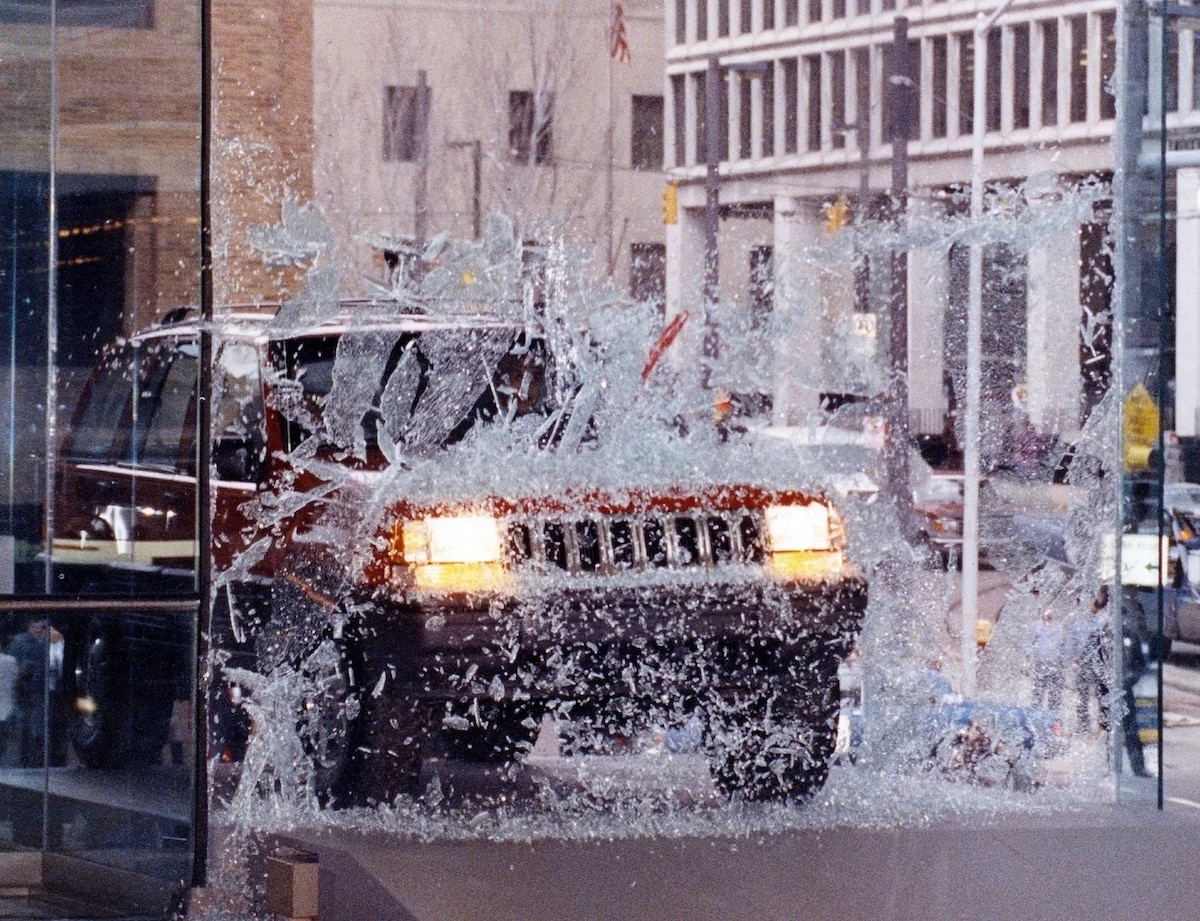
Just as the first McDonald’s franchise opens, American automakers begin to use car shows for unveiling new designs. As the decades pass, their displays grow more elaborate, largely eclipsing local dealers at Detroit, Chicago, New York, and Los Angeles. Instead, journalists and broadcasters are brought in at the automakers’ expense to hype the latest in automotive couture. By the early 1990s, spectacle reaches its apex as a redesigned Jeep Grand Cherokee drives up the steps of Cobo Hall, smashing through a plate-glass window and into history. Each unveiling thereafter tries to outshine the last, a crescendo of volume, lights, and audacity.
Until cost intervenes.
By 2007, an elaborate auto show stand, including lighting, stages, speakers, video screens, vehicles, rotating car turntables, carpeting, labor, rent, electricity, transport, on-site product specialists, accommodations, advertising and public relations tops $50 million, according to a 2007 report by the Los Angeles Times. Inflation-adjusted, that’s more than $80 million. And for what? A few fleeting minutes before the assembled media; sometimes not even that.
It’s little wonder the razzle-dazzle recedes. The glamour thins. Reality returns.
WHY AUTO SHOWS AREN’T DYING
Self-absorbed critics, spoiled by excess, dismiss today’s auto shows derisively as merely “cars on carpet.”
But auto shows have simply returned to their roots. Regional dealer groups orchestrate the exhibitions where cars are displayed, consumers arrive in droves and deals are made. The spectacle may have faded, but the fundamentals remain. After all, some 11 million consumers attend American car shows annually.
Yes, the magic is quieter now, but it’s still there.
For the allure of a car show is not in its theatrics. It’s the promise of a new car itself; the hum of its engine, the thrill of choice, the possibility of motion.
And in that, the auto show drives on, as vital as ever.
Editor’s note: This is an updated version of a column that first appeared on The Car Collective Substack. To subscribe to The Car Collective, click here.